During Finals Week, I Secretly Built a "Campus Xianyu" with AI
🎓
Narrated by: A sophomore student
01 Mao Xiaolv's "3-Hour Miracle" and My Overheated Brain
"Help me test it. Try chatting with it."
"That's amazing. Finals are coming up and you're still staying up late coding. Go study already."
"It only took 3 hours."
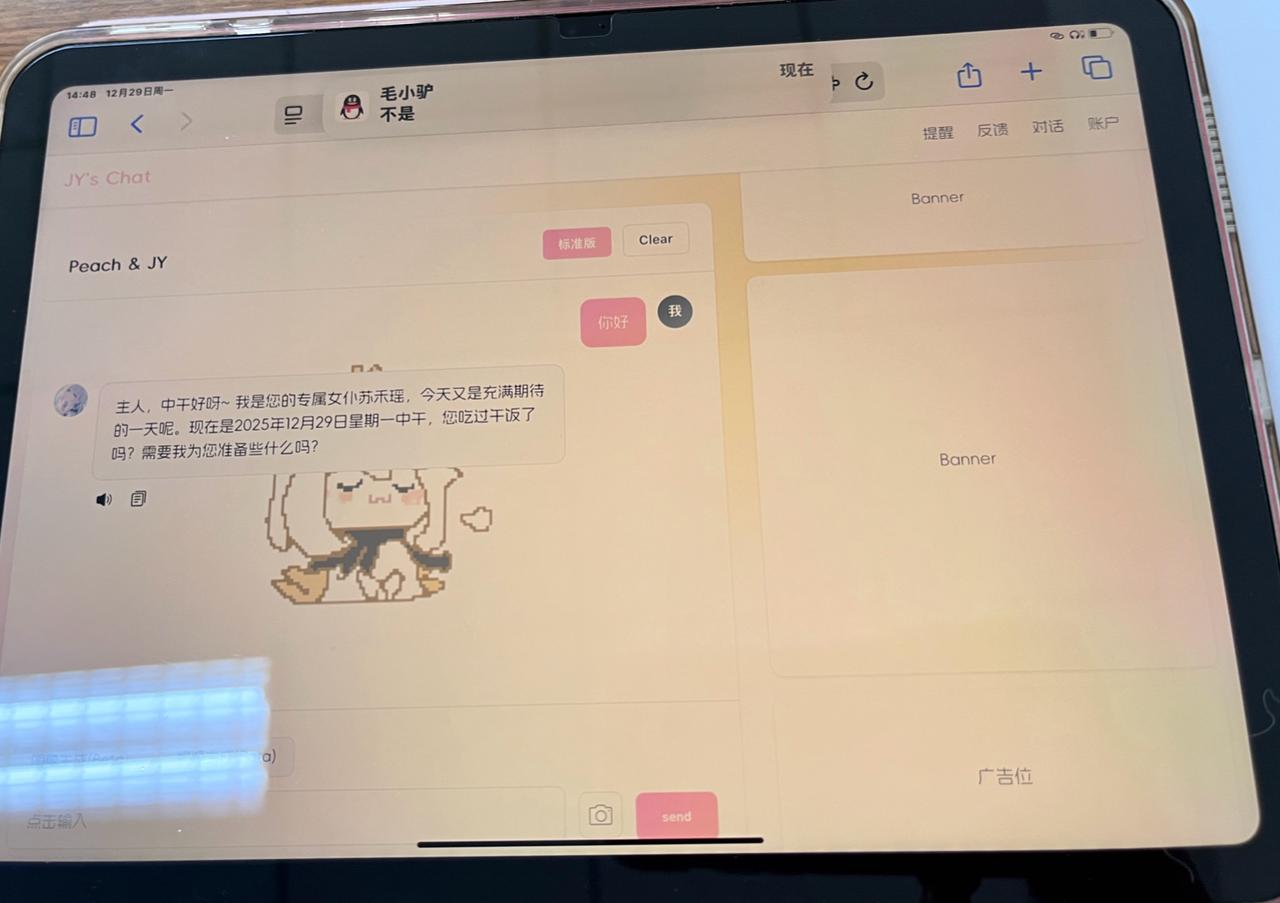
During finals week in January 2026, while I was buried in review, I suddenly got a link from a technical genius friend named Mao Xiaolv. It was an AI chat website. It already had features like scheduling and anime tracking, and the interface looked surprisingly polished.
Three hours? I stared at the screen and felt like my brain was overheating. Once again, this guy had reset my understanding of what "fast" meant. Then he sent me a pile of materials. I opened them and realized that while I recognized every single character, the full sentences might as well have been written in another language. I wanted to ask him, but I was afraid of exposing how much of a beginner I was. So I ended up doing this: he threw jargon at me, I quietly pasted it into Doubao, waited for an explanation, and then cautiously replied to him. My learning process had turned from "person-to-person" into "person-to-AI-to-person."
02 On My First Day in the Group Chat, I Chose Silence
The group-based learning program started in January, and Mao Xiaolv pulled me into a big learning chat. The opening round was self-introductions: "many years of development experience," "currently at a major tech company," and so on. I stared at everyone else's intros, paused with my fingers on the keyboard for a few seconds, and then deleted the two lines I had just typed. I sighed to myself: "When experts are sparring, maybe the fool should keep quiet."
Later, Mao Xiaolv, another new friend, and I formed a smaller group of three, and I finally started to relax. The atmosphere in that group made me especially happy: nobody cared how old you were, what job you had, or whether you were impressive. If a problem came up, we just talked about it as equals and figured it out together. Most of the time everyone was busy and quiet, but you could still feel that people were putting in effort behind the scenes. It was strangely grounding. In school, I rarely experienced this feeling of not being defined by labels and simply moving forward with others because of shared interest.
03 "Slacking Off" During Finals Actually Made Me Learn Harder
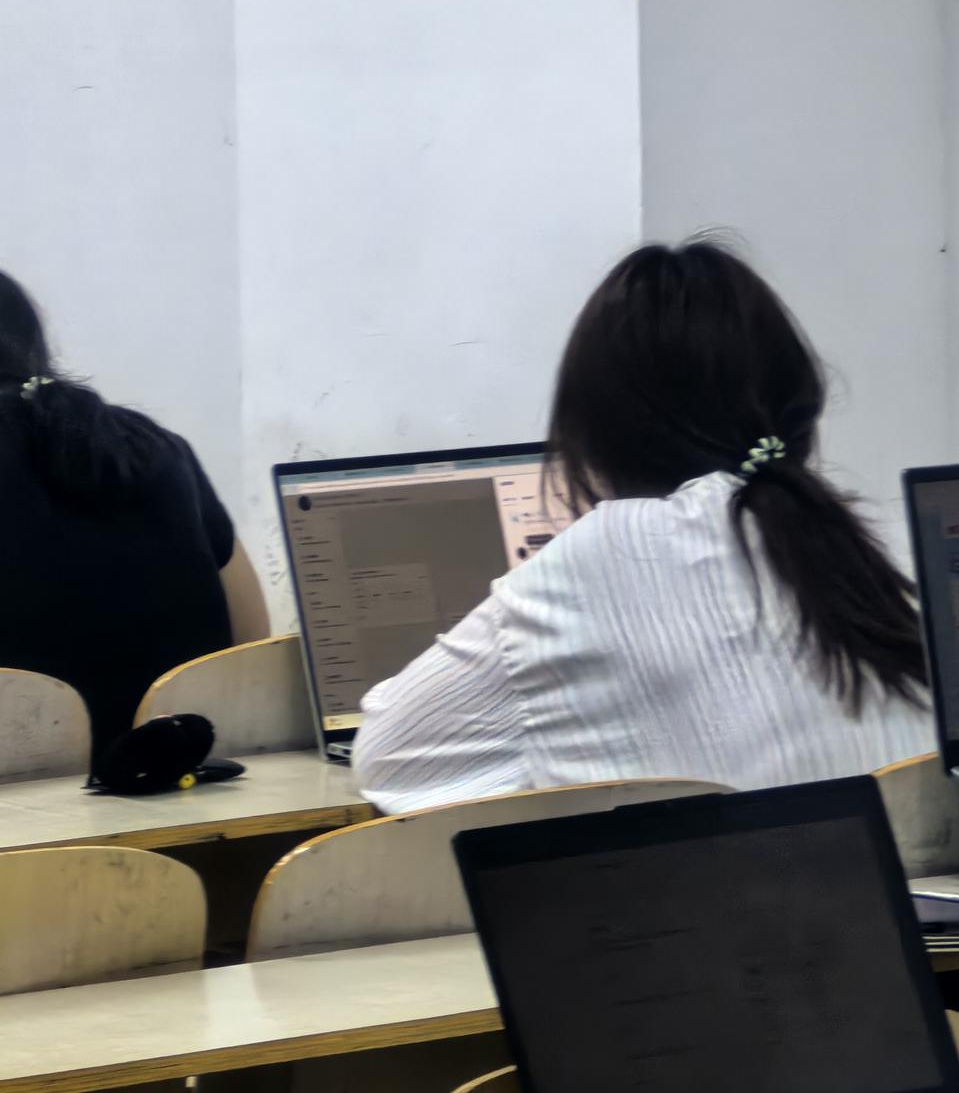
During this learning stretch, I felt much less tension and anxiety than before. Even while preparing for finals, if my daily progress check-ins were slow, nobody rushed me or blamed me. Everything was on me, and that freedom somehow made me more motivated.
It felt very different from the standard-answer learning atmosphere of high school and college. This kind of autonomy actually made me want to work harder.
Each day's task check-in felt like leveling up in a game. Learning became more active, and I learned much more because of it.
04 In a Moment of Excitement, I Dug Myself a Huge Hole
Before I knew it, winter break was approaching, and this round of learning was almost over. Before the graduation livestream showcase, the teacher asked me whether I wanted to demo a product.
"Yes!"
I answered almost reflexively, even though I had no idea what I was going to build.
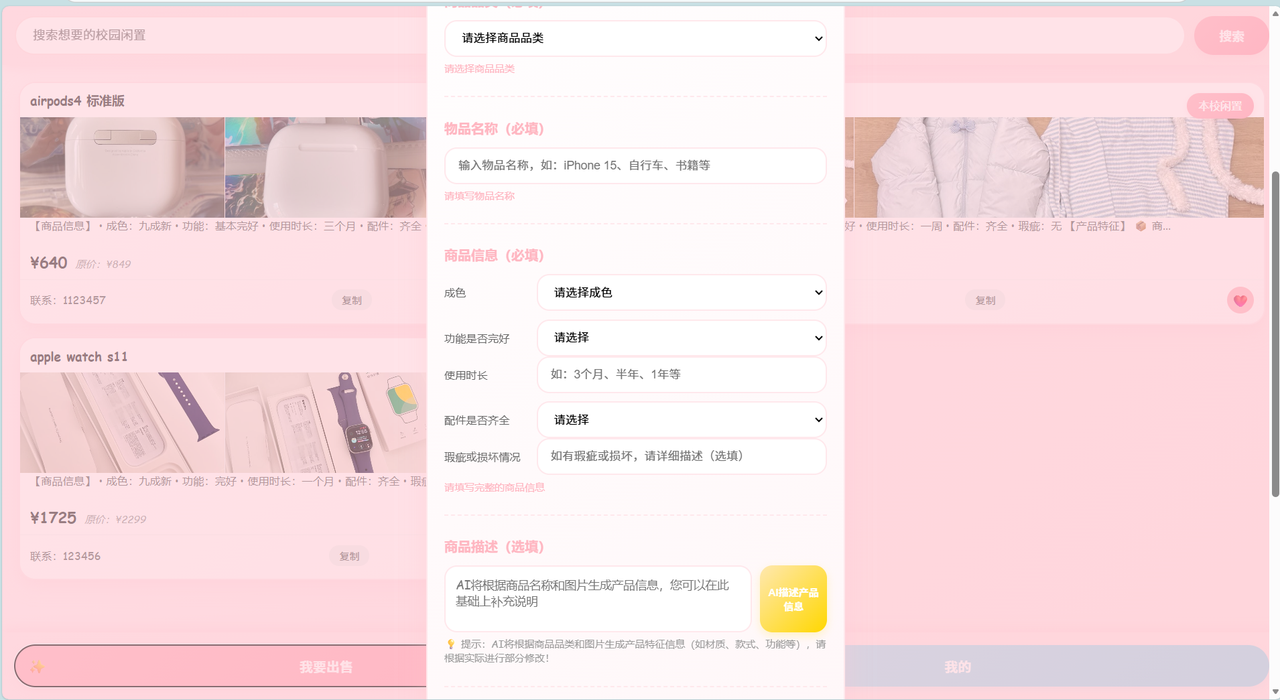
As I scrolled through the dorm and campus group chats full of secondhand listings, a direction started to form. Campus secondhand trading had always existed inside temporary chat groups. People usually arranged to meet at a dorm building or cafeteria, and almost nobody bothered to use a bigger marketplace app. So I started thinking: what if there were a secondhand platform just for campus users? It could show listings from your own school or nearby schools more accurately, and it would naturally come with a bit more trust, reducing the fear of being scammed.
Once the idea clicked, I threw myself into my first real AI product design. The page design came pretty smoothly: a product browsing page as soon as you enter, a search bar on top, and "My Page" plus "I Want to Sell" underneath. Simple and direct. The hard part was figuring out where to add AI features. At first I thought about making AI recommendations like a shopping platform, but "cost-performance" is too subjective, so I dropped it. I came up with a few more ideas, but none really held up. For a while, I was completely stuck.
Then I talked to a friend who loves digital gadgets, and one sentence suddenly cleared everything up: "When people sell used items, they usually only say how long they've used it, what flaws it has, and whether it still works. They don't list specs the way merchants do. What if AI helped novice buyers understand the product description instead of making them go hunt down the details themselves?"
That was it. The direction became clear instantly. The AI feature should live inside the product description. Later, an intelligent pricing feature naturally followed.
05 I Felt Like the Worst Student in the Livestream, but Got the Most Valuable Encouragement
I put a lot of effort into the project, and by the time of the livestream, it was finally done. But the closer I got to presenting it, the more nervous I became. The projects shown before mine were all polished and refined, and every interaction looked smoother than the last. Before the event, I had felt confident. But when it was really my turn, the only thought left in my head was: "There has to be room for bad students too."
So I took a deep breath and presented my demo, feeling both brave and uneasy. When it was over, my mind exploded with self-criticism: my questions had been dumb, my project wasn't polished, my idea was boring, and so many parts were still unfinished.
But to my surprise, the teachers did not dismiss me at all. Instead, they gave me a lot of specific, practical suggestions. That was the moment I realized that even something imperfect could still be taken seriously. Before this, I had almost never been given a chance to calmly present a project that was still immature.
06 What I Gained Was Much More Than a Demo
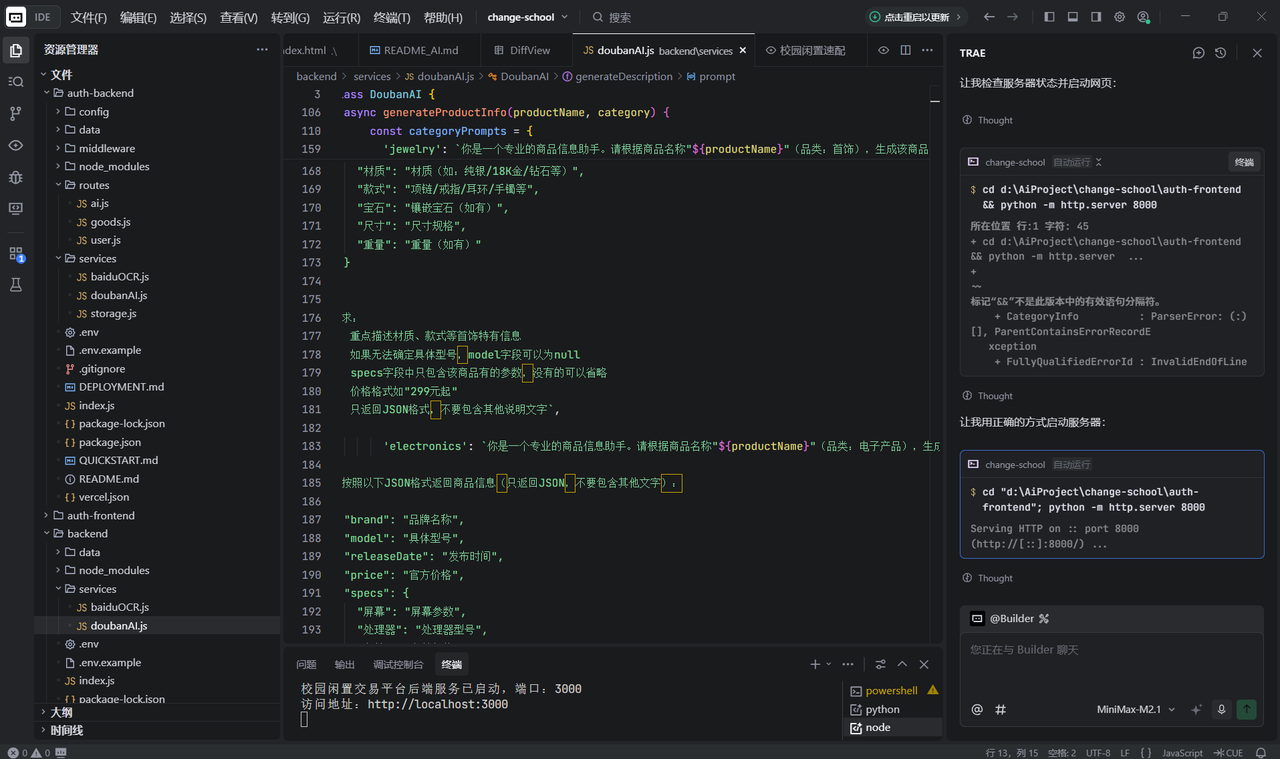
Through this experience, I genuinely feel that my ability to solve real problems has improved. First, my learning efficiency went up. I learned how to build small tools for myself, such as an AI-powered schedule planner and a personal blog. Second, the way I learn changed. Instead of painfully chewing through thick tutorials page by page, I started directly designing my own small projects and learning by building.
Not knowing how to code is no longer fatal. AI can help write code. When I run into something I don't understand, I can ask directly: "What does this line mean?" "What concept is this using?" "How do I fix this error?"
With Trae, the wall between "having an idea" and "making it real" suddenly felt much lower. Even without a strong programming foundation, I could gradually turn ideas in my head into something tangible. Watching a product evolve through iteration gives me a very real sense of achievement.
This experience made me believe that the threshold for creating things may really be much lower than we once imagined.