如何使用 TypeSafe 进行构建
通过让代码保持控制权,并让 System One 只做狭窄、结构化的决策,来设计 AI 驱动的软件。
System One 是 TypeSafe 用于构建 AI 驱动的软件(而非智能体)的模型。它不生成代码,也不自行选择下一步动作。它提供可嵌入软件的 AI 原语,让代码始终保持控制权,而由模型负责对非结构化数据做出常识性判断。
概要: 先构建正常的软件工作流,只在需要 AI 的地方插入 System One。
把控制流、确定性规则和副作用保留在代码中。
把宽泛的判断拆解为狭窄的、类型化的问题,并给出明确的 instructions 和 criteria。
只给每个问题提供它所需的上下文。
利用概率与置信度来采取行动、请求人工审核或升级处理。
把相互独立的问题一起提出,然后在代码中组合它们的答案。
三种软件架构
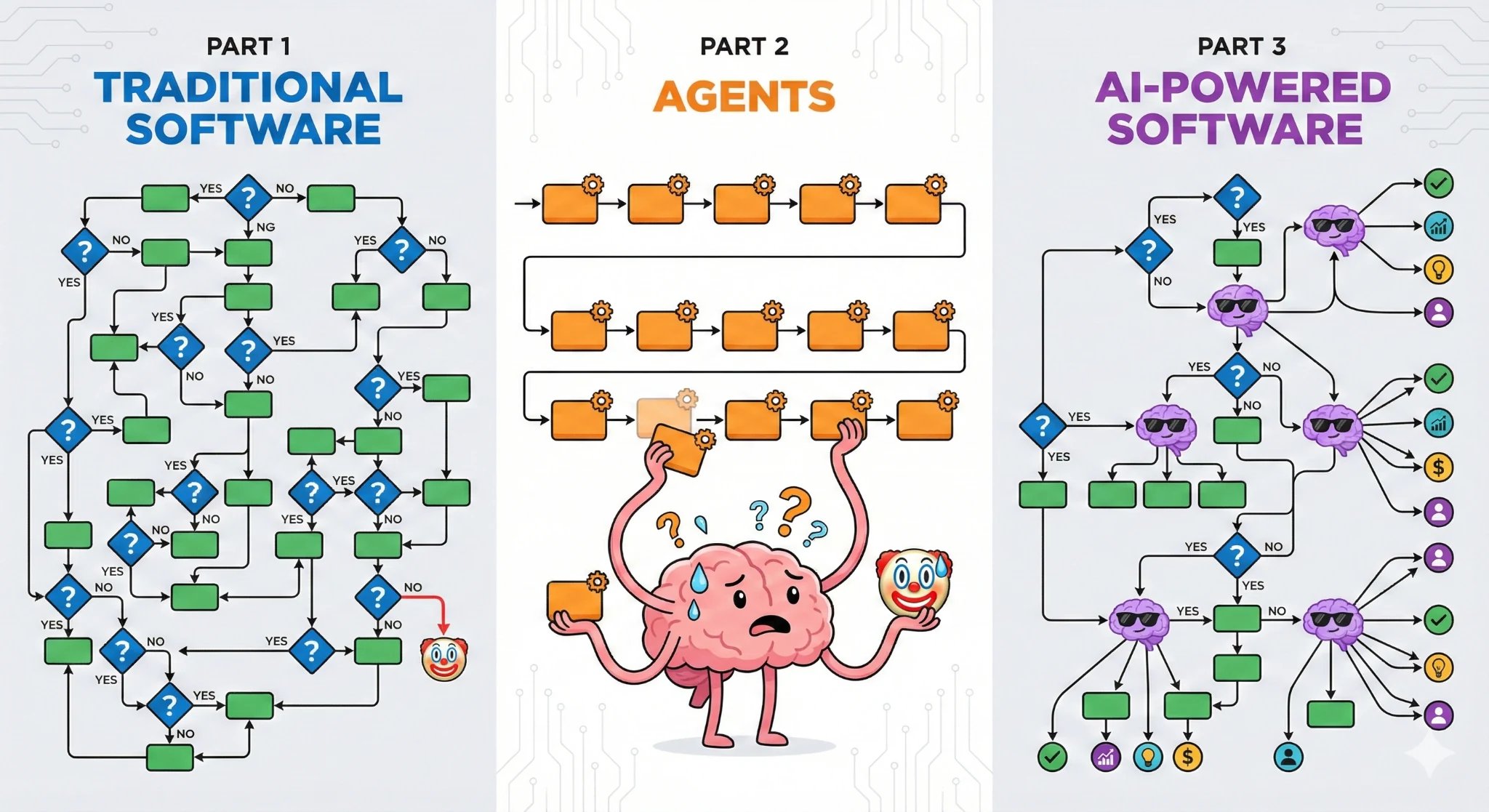
TypeSafe 旨在构建 AI 驱动的软件:代码掌控工作流,AI 处理狭窄、结构化的决策。
传统代码是由简单软件原语构成的复杂决策树。由于每个原语都可靠,开发者可以把它们组合成更高层次的抽象。
智能体处理指令并自行选择下一步。当有人在监督整个过程时,这种方式效果不错,但每一次循环都会带来新的脱轨风险。
代码负责确定性工作并掌控控制流。模型只出现在系统需要可编程的常识、或需要解读非结构化数据的地方。每个 AI 任务都保持原子性并受到约束。
System One 为何可组合
System One 在构造上就是类型安全的。决策与概率符合你的代码所期望的结构化软件类型和 JSON schema,因此永远无需从生成的文本中恢复值。
问题被独立且并行地评估。一个原语的结果不会变成隐藏上下文,去改变另一个原语的结果。
输出可排序,可以驱动智能的 if 语句、阈值和比较。
大多数查询在约 100 毫秒内完成。System One 足够快,可用于实时请求路径和用户界面。
RLCD 通过校准后的概率传达不确定性,而不是倾向于过度自信。
System One 的设计目标是在重复评估中返回稳定的答案。参见自洽性实战指南。
由于每个输出都被约束在所提供的选项之内,模型会返回这些选项上的完整概率分布,而不是在 schema 之外凭空编造一个值。TypeSafe 的目标是让智能与速度和成本之比超过 100 倍;其背后的赌注是:更便宜的智能会催生多得多的需求。
设计 System One 工作流
- 能用代码就用代码
把确定性工作留在代码中。它可靠且廉价。当软件工作流能表达同样的行为时,避免使用智能体式的
while循环。示例:把确定性规则留在代码中▾
pythondays_overdue = (today - invoice.due_date).daysif days_overdue > 30: route_to_collections(invoice)
浏览 System One 模式,了解以有界方式将模型决策与代码组合起来的方法。
- 分解输入状态
只包含与当前问题相关的上下文。这有助于模型避免干扰和上下文腐化。当最新的信息可以来自你自己的知识库时,不要依赖存储在模型权重中的知识。
示例:只发送相关上下文▾
request{ "state": { "ticket_message": "My flight was cancelled. Can I get a refund?", "refund_policy": "Cancelled flights are eligible for a full refund." }, "questions": { "policy_supports_refund": { "type": "noul", "instructions": "Does the refund policy support the refund requested in the ticket?" } } } - 在输入状态中使用结构
对
state和questions字段使用嵌套 JSON。当指向具体值能消除歧义时,就让问题指向这些具体值,并在问题内用反引号字符把每个路径包起来。示例:引用一个嵌套值▾
使用带反引号的点号加索引路径,让问题指向某个具体的嵌套值,例如
support.tickets[0].message。request{ "state": { "support": { "tickets": [ { "message": "I was charged twice for order A-104." }, { "message": "How do I reset my password?" } ] }, "commerce": { "orders": [ { "id": "A-104", "charges": [ { "amount_usd": 49, "status": "captured" }, { "amount_usd": 49, "status": "captured" } ] } ] }, "account": { "security": { "password_reset": "Email a reset link to the address on file." } } }, "questions": { "duplicate_charge": { "type": "noul", "instructions": "Dosupport.tickets[0].messageandcommerce.orders[0].chargesindicate a duplicate charge?" }, "password_reset_supported": { "type": "noul", "instructions": "Canaccount.security.password_resetresolve the request insupport.tickets[1].message?" } } } - 分解问题
尽可能提出最明确、狭窄、具体、原子化的问题。把复杂或定义不清的问题拆分成各自只评估一个属性的独立问题。
信息这可能是本指南中最重要的概念。宽泛的问题把多个判断隐藏在同一个答案背后。原子化的问题把这些判断暴露出来,让你可以在代码中检查、调优和组合它们。
示例:分解垃圾信息检测▾
One broad question (bad){ "questions": { "is_spam": { "type": "noul", "instructions": "Ismessagespam?" } } }Decomposed questions (good){ "questions": { "requests_credentials": { "type": "noul", "instructions": "Doesmessage.bodyask the recipient to provide a password or other login credential?" }, "offers_unexpected_reward": { "type": "noul", "instructions": "Doesmessage.bodyclaim the recipient received an unexpected prize, payment, or reward?" }, "creates_time_pressure": { "type": "noul", "instructions": "Doesmessage.subjectormessage.bodypressure the recipient to act quickly?" }, "sender_identity_mismatch": { "type": "noul", "instructions": "Does the organization named inmessage.sender.display_nameconflict with the domain inmessage.sender.email?" }, "link_domain_mismatch": { "type": "noul", "instructions": "Does the domain inmessage.links[0].urlconflict with the organization named inmessage.sender.display_name?" }, "disguises_link_destination": { "type": "noul", "instructions": "Doesmessage.links[0].textconceal or misrepresent the destination inmessage.links[0].url?" } } }示例:校验工具调用轨迹▾
One broad question (bad){ "questions": { "tool_calls_are_correct": { "type": "noul", "instructions": "Istrace.tool_callscorrect forrequestandavailable_tools?" } } }Decomposed questions (good){ "questions": { "geocode_tool_is_relevant": { "type": "noul", "instructions": "Istrace.tool_calls[0].namean appropriate tool for resolvingrequest.location?" }, "geocode_location_matches": { "type": "noul", "instructions": "Doestrace.tool_calls[0].arguments.citymatchrequest.location?" }, "geocode_arguments_match_schema": { "type": "noul", "instructions": "Doestrace.tool_calls[0].argumentsconform toavailable_tools.geocode_city.parameters?" }, "geocode_result_matches_call": { "type": "noul", "instructions": "Doestrace.tool_results[0].tool_call_idmatchtrace.tool_calls[0].id?" }, "weather_tool_is_relevant": { "type": "noul", "instructions": "Istrace.tool_calls[1].namean appropriate tool for answeringrequest.text?" }, "weather_arguments_match_schema": { "type": "noul", "instructions": "Doestrace.tool_calls[1].argumentsconform toavailable_tools.get_weather.parameters?" }, "weather_uses_geocoded_coordinates": { "type": "noul", "instructions": "Do the coordinates intrace.tool_calls[1].argumentsmatch those intrace.tool_results[0].output?" }, "weather_date_matches": { "type": "noul", "instructions": "Doestrace.tool_calls[1].arguments.datematchrequest.date?" }, "weather_unit_matches": { "type": "noul", "instructions": "Doestrace.tool_calls[1].arguments.unitmatchrequest.unit?" } } } - 在问题中使用结构
保持问题简短。
instructions和criteria通常是字符串,对于一个简短而明确的问题,一个字符串就足够了。它们也可以是对象或数组。把问题放在一个字段中,把引导该问题的数据放在其他字段中。结构在以下情形中会有帮助:
问题需要上下文或示例。一大段背景信息或一列示例输入,应放在问题旁边的命名字段中,你的代码可以在那里增补或替换它们,而无需重写问题。
问题的一部分来自你的代码。当某个值来自数据库时,把它放在自己的字段中,而不是拼接到字符串模板里。
多个问题有相似的 instructions。一个请求接受一个状态,并且可以包含多个问题。添加补充数据有助于让问题彼此区分。
示例:引用来自你代码的一条记录▾
这个 Noul 将状态中的简历与来自候选人数据库的一条记录进行比较。该记录原样放入
potential_duplicate,问题通过名称来引用它。questions{ "questions": { "same_as_record_18": { "type": "noul", "instructions": { "potential_duplicate": { "name": "John Smith", "location": "Oakland, California", "last_employer": "Google" }, "question": "Is the resume for the same person aspotential_duplicate?" } } } }来自代码的 “potential_duplicate” 数据可能随时间变化。“question” 使用反引号来引用它。
criteria中的描述也可以是对象。对于 Choice,每个选项的描述可以是一个对象,说明该选项涵盖什么、什么其实属于其他选项,以及几个示例。在各选项之间使用相同的字段名,以便模型可以直接比较它们。示例:定义对比式的 Choice criteria▾
questions{ "questions": { "card_help_topic": { "type": "choice", "instructions": { "question": "Which disposable virtual card topic is the user asking about?", "focus": "Classify the information the user wants." }, "criteria": { "get_disposable_virtual_card": { "what": "Purpose, eligibility, or setup", "not_for": "Quantity, transaction, or merchant restrictions", "examples": [ "How can I get a disposable virtual card?", "What are disposable cards for?" ] }, "disposable_card_limits": { "what": "Quantity, transaction, or merchant restrictions", "not_for": "Purpose, eligibility, or setup", "examples": [ "How many disposable cards can I make per day?", "Where can I use a disposable card?" ] } } } } }每种问题类型的页面都有一个完整的实例:
Noul 将一份简历与多条候选记录进行比较,每条记录一个问题,这些问题在代码中构建。
Choice 用每个选项涵盖什么、不适用于什么以及示例,来描述两个容易混淆的选项。
Score 为每个等级提供描述和示例情境。
结构化数据提取级联实战指南 展示了共享措辞的情形:对提取记录的每个字段提出同一组问题。
简短明确的问题或 criterion 可以保持为字符串。当结构能把原本会混在一起的指引区分开时,就引入结构。关于接受结构的全部位置,参见进阶:结构。
- 大量提问
在一个请求中,针对同一状态提出许多狭窄且相互独立的问题。这就是你用该 API 最大化每美元效益与智能的方法:问题并行运行,代码可以组合它们的信号,而无需增加串行的模型往返。
- 在代码中组合问题输出(或输入经典 ML 模型)
用确定性规则或加权和来组合独立的答案。对于需要学习得到的组合方式,把这些概率用作下游经典机器学习模型的特征。
示例:用加权得分组合信号▾
pythonanswers = response.answersCombine independent signals into one application-specific score.
quality = ( 0.4 * answers["answers_request"].noul
0.4 * answers["citations_are_supported"].noul
0.2 * (1 - answers["contradicts_context"].noul)
)
组合评分 展示了如何在组合各项判断的同时保留它们。如果你没有下游模型所需的标签,可以用一组昂贵的推理模型集成来生成标签;AutoResearch 实战指南 展示了如何基于 System One 的输出训练一个经典模型。
- 根据不确定性进行路由
让代码针对有置信度和缺乏置信度的答案采取不同的行动。把不确定的情况升级给人工或更昂贵的推理模型。通过在你的数据上绘制置信度对准确率的曲线来测试阈值。
示例:按置信度路由▾
pythonanswer = response.answers["card_help_topic"]if answer.confidence < 0.8: route_to_human_review(ticket) else: route_to_handler(answer.choice, ticket)
分解并不意味着更多往返。针对同一状态的问题会并行运行。
综合运用
这个客服工单工作流把确定性工作留在代码中,只发送相关的结构化上下文,在单个请求中评估许多原子化的问题,并通过显式的置信度门控来组合答案。
from typesafe_sdk import Choice, Noul, NoulCriteria, Score, TypeSafeClient


def triage_ticket(ticket, customer):
    # Handle deterministic states without calling a model.
    if ticket["status"] == "closed":
        return "no_action"

    open_orders = [
        order for order in customer["orders"] if order["status"] != "delivered"
    ]

    # Include only the structured context needed by the questions below.
    state = {
        "ticket": {
            "message": ticket["message"],
            "sender": ticket["sender"],
            "links": ticket["links"],
        },
        "customer": {
            "plan": customer["plan"],
            "open_orders": open_orders,
        },
        "policy": {
            "sensitive_credentials": ["password", "security code", "API key"],
        },
    }

    # Ask structured, atomic questions together so they run in parallel.
    questions = {
        "topic": Choice(
            instructions={
                "question": "Which team should handle `ticket.message`?",
                "focus": "Classify the customer's primary request.",
            },
            criteria={
                "billing": {
                    "what": "Charges, invoices, refunds, or subscriptions",
                    "not_for": "Order tracking or account access",
                    "examples": ["I was charged twice", "Where is my refund?"],
                },
                "orders": {
                    "what": "Order status, delivery, cancellation, or returns",
                    "not_for": "Charges or account access",
                    "examples": ["Where is my order?", "Cancel my shipment"],
                },
                "account": {
                    "what": "Login, profile, permissions, or security",
                    "not_for": "Charges or order tracking",
                    "examples": ["Reset my password", "I cannot sign in"],
                },
            },
        ),
        "requests_credentials": Noul(
            instructions={
                "question": "Does the message request a sensitive credential?",
                "compare": [
                    "`ticket.message`",
                    "`policy.sensitive_credentials`",
                ],
                "focus": "Look for a request to disclose the credential itself.",
            },
            criteria=NoulCriteria(
                true={
                    "what": "Asks the recipient to disclose a listed credential",
                    "examples": [
                        "Reply with your password",
                        "Send us your API key",
                    ],
                },
                false={
                    "what": "Does not ask the recipient to disclose a credential",
                    "not_for": "A legitimate instruction to reset a credential",
                    "examples": ["Use this link to reset your password"],
                },
            ),
        ),
        "sender_identity_mismatch": Noul(
            instructions={
                "question": "Does the claimed sender identity conflict with its domain?",
                "compare": [
                    "`ticket.sender.display_name`",
                    "`ticket.sender.email`",
                ],
                "focus": "Compare the named organization with the email domain.",
            },
            criteria=NoulCriteria(
                true={
                    "what": "Claims an organization unrelated to the email domain",
                    "examples": ["Acme Payroll sent from claim-bonus.example"],
                },
                false={
                    "what": "The identity and domain agree or make no conflicting claim",
                    "examples": ["Acme Payroll sent from acme.example"],
                },
            ),
        ),
        "unexpected_reward": Noul(
            instructions={
                "question": "Does the message announce an unexpected reward?",
                "inspect": "`ticket.message`",
                "focus": "Look for an unsolicited prize, payment, or reward claim.",
            },
            criteria=NoulCriteria(
                true={
                    "what": "Announces an unrequested prize, payment, or reward",
                    "examples": ["You were selected for a $1,000 bonus"],
                },
                false={
                    "what": "Contains no reward claim or discusses an expected payment",
                    "not_for": "A customer asking about a known refund or payroll deposit",
                    "examples": ["When will my approved refund arrive?"],
                },
            ),
        ),
        "refund_requested": Noul(
            instructions={
                "question": "Does the customer explicitly request a refund or credit?",
                "inspect": "`ticket.message`",
                "focus": "Require a requested remedy, not a billing complaint alone.",
            },
            criteria=NoulCriteria(
                true={
                    "what": "Directly asks for money back or an account credit",
                    "examples": ["Please refund the duplicate charge"],
                },
                false={
                    "what": "Does not ask for a refund or credit",
                    "not_for": "A complaint or billing question without a requested remedy",
                    "examples": ["Why was I charged twice?"],
                },
            ),
        ),
        "mentions_open_order": Noul(
            instructions={
                "question": "Does the message refer to a supplied open order?",
                "compare": [
                    "`ticket.message`",
                    "`customer.open_orders`",
                ],
                "focus": "Match an order id or other identifying details.",
            },
            criteria=NoulCriteria(
                true={
                    "what": "Refers to an open order by id or identifying details",
                    "examples": ["Where is order A-104?"],
                },
                false={
                    "what": "Does not identify any supplied open order",
                    "not_for": "A generic order question with no matching details",
                    "examples": ["How long does shipping usually take?"],
                },
            ),
        ),
        "frustration": Score(
            instructions={
                "question": "How frustrated does the customer appear?",
                "inspect": "`ticket.message`",
                "focus": "Judge expressed frustration, not issue severity.",
            },
            criteria=[
                {
                    "what": "Calm and matter-of-fact",
                    "signals": ["Neutral wording", "No complaint about the experience"],
                },
                {
                    "what": "Frustrated but civil",
                    "signals": ["Expresses annoyance", "Remains constructive"],
                },
                {
                    "what": "Very angry or threatening to leave",
                    "signals": ["Hostile language", "Threatens cancellation or churn"],
                },
            ],
        ),
    }

    with TypeSafeClient() as client:
        response = client.system_one(
            state=state,
            questions=questions,
        )

    # Compose independent spam signals with weights controlled by code.
    answers = response.answers
    spam_risk = (
        0.45 * answers["requests_credentials"].noul
        + 0.30 * answers["sender_identity_mismatch"].noul
        + 0.25 * answers["unexpected_reward"].noul
    )

    # Escalate uncertain judgments instead of guessing.
    spam_is_uncertain = 0.4 < spam_risk < 0.6
    if spam_is_uncertain or answers["topic"].confidence < 0.75:
        return route_to_human_review(ticket)
    if spam_risk >= 0.6:
        return quarantine_as_spam(ticket)

    # Let code decide which speculative answers matter on this path.
    if answers["topic"].choice == "billing":
        return route_to_billing(
            ticket,
            refund_requested=answers["refund_requested"].noul >= 0.7,
        )
    if answers["topic"].choice == "orders":
        return route_to_orders(
            ticket,
            mentions_open_order=answers["mentions_open_order"].noul >= 0.7,
        )

    priority = (
        "high"
        if answers["frustration"].confidence >= 0.7
        and answers["frustration"].score >= 1.5
        else "normal"
    )
    return route_to_account_support(ticket, priority=priority)