
09. SFT Training Loop | 监督微调训练循环
难度: Medium | 环境: CPU-first | 标签: 训练微调, SFT, 训练循环 | 目标人群: 训练机制学习者
🚀 云端运行环境
本章节的实战代码可以点击以下链接在免费 GPU 算力平台上直接运行:
(国内推荐:魔搭社区免费实例)

本节导读
把模型结构写出来以后,下一步就是让它按监督数据学习回答。Fine-tuning 是继续训练预训练模型以适应下游任务的总称,SFT(监督微调)是其中使用 prompt-response 标注数据的一种训练方式。SFT 最容易出错的地方并不在 optimizer,而在数据和 loss 的对齐:模型输入通常是 [prompt + response],真正应该学习的是 response,而不是让模型去复述 prompt。
本节聚焦 SFT 训练循环中的数据与 loss 对齐:用 prompt masking 将上下文位置设为 ignore_index,用 attention_mask 区分真实 token 和 padding,再通过 shift logits / labels 对齐下一个 token 预测。完成后,你应该能看懂 input_ids、attention_mask、labels 和 cross entropy 之间的关系,并能把它们接到 backward → optimizer.step() → scheduler.step() 的训练更新链上。参数更新的细节、effective batch 和 LoRA / RLHF 训练将在后续内容中沿用这套对齐规则。
关键词: SFT, masking, attention_mask, shift logits
前置阅读
导语: 先把模型封装、训练循环和优化器基础看清,再读 SFT 的数据构造与 loss 对齐会更顺。
- P0: 09. PyTorch nn.Module Basics | PyTorch nn.Module 基础
- P0: 11. PyTorch Optimizers and Loss | PyTorch 优化器与损失
- P0: 13. Simple Neural Network Training | 简单神经网络训练循环
Step 1:从一条问答样本理解 SFT
SFT 使用“输入—回答”样本训练模型。例如:
- prompt:
请计算 2 + 2。 - response:
答案是 4。
EOS(end of sequence)是表示序列结束的特殊 token。它让模型知道回答何时结束。
图片说明:训练时将 prompt 与 response 拼接成序列并逐位置预测下一个 token;推理时只输入 prompt,再逐步生成 response。

本节先从问答样本理解模型如何逐步生成回答,再逐步实现数据张量与 loss 对齐。
Step 2:构造输入数据三件套
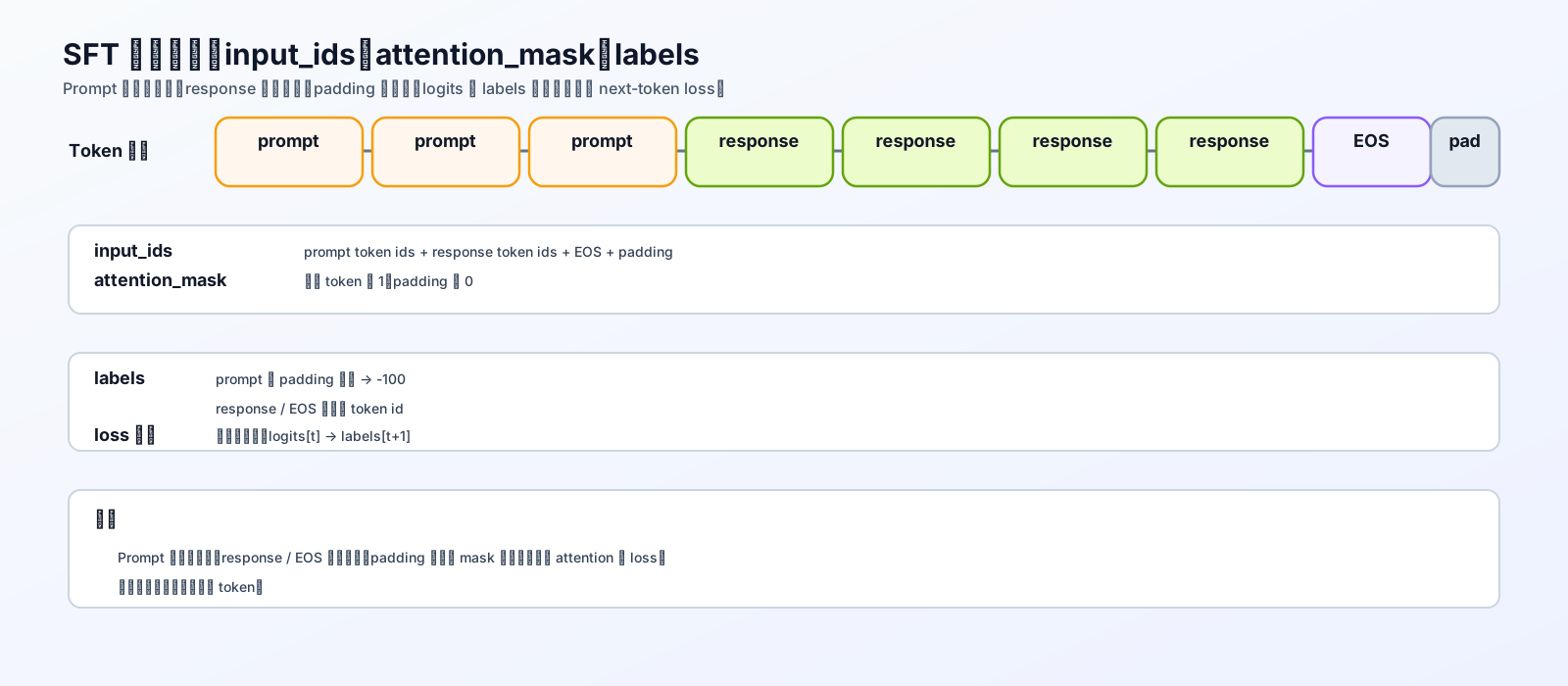
一条 SFT 样本进入模型前,要整理成 input_ids、attention_mask 和 labels。本 Step 先看序列长度与 padding 对齐,labels 的监督范围放到 Step 3。
padding 是为了让同一 batch 的序列长度一致而补的占位位置;mask 用来标记哪些位置有效、哪些位置需要忽略。
下面的表只检查序列结构;labels 的具体监督范围留到 Step 3。读表时确认真实 token 的 attention_mask 为 1、padding 位为 0;input_ids 可以包含 padding,但 padding 不应成为训练目标。
| 位置 | 0 | 1 | 2 | 3 | 4 | 5 | 6 | 7 | 8 |
|---|---|---|---|---|---|---|---|---|---|
| 语义 | prompt | prompt | prompt | response | response | response | response | EOS | padding |
input_ids | 10 | 20 | 30 | 40 | 50 | 60 | 70 | 2 | 0 |
attention_mask | 1 | 1 | 1 | 1 | 1 | 1 | 1 | 1 | 0 |
labels | 先不填 | 先不填 | 先不填 | 先不填 | 先不填 | 先不填 | 先不填 | 先不填 | 先不填 |
具体的 prompt masking 与监督 token 由 Step 3 统一确定。
Step 3:对齐 next-token loss
先记住一个位置关系:模型读到位置 t 的内容后,要预测位置 t+1 的 token。模型对词表中每个 token 给出的分数叫 logits;计算 loss 前,要把最后一个 logit 去掉,并把 labels 从第二个位置开始取,也就是 logits[..., :-1, :] 对齐 labels[..., 1:]。
交叉熵可以看成“预测错得有多严重”:先把 logits 转成概率,再查看正确目标 token 的概率;概率越低,loss 越大。Step 2 的序列中,prompt 和 padding 的 label 设为 -100,response 与可选 EOS 保留目标 token;CrossEntropyLoss(ignore_index=-100) 会跳过 -100 位置并对其余目标求平均。若传入 attention_mask,还要同步屏蔽 shift 后的 padding。
实现约束: response 至少要留下一个监督 token;如果加入 EOS,它放在 response 后面;本节构造函数采用右侧 padding。截断后没有监督 token 时,应该调大 max_len、过滤样本或报错。
下表把 label 的监督范围与 shift 后的预测位置放在一起,帮助检查 logits、目标 token 和 loss 是否对应。读表时先确认 labels=-100 决定监督范围,再确认 shift 决定 logits 与目标 token 的时间位置。
| 预测位置 | 0 | 1 | 2 | 3 | 4 | 5 | 6 | 7 |
|---|---|---|---|---|---|---|---|---|
| logit 预测的 token | 20 | 30 | 40 | 50 | 60 | 70 | 2 | 0 |
| shift 后的 label | -100 | -100 | 40 | 50 | 60 | 70 | 2 | -100 |
| 是否计入 loss | 否 | 否 | 是 | 是 | 是 | 是 | 是 | 否 |
Step 4:实现并验证 SFT 数据与 Loss
要求:请补全下方两个函数的 TODO。TODO 1–3 对应 Step 2 的数据阶段:监督 labels、截断后的有效 token 数和 padding 长度;TODO 4–5 对应 Step 3 的 loss 阶段:shift 对齐、有效监督检查和交叉熵。题目区已经给出形状保持不变的切片与 mask 骨架,请把注意力放在监督边界和 loss 对齐上。
这里仍然使用 token id 直接演示;真实工程中的 chat template 和 tokenizer 会在进入本函数前完成。完成代码后运行测试,检查样本结构和 loss 对齐。
import torch
import torch.nn as nn# 题目设计:把 prompt-response 样本转换为可验证的监督训练契约。
# TODO 依次覆盖监督范围、截断保护、padding 屏蔽和 next-token 对齐。
def build_sft_data(
prompt_ids: list[int],
response_ids: list[int],
pad_id: int = 0,
eos_id: int | None = None,
max_len: int = 16,
min_response_tokens: int = 1,
):
"""构造一条右侧 padding 的 SFT 样本。
参数:prompt_ids / response_ids 为 token id 列表;pad_id 和 eos_id
分别指定 padding 与可选 EOS;max_len 是输出固定长度;
min_response_tokens 是截断后必须保留的监督 token 数。
返回三个长度为 max_len 的 torch.long 张量:input_ids、
attention_mask 和 labels;labels 中的 -100 不参与交叉熵。
截断后有效监督 token 不足时抛出 ValueError。
"""
response_with_eos = response_ids + ([] if eos_id is None else [eos_id])
# 1. 拼接成完整序列。
input_ids = prompt_ids + response_with_eos
# ==========================================
# Prompt 部分先统一标成 ignore_index,确保只对 Response/EOS 计算损失。
# TODO 1: 构造 labels
# 规则:
# - 长度与 input_ids 相同
# - prompt 部分的 label 设置为 -100
# - response/EOS 部分的 label 保持原样
# ==========================================
# labels = ???
# ==========================================
# TODO 2: 截断(Truncation)与有效监督检查
# 规则:
# - input_ids 和 labels 使用同一个 [:max_len] 范围截断
# - 从截断后的 labels 统计有效监督 token
# - 截断后至少保留 min_response_tokens 个可监督 token
# ==========================================
input_ids = input_ids[:max_len]
labels = labels[:max_len]
# valid_supervised = sum(label != -100 for label in labels)
# if valid_supervised < min_response_tokens:
# raise ValueError(...)
# ==========================================
# TODO 3: attention mask 与填充 (Padding)
# 规则:
# - 真实 token 的 attention_mask 为 1
# - 计算 pad_len;若大于 0,再分别追加 pad_id、0 和 -100
# ==========================================
attention_mask = [1] * len(input_ids)
# pad_len = max_len - len(input_ids)
# if pad_len > 0: 追加 padding 到三个序列
return (
torch.tensor(input_ids, dtype=torch.long),
torch.tensor(attention_mask, dtype=torch.long),
torch.tensor(labels, dtype=torch.long),
)
def compute_sft_loss(logits: torch.Tensor, labels: torch.Tensor, attention_mask: torch.Tensor | None = None):
"""计算自回归 SFT 的 token-level cross entropy。
logits 的 shape 为 [batch_size, seq_len, vocab_size];labels 和
attention_mask 的 shape 为 [batch_size, seq_len]。返回标量 loss;
shift 后没有有效监督 token 时抛出 ValueError。
"""
# ==========================================
# TODO 4: 实现 Shift 错位对齐
# 将 logits 的最后一个 token 切掉
# 将 labels 的第一个 token 切掉
# 如果传入 attention_mask,也同步切掉第一个位置
# ==========================================
# shift_logits = ???
# shift_labels = ???
# if attention_mask is not None:
# shift_attention_mask = ???
# shift_labels = ???
# ==========================================
# TODO 5: 检查有效监督 token,并计算交叉熵
# 提示:loss_fct 使用 ignore_index=-100;计算前将
# shift_logits 整理为 [有效位置数, vocab_size],
# shift_labels 整理为 [有效位置数]。
# ==========================================
# if ???:
# raise ValueError(...)
# loss_fct = ???
# loss = ???
return loss# 测试设计:用固定样本验证数据契约、监督范围、shift 对齐和 padding 屏蔽。
# baseline 是中性 logits;candidate 只改变 prompt、response 或 padding 位置,
# 用 loss 是否变化来验证 labels 与 attention_mask 的监督边界。
def _build_sft_test_case():
"""构造可重复的 CPU-first SFT 测试样本。"""
prompt = [10, 20, 30]
response = [40, 50, 60, 70]
pad_id, eos_id, max_len = 0, 2, 9
tensors = build_sft_data(prompt, response, pad_id, eos_id, max_len)
return tensors, prompt, pad_id, eos_id, max_len
def _assert_sft_data_contract(tensors):
"""验证 input_ids、attention_mask 和 labels 的结构契约。"""
input_ids, attention_mask, labels = tensors
assert input_ids.tolist() == [10, 20, 30, 40, 50, 60, 70, 2, 0], "Input IDs 构造错误!"
assert attention_mask.tolist() == [1, 1, 1, 1, 1, 1, 1, 1, 0], "attention_mask 构造错误!"
assert labels.tolist() == [-100, -100, -100, 40, 50, 60, 70, 2, -100], "Labels 构造或 Padding 错误!"
def _assert_truncation_guard(prompt, pad_id, eos_id):
"""验证截断后不能丢失全部有效 response 监督。"""
try:
build_sft_data(prompt, [40], pad_id=pad_id, eos_id=eos_id, max_len=3)
except ValueError:
return
raise AssertionError("截断后没有 response token 时应该报错")
def _make_aligned_logits(labels, max_len):
"""构造一个只在有效 response 位置预测正确的 logits。"""
torch.manual_seed(42)
logits = torch.randn(1, max_len, 100)
for position, target in [(2, 40), (3, 50), (4, 60), (5, 70), (6, 2)]:
logits[0, position, target] = 50.0
return logits
def _assert_loss_alignment(tensors, max_len):
"""验证 shift 后的 logits、labels 与 attention_mask 对齐。"""
input_ids, attention_mask, labels = tensors
logits = _make_aligned_logits(labels, max_len)
loss = compute_sft_loss(logits, labels.unsqueeze(0), attention_mask.unsqueeze(0))
assert loss.item() < 0.01, f"Loss 异常偏大,可能包含了 Prompt 或 Padding 的计算!Loss = {loss.item()}"
return logits, labels.unsqueeze(0), attention_mask.unsqueeze(0)
def _assert_supervision_scope(logits, labels_batch, attention_batch):
"""验证 prompt 不监督、response 受监督、padding 被屏蔽。"""
neutral_logits = torch.zeros_like(logits)
neutral_loss = compute_sft_loss(neutral_logits, labels_batch, attention_batch)
prompt_candidate = neutral_logits.clone()
prompt_candidate[0, 0, 99] = 50.0
prompt_loss = compute_sft_loss(prompt_candidate, labels_batch, attention_batch)
assert torch.allclose(prompt_loss, neutral_loss), "Prompt 位置不应参与 loss"
response_candidate = neutral_logits.clone()
response_candidate[0, 2, 40] = 10.0
response_loss = compute_sft_loss(response_candidate, labels_batch, attention_batch)
assert response_loss < neutral_loss, "response 目标位置没有参与 loss"
labels_with_pad_target = labels_batch.clone()
labels_with_pad_target[0, -1] = 99
protected_loss = compute_sft_loss(neutral_logits, labels_with_pad_target, attention_batch)
assert torch.allclose(protected_loss, neutral_loss), "padding 目标没有被 attention_mask 屏蔽"
def test_sft_pipeline():
"""运行 CPU-first 的 SFT 机制测试。"""
try:
tensors, prompt, pad_id, eos_id, max_len = _build_sft_test_case()
_assert_sft_data_contract(tensors)
_assert_truncation_guard(prompt, pad_id, eos_id)
logits, labels_batch, attention_batch = _assert_loss_alignment(tensors, max_len)
_assert_supervision_scope(logits, labels_batch, attention_batch)
input_ids, attention_mask, labels = tensors
print(f"Input IDs : {input_ids.tolist()}")
print(f"Attention Mask : {attention_mask.tolist()}")
print(f"Labels : {labels.tolist()}")
print("✅ All Tests Passed! SFT 数据与 loss 对齐逻辑实现正确。")
except NotImplementedError:
print("请先完成 TODO 部分的代码!")
raise
except (AttributeError, NameError, TypeError, ValueError) as e:
print("代码可能未完成,导致变量未定义" if isinstance(e, NameError) else "代码可能未完成,导致了类型错误")
raise NotImplementedError("请先完成 TODO 部分的代码!") from e
except AssertionError as e:
print(f"❌ 测试失败: {e}")
raise NotImplementedError("请先完成 TODO 部分的代码!") from e
except Exception as e:
print(f"❌ 发生异常: {e}")
raise
test_sft_pipeline()🛑 STOP HERE 🛑
请先尝试自己完成代码并跑通测试。
如果你正在 Colab 中运行,并且遇到困难没有思路,可以向下滚动查看参考答案。
参考代码与解析
代码
def build_sft_data(
    prompt_ids: list[int],
    response_ids: list[int],
    pad_id: int = 0,
    eos_id: int | None = None,
    max_len: int = 16,
    min_response_tokens: int = 1,
):
    """构造一条右侧 padding 的 SFT 样本。

    参数:prompt_ids / response_ids 为 token id 列表;pad_id 和 eos_id
    指定 padding 与可选 EOS;max_len 是输出固定长度;
    min_response_tokens 是截断后必须保留的监督 token 数。

    返回三个长度为 max_len 的 torch.long 张量;labels 中的 -100 不参与交叉熵。
    截断后有效监督 token 不足 min_response_tokens 时抛出 ValueError。
    """
    response_with_eos = response_ids + ([] if eos_id is None else [eos_id])
    input_ids = prompt_ids + response_with_eos

    # TODO 1: 构造 labels
    labels = [-100] * len(prompt_ids) + response_with_eos

    # TODO 2: 截断与有效监督检查
    input_ids = input_ids[:max_len]
    labels = labels[:max_len]
    valid_supervised = sum(label != -100 for label in labels)
    if valid_supervised < min_response_tokens:
        raise ValueError("截断后没有足够的 response token 参与监督,请调大 max_len 或过滤该样本。")

    # TODO 3: attention mask 与填充
    attention_mask = [1] * len(input_ids)
    pad_len = max_len - len(input_ids)
    if pad_len > 0:
        input_ids = input_ids + [pad_id] * pad_len
        attention_mask = attention_mask + [0] * pad_len
        labels = labels + [-100] * pad_len

    return (
        torch.tensor(input_ids, dtype=torch.long),
        torch.tensor(attention_mask, dtype=torch.long),
        torch.tensor(labels, dtype=torch.long),
    )


def compute_sft_loss(logits: torch.Tensor, labels: torch.Tensor, attention_mask: torch.Tensor | None = None):
    """按 next-token 对齐规则计算忽略 padding 的交叉熵。

    logits、labels 和 attention_mask 的 shape 分别为 [B, T, V]、
    [B, T] 和可选的 [B, T];返回标量 loss。
    """
    # 预测位置向左对齐一位,对应 next-token prediction。
    # TODO 4: 实现 Shift 错位对齐
    shift_logits = logits[..., :-1, :].contiguous()
    shift_labels = labels[..., 1:].contiguous()

    if attention_mask is not None:
        shift_attention_mask = attention_mask[..., 1:].contiguous()
        shift_labels = shift_labels.masked_fill(shift_attention_mask == 0, -100)

    # TODO 5: 检查有效监督 token 并计算交叉熵
    if not torch.any(shift_labels != -100):
        raise ValueError("当前 batch 没有任何有效监督 token,请检查 labels、padding 或截断策略。")

    loss_fct = nn.CrossEntropyLoss(ignore_index=-100)
    shift_logits = shift_logits.view(-1, shift_logits.size(-1))
    shift_labels = shift_labels.view(-1)
    loss = loss_fct(shift_logits, shift_labels)

    return loss
解析
以下内容按题目区 TODO 1–5 展开,围绕 SFT 的数据构造与 loss 对齐说明每一步的原因。
1. TODO 1: 构造 labels
- 实现方式:
labels = [-100] * len(prompt_ids) + response_with_eos - 核心思想:Prompt 部分全部设为 -100(忽略),Response 和可选 EOS 保持原 token id。
- Loss Masking 原理:PyTorch 的
CrossEntropyLoss中,ignore_index=-100的位置不会产生梯度,也不会计入损失。 - 为什么要 mask Prompt:SFT 的目标是让模型学会“回答”,而不是“背诵提问”。如果 Prompt 也参与损失计算,模型会浪费容量去记忆人类的提问方式。
2. TODO 2: 截断与有效监督检查
- 截断逻辑:
input_ids = input_ids[:max_len],labels = labels[:max_len]。 - 监督检查:截断后至少要保留
min_response_tokens个非-100的 label,否则样本没有足够的训练信号。 - 工程细节:真实微调里如果 prompt 太长、response 被截没,应该调大
max_len、缩短 prompt,或直接过滤样本。
3. TODO 3: attention mask 与填充
- attention mask:真实 token 设为
1,padding 设为0。 - 填充逻辑:
input_ids填充pad_id(通常是 tokenizer 的 pad token)attention_mask填充0labels填充-100(确保 Padding 位置不产生梯度)
- 区别:
attention_mask管模型看不看 padding,labels=-100管 loss 学不学这个位置。
4. TODO 4: Shift 错位对齐
- 实现方式:python
shift_logits = logits[..., :-1, :].contiguous() shift_labels = labels[..., 1:].contiguous() - 自回归原理:模型用前
个 token 预测第 个 token。 - 对齐逻辑:
logits[0]预测的是labels[1]logits[1]预测的是labels[2]- 因此需要切掉
logits的最后一个位置,切掉labels的第一个位置
- attention mask 二次保护:如果传入
attention_mask,shift 后的 padding label 会再次被设为-100,避免数据构造错误漏进 loss。
5. TODO 5: 展平并计算交叉熵
- 实现方式:python
loss_fct = nn.CrossEntropyLoss(ignore_index=-100) shift_logits = shift_logits.view(-1, shift_logits.size(-1)) shift_labels = shift_labels.view(-1) loss = loss_fct(shift_logits, shift_labels) - 形状要求:
CrossEntropyLoss期望 logits 形状为[N, C],labels 形状为[N]。 - 有效监督检查:如果整个 batch 的 labels 都是
-100,loss 没有意义,应该显式报错。 - 数据构造:真实工程中通常在 tokenizer / DataLoader / collator 里批量生成这三件套,而不是逐条手写。
测试区还额外检查了三件事:改变 prompt 位置的分数不会改变 loss,改变 response 目标位置会改变 loss,以及给 padding 错写目标 token 后仍会被 attention_mask 屏蔽。它们验证的是 mask 规则真正参与了 loss 计算,而不只是检查张量形状。
相关阅读
完成这个最小训练循环后,可以继续看 LoRA 如何改变参数更新路径,再进入端到端微调和性能证据。