Chapters
On this page
Quadruped series
Explore quadruped modeling, control, reinforcement learning, and multimodal decision-making through projects covering single-joint PD control, full-body gaits, PPO policy training, browser simulation, and language and vision feedback loops.
🗂️ Project overview
| Category | Project | Description |
|---|---|---|
| Chapter-based course | Build a quadruped from scratch | Eight chapters covering MuJoCo actuators, forward and inverse kinematics, Pupper modeling, open-loop gaits, PPO training, LLM control, and visual ball tracking |
| Browser simulation and terrain experiments | Petoi Quaddle walking simulation | Control a four-servo robot in the browser and explore closed-loop linkage adaptation, residual PPO training, and terrain experiments |
| Language and vision feedback | Petoi Quaddle VLA navigation training | Navigate using language instructions and camera images: SmolVLA decisions with low-level lookup-table CPG control on a 10GB GPU (L2 navigation 90%, L3 obstacle avoidance 80%, L4 composition 85%) |
| Cross-simulator validation | Sim2Sim validation | Policy transfer and consistency checks across physics engines (in development) |
| Hardware deployment | Sim2Real guide | Calibration, safety protections, and deployment from simulation policies to quadruped hardware (in development) |
🎬 Demos
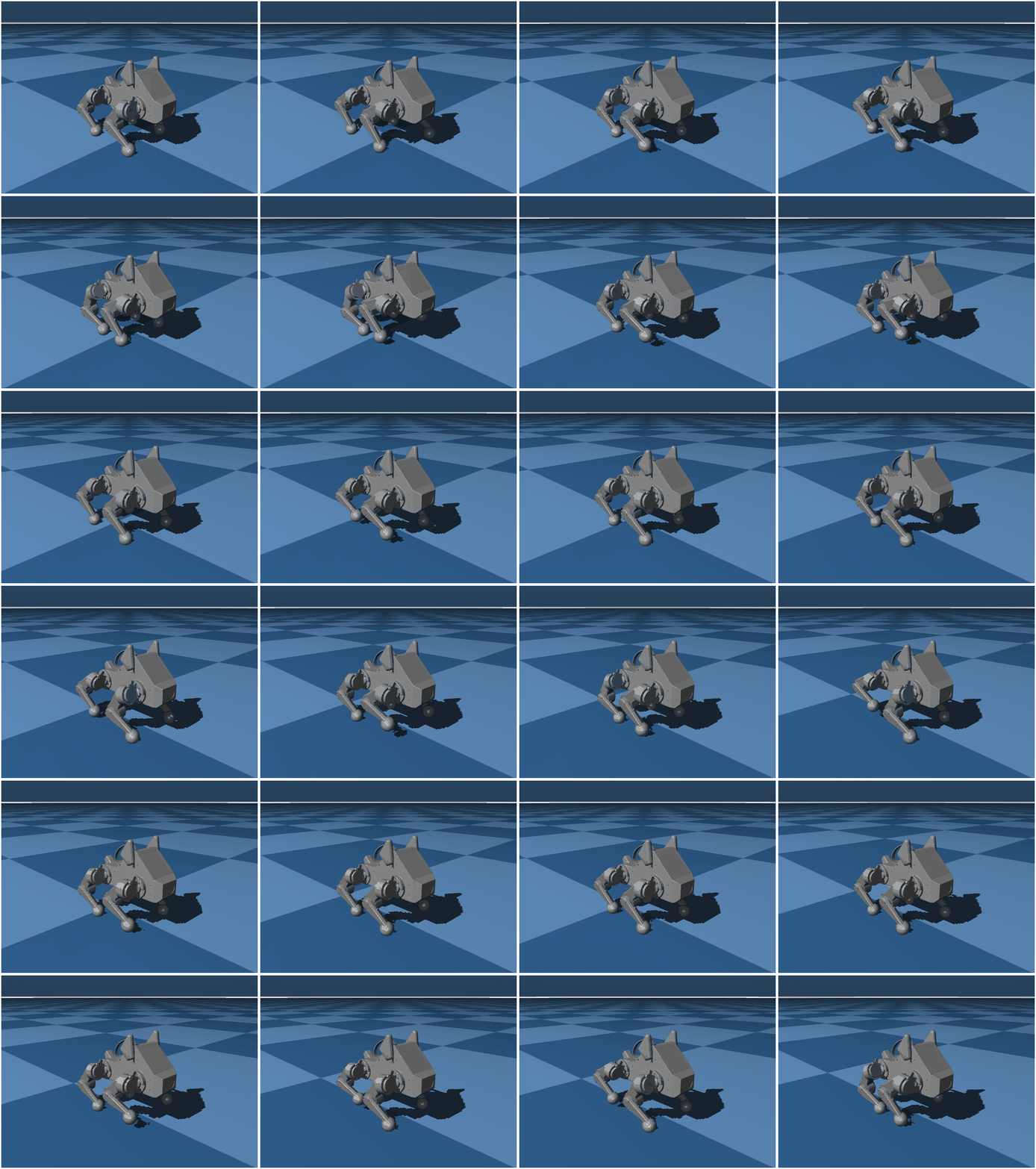 Build a quadruped from scratch CS123 simulation · Walk / Pace / Bound / Gallop comparison | 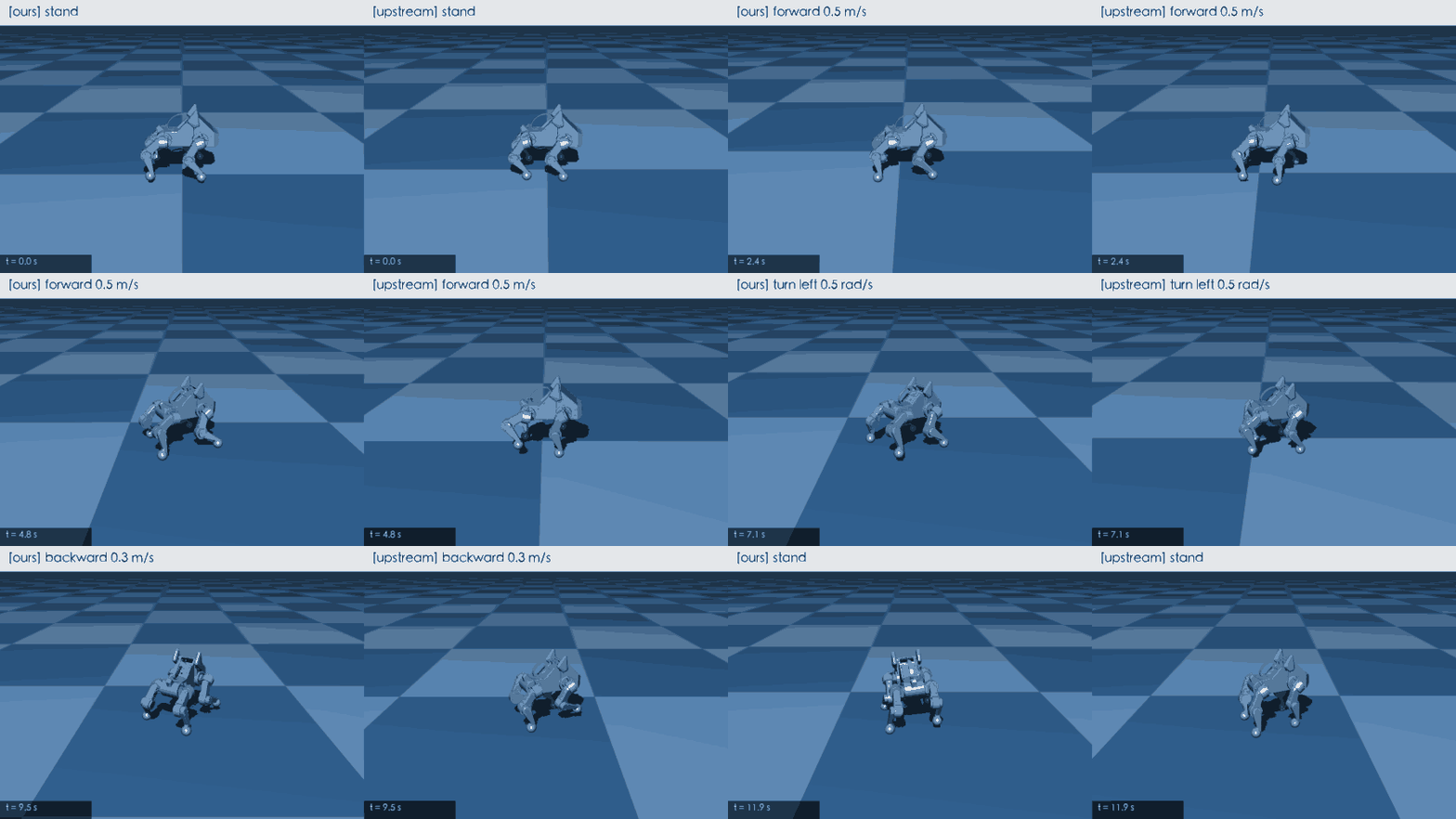 PPO gait policy training MuJoCo + Stable-Baselines3 · Closed-loop balance and velocity tracking |
|---|
Build a quadruped from scratch · Chapter demos
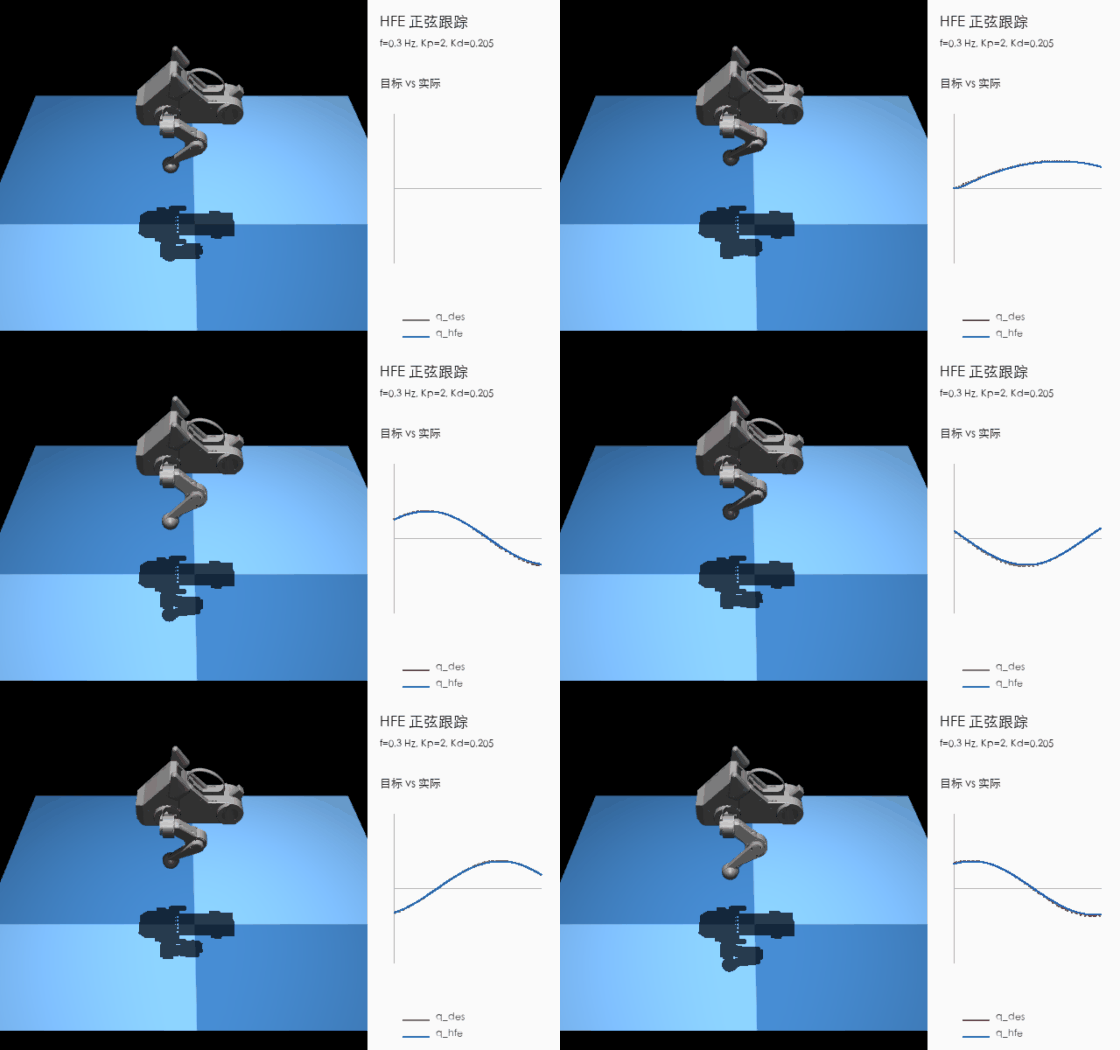 1. Actuators and PD control Joint position feedback and 0.3 Hz sine tracking | 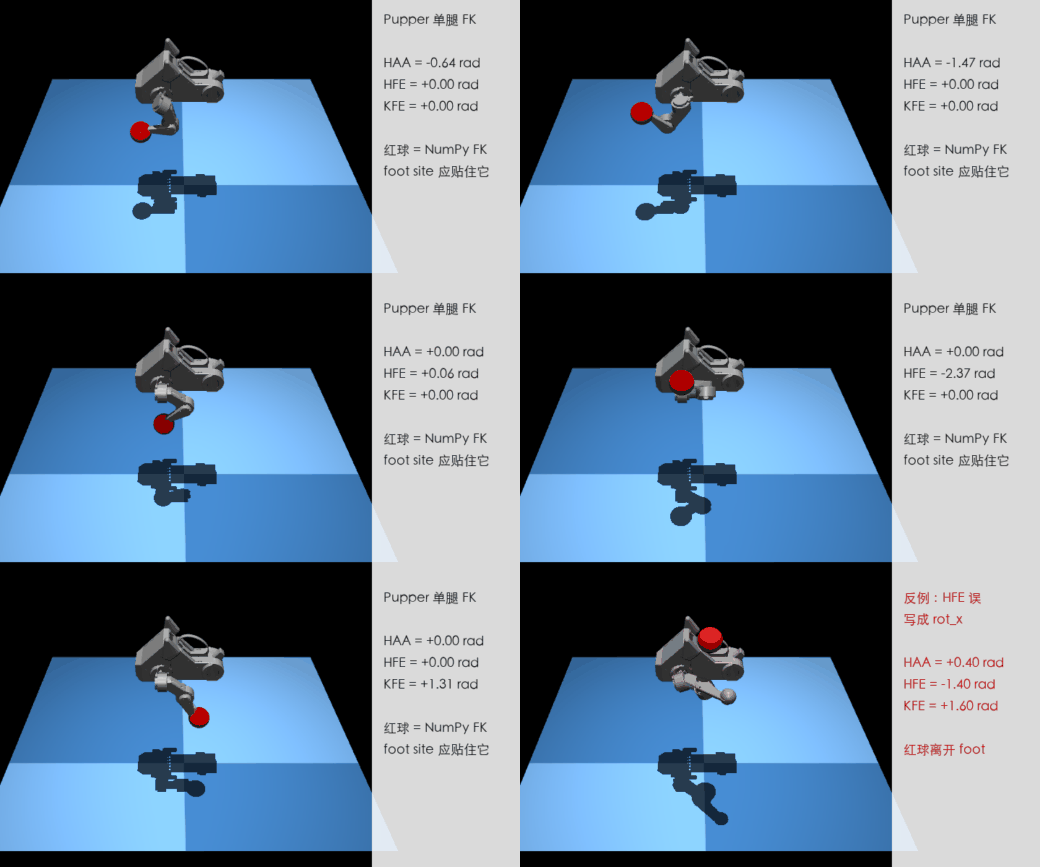 2. Forward kinematics Three-DoF leg transforms and joint sweeps | 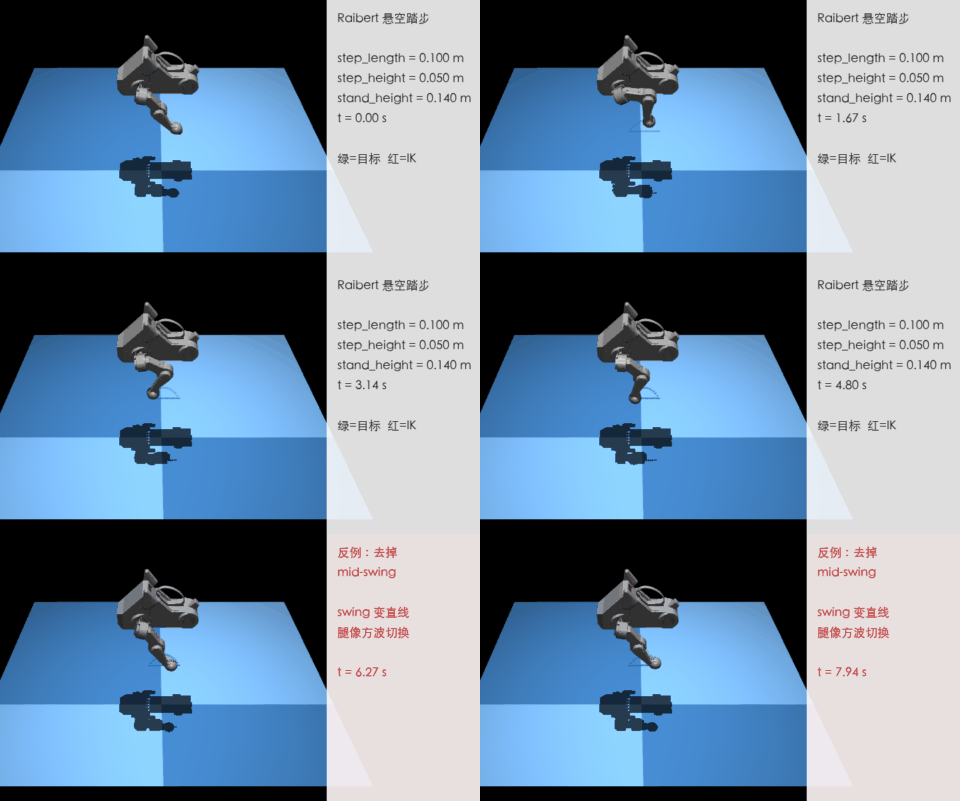 3. Inverse kinematics Foot trajectory inversion and suspended Raibert stepping |
|---|---|---|
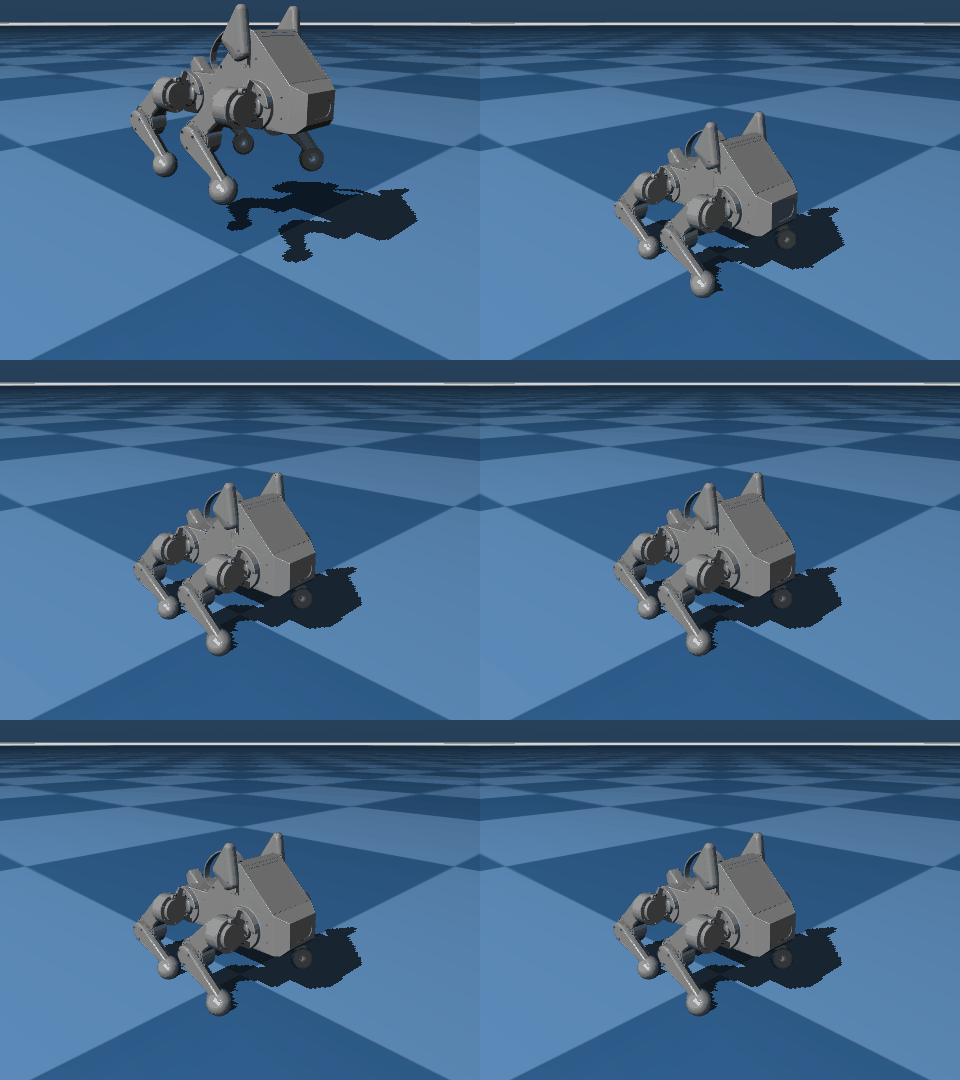 4. Build a quadruped model Pupper v3 MJCF, floating base, and stable landing | 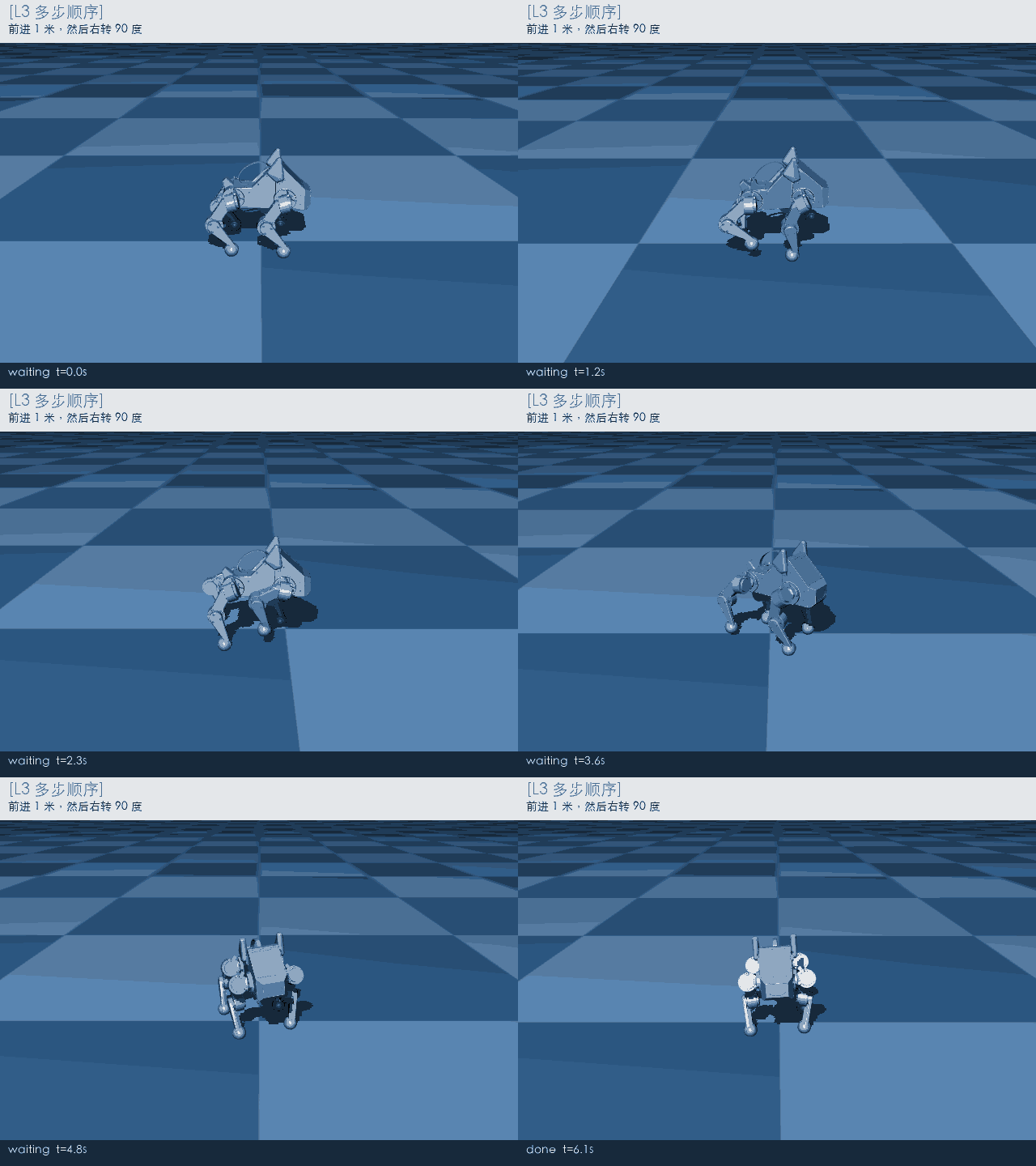 7. Language control LLM function calling for multi-step action sequences | 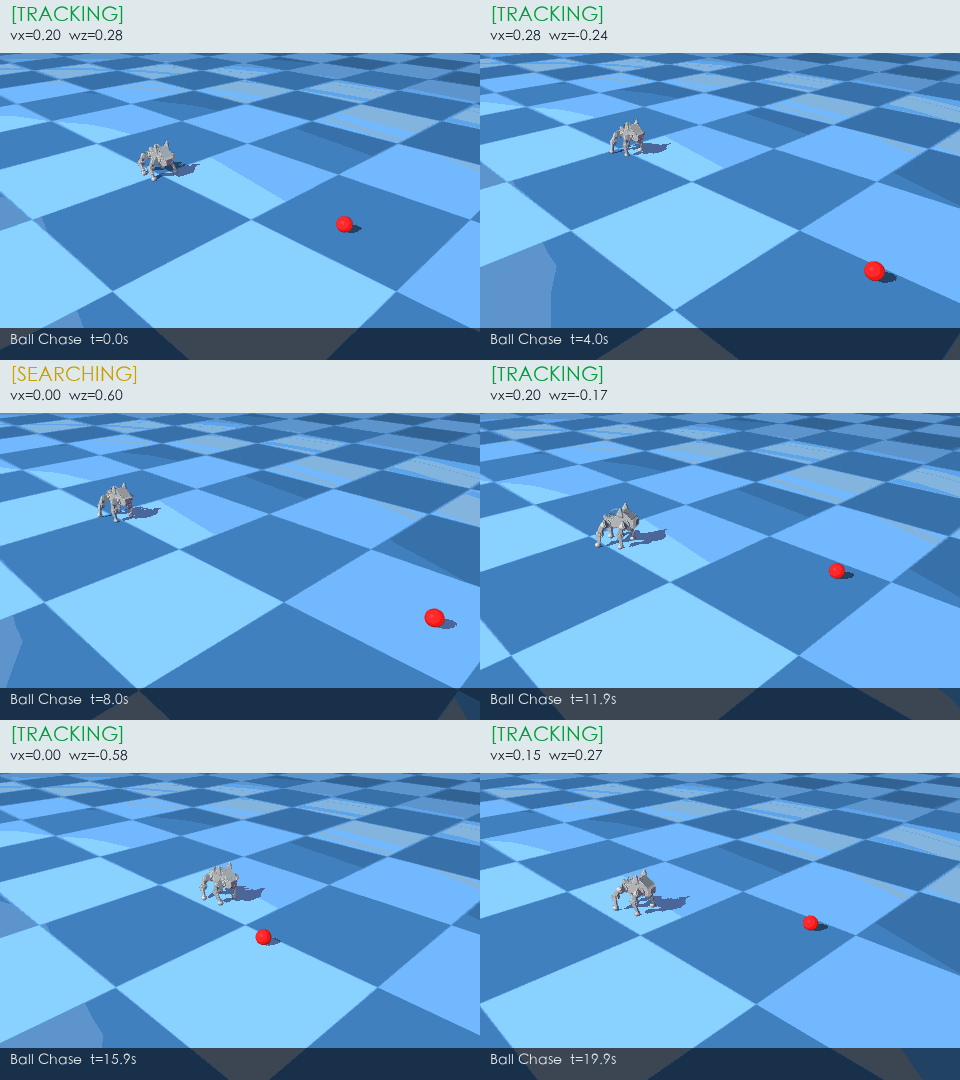 8. Visual perception Onboard camera detection and ball tracking with an RL gait |
Petoi Quaddle walking simulation · Scene previews
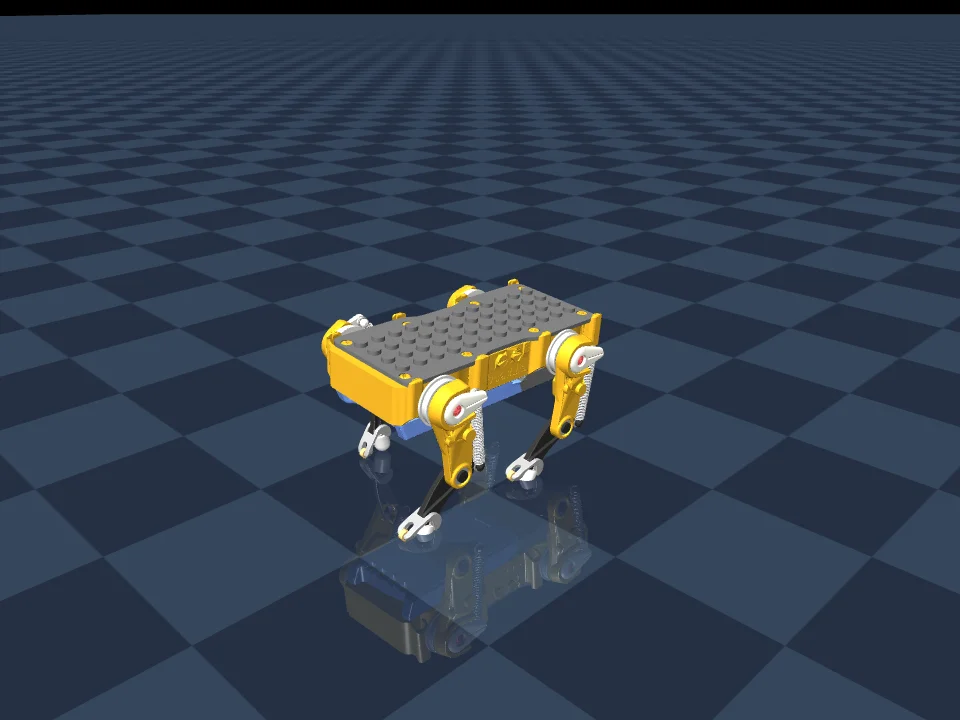 Quaddle introduction: browser simulation and residual PPO Run MuJoCo WebAssembly in the browser to walk, stand, and pause | 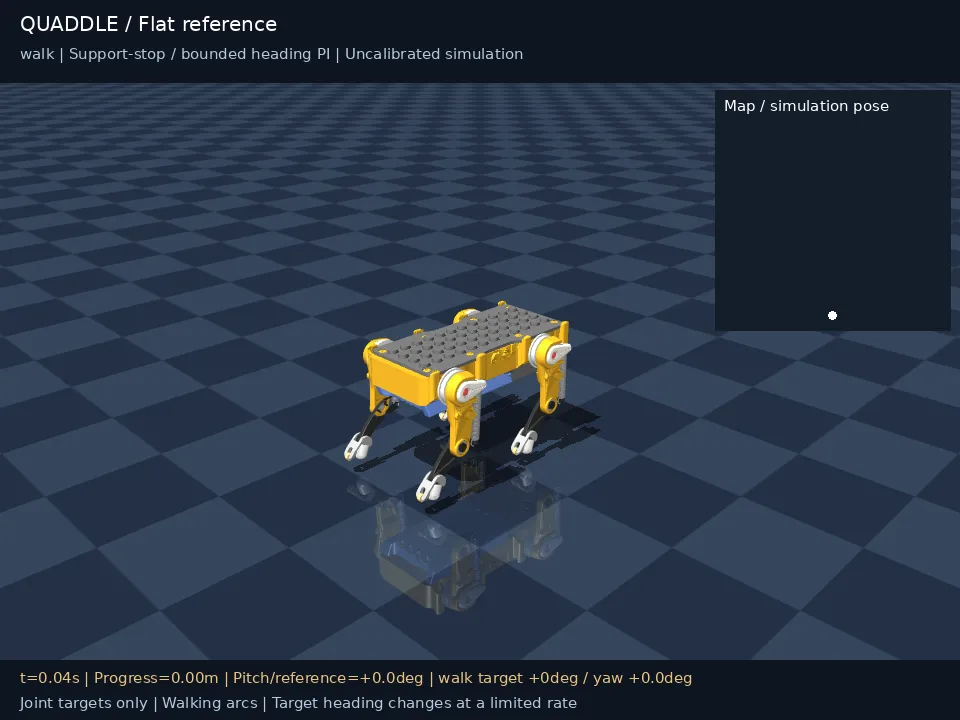 Quaddle experiments: results and failure analysis Recorded tests and analysis of stopping, turning, slopes, steps, and uneven terrain |
|---|
Petoi Quaddle VLA navigation · Previews
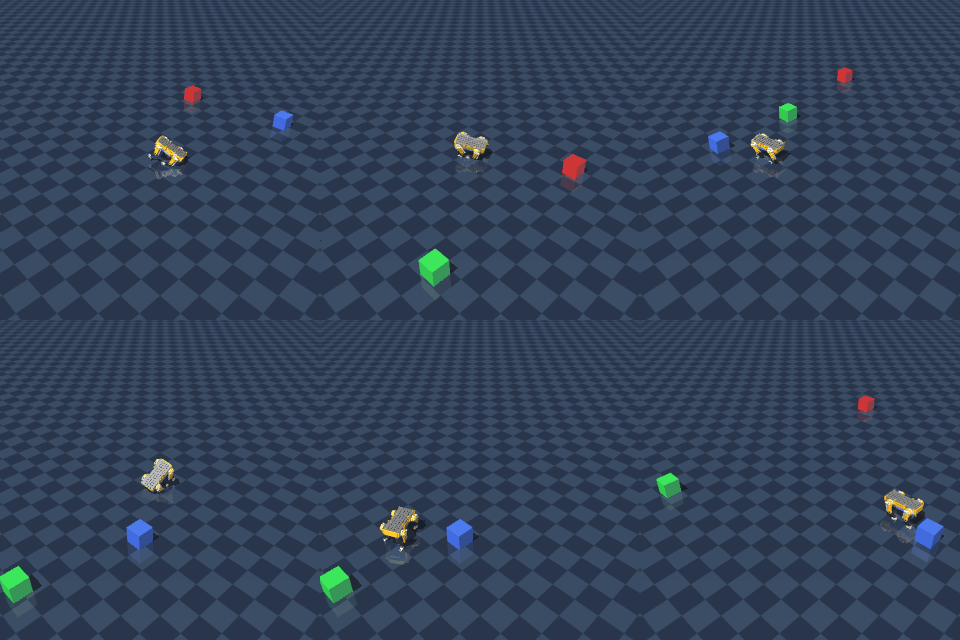 VLA navigation: train a policy on a 10GB GPU SmolVLA with temporal ensembling, 90% over 20 episodes of navigating to a red block | 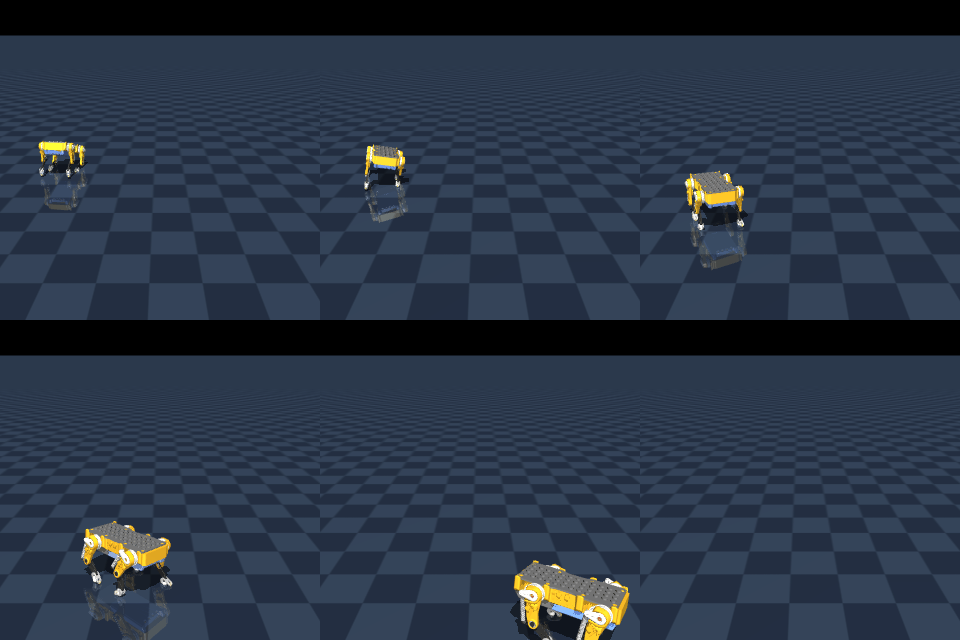 Low-level control baseline (without VLA) Open-loop lookup-table CPG gait, upright at 69.8 mm/s |
|---|
🧭 Course outline
1. Build a quadruped from scratch (CS123 simulation)
A Chinese simulation course inspired by Stanford CS123, covering control, kinematics, modeling, gaits, reinforcement learning, language, and vision without requiring physical hardware. The first three chapters also include browser experiments.
| Chapter | Topics | Browser experiment |
|---|---|---|
| 0. Course overview | Scope, prerequisites, environment requirements, and a six-week study plan | — |
| 1. Actuators and PD control | Motor models, gear ratios, bang-bang control, and joint PD/PID responses | PD experiment |
| 2. Forward kinematics | Rigid transforms, homogeneous matrices, DH / URDF conventions, and three-DoF leg FK | FK experiment |
| 3. Inverse kinematics | Geometric solutions, Jacobian iteration, and foot trajectory tracking | IK experiment |
| 4. Build a quadruped model | Pupper v3 URDF/MJCF tree, floating base, and standing parameter sweeps | — |
| 5. Gait control | Phase scheduling, swing and stance trajectories, and Trot / Walk / Pace / Bound / Gallop | — |
| 6. Policy training | Gymnasium environments, exponential velocity rewards, and PPO gait training | — |
| 7. Language control | Tool APIs, function calling / ReAct loops, and voice commands | — |
| 8. Visual perception | Onboard cameras, HSV detection, pixel-to-direction mapping, and closed-loop ball tracking | — |
2. Petoi Quaddle walking simulation
Based on Petoi's official Quaddle model, with MuJoCo closed-loop linkage constraints, passive torsion springs, and contact parameters for real-time browser interaction.
| Chapter | Topics |
|---|---|
| Introduction: make a quadruped walk | Real-time MuJoCo in the browser, local mjpython, an infinite ground plane, and a 32-dimensional residual PPO training workflow |
| Experiments: results and failure analysis | Recorded comparisons and reproduction commands for stopping and turning, 3°/5° slopes, 4 mm descents, 2 mm ascents, uneven ground, and candidate running policies |
3. Petoi Quaddle VLA navigation training
Build a VLA pipeline in the Quaddle introduction environment: given "walk to the red block," the robot turns, distinguishes colors, approaches the target, and stops. SmolVLA 450M provides high-level decisions, with lookup-table CPG control and a 10GB GPU memory budget.
| Chapter | Topics |
|---|---|
| VLA navigation: train a policy on a 10GB GPU | Data collection, SmolVLA fine-tuning, and closed-loop evaluation; L2 navigation demos (90%) and capability limits |
| Experiment notes and v5 roadmap | v4/v5/v6 experiments, including negative results; temporal ensembling and 8.2x faster training |
| Implementation status and plans | L1–L4 evaluation progress, task decomposition (L3 obstacle avoidance 80%, L4 composition 85%), and hardware handoff plans |