
Debates One and Two: Language as Opium, and the Bitter Lesson
A Fork in the Foundations of Intelligence
Looking back from 2024, a clear fork has emerged in AI research.
The language camp holds that the core of intelligence is symbolic reasoning and language understanding. LLMs are the right path toward AGI (Artificial General Intelligence: an AI system that matches or exceeds human performance across all cognitive tasks, as opposed to "narrow AI" that handles only specific tasks), and the Scaling Law (the empirical regularity that model performance improves predictably with more parameters, data, and compute, first systematically studied by Kaplan et al. 2020) is the answer. The success of GPT-4, Claude, and Gemini keeps validating this path. Across Silicon Valley, the majority of resources at OpenAI, Google, Anthropic, and Meta are accelerating down this road.
The world model camp holds that the core of intelligence is prediction and causal understanding of the physical world. Language is a highly compressed artifact of human knowledge: a tool for communication, not a tool for thought. A genuine agent must be able to act, predict, and plan in the physical world, and this is precisely where LLMs are blind. Saining Xie (computer vision researcher at NYU, co-founder and CSO of AMI Labs, formerly at Meta AI Research leading ResNeXt and ConvNeXt, now focused on embodied intelligence grounded in physical-world perception), Yann LeCun, and researchers from the robotics and reinforcement learning communities are swimming against this current.
The central tension of this debate can be stated in one sentence:
Language models predict the next token. World models predict the next state.
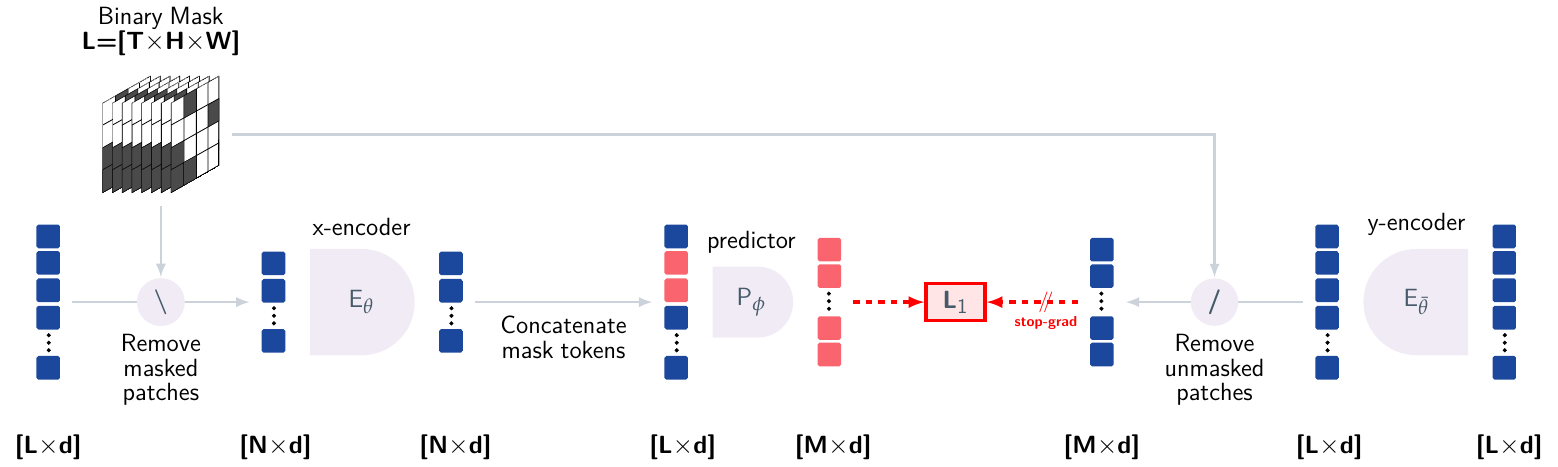
It sounds like a single word has been swapped. But behind it lie two fundamentally different conceptions of intelligence: what "understanding" means, and where AI is ultimately headed.
Debate One: Is Language a Tool, or "Opium"?
Saining Xie's Core Argument
Saining Xie has a passage that is one of the most charged statements in this entire debate:
"Language is actually a kind of 'poison', or you could call it 'opium'. The more language you add, the happier you feel. It's useful, but it's a shortcut. If you keep taking opium you'll be ruined. If you keep leaning on a crutch, you'll never train the muscles in your legs."
The logic of this analogy needs unpacking.
Language is the product of thousands of years of human civilization, a highly compressed abstract knowledge structure. When you say "the cup fell and broke," you have already discarded all of the physical process: gravitational acceleration, the stress distribution at impact, the trajectory of the fragments, the brittleness coefficient of the material. None of that physical information appears anywhere in the sentence.
For an agent that needs to act in the physical world, those missing details are precisely what matters most. An industrial robotic arm needs torque values. A surgical robot needs tissue deformation data. An autonomous vehicle needs road surface friction coefficients. Language cannot express any of these.
Xie divides the learning space of AI systems into two layers:
- X space: the physical world itself, continuous, high-dimensional, noisy sensor signals
- Y space: supervisory information, the labels humans assign, the text they write, the categories they annotate
His central indictment is that LLMs are forever confined to Y space. They learn how humans describe the world, not the world itself. This is not a methodological limitation, it is a fundamental constraint of data modality.
This same limitation is also the source of the LLM's success. Different text tasks look wildly different on the surface (novels, papers, code, chat, math problems), but the mechanism that generates them is highly shared: the complex physical world is first understood and compressed by the human brain, then re-expressed as language. That shared "world to brain to language to token" pathway is what lets an LLM inherit thousands of years of accumulated human knowledge just by learning in Y space, arguably one of the deepest reasons foundation models succeed at all. But the same pathway also sets its ceiling: whatever information the brain discards while compressing the world (torque, material deformation, friction coefficients, and the like) never makes it into language, so the LLM can never learn it either. The brain is both the reason it wins and the reason it loses.
He has an even more direct claim: language contaminates vision. Visual systems process continuous, high-dimensional, noise-filled physical signals, while language is discrete and symbolic. When you force a vision model to express its "understanding" through language, you have already compressed its representation space into an ill-fitting container.
📖 Representation learning: the practice of having a model automatically learn an internal representation from raw data, rather than hand-designing features. One of the core goals of world models is to learn a representation of the physical world that can support prediction and planning. That representation should live in X space, not Y space.
Counterarguments: The Language Camp's Strongest Case
The language camp does not accept this criticism quietly. They have several forceful replies.
First, GPT-4 can do physical reasoning, and that is understanding, not mere description. Ask GPT-4 to explain why a stick looks bent when submerged in water, and it gives the refractive index explanation. Ask it to predict the forces on an object, and it derives the answer from Newton's laws. If that does not count as understanding physics, what does?
Second, humans also think in language. The sentence "the cup fell and broke" is meaningful precisely because the speaker has physical intuitions behind it, intuitions built from countless real experiences. Language and physical understanding are not opposites. They are symbiotic. Humans use language to transmit knowledge, to reason, and to plan. If language does not "ruin" humans, why should it ruin AI?
Third, Scaling Laws remain effective on physical understanding. On physical reasoning benchmarks such as BIG-Bench Physical Intuition (the physical intuition subset of the Beyond the Imitation Game Benchmark, which evaluates language models on everyday physical scenarios including object motion, gravity, and collisions), larger models consistently perform better. The trend shows no sign of leveling off. If language is a crutch, why does leaning on it harder keep producing stronger results?
For You to Consider (Debate One)
Do you believe LLMs genuinely "understand" the physical world, or are they performing sophisticated pattern matching? Is there a principled distinction between the two, and does that distinction matter?
If a system performs indistinguishably from genuine understanding on every physical reasoning test we can devise, do we still have grounds to insist it is "merely matching patterns"?
Debate Two: What Does the Bitter Lesson Actually Say?
Sutton's Original Argument
In 2019, Richard Sutton published a short essay, The Bitter Lesson. It is brief, but it triggered one of the most enduring debates in AI.
The core claim:
Human domain knowledge, however clever it seems, is repeatedly surpassed by "simpler, more general methods that leverage computation."
He marshals historical evidence. Chess: Deep Blue encoded enormous amounts of chess expertise. AlphaZero discarded all of it, relying only on self-play and neural networks, and defeated Deep Blue's successors. Go: Humans spent decades studying joseki, tesuji, and shape, then AlphaGo combined supervised and reinforcement learning to surpass every human player. Speech recognition: Linguists spent decades building phoneme models, formant models, and acoustic models, all ultimately replaced by end-to-end neural networks. Image classification: Hand-crafted features like SIFT and HOG were eliminated by AlexNet's end-to-end learning.
Sutton's conclusion: this is the bitter lesson. Researchers make the same mistake again and again, hard-coding human knowledge into systems, only to be overtaken by simpler, more general methods. The right direction is to reduce human intervention and let computation and learning do the work.
Xie's Counter-Reading
Here is where the argument becomes most interesting. Xie does not dispute the Bitter Lesson. What he disputes is using it to endorse LLMs:
"LLMs fall far short of the Bitter Lesson. In a certain sense, LLMs are anti-Bitter Lesson."
The logic runs as follows: the Bitter Lesson calls for reducing hand-crafted features and rules, relying more on search and learning. But language itself is an extraordinarily sophisticated human artifact.
When you train an LLM on Common Crawl (a publicly available dataset that continuously crawls web pages and contains text from billions of pages, one of the primary raw data sources for training large language models like GPT and LLaMA), you are not feeding it "raw world data." You are feeding it the language-compressed wisdom of thousands of years of human civilization: philosophy, science, history, literature, law, and conversation. This is an extremely well-disguised inductive bias.
📖 Inductive bias: the set of assumptions a machine learning model relies on to generalize beyond its training data, narrowing the hypothesis space. For example, the inductive bias of a CNN is that local features matter more than global ones and that features are translation-invariant. An LLM trained on language data carries the inductive bias that "the world can be adequately described in human language." Xie's critique is directed precisely at this assumption.
You are not "letting the model discover patterns on its own." You are saying: "All the patterns that clever humans have ever worked out are right here. Absorb them."
This is the exact opposite of AlphaZero discarding chess expertise. AlphaZero genuinely "discovers" the rules of Go on its own, starting from X space. LLMs "absorb" all the patterns humans have already discovered, starting from Y space.
The extended implication: the Scaling Law for language models may contain "slack." A model does not need to genuinely understand the world to answer questions about it, much like a high-scoring test-taker who may simply have a strong memory rather than deep comprehension. The Scaling Law for world models will look different: the model faces raw physical signals, with no human pre-digestion, and must truly "understand" to succeed.
📖 Out-of-Distribution (OOD): a model trained on one data distribution will experience sharply degraded reliability when tested on inputs outside that distribution. This is the canonical test for whether a model genuinely understands or merely memorizes, and it is a key reason why the world model camp argues that LLM Scaling contains slack.
Counterarguments: Why "Absorbing Human Knowledge" Does Not Mean Anti-Bitter Lesson
The Bitter Lesson objects to hand-crafted features and rules, not to using data that humans have accumulated. Language data is not "rules". It is "examples." Learning from knowledge embedded in human language is methodologically no different from learning from a database of chess games. Did AlphaZero not use the rules of Go, a human invention, as its environment? Those rules are also human knowledge.
Seen this way, LLMs are actually the most thoroughgoing embodiment of the Bitter Lesson's spirit: discard hand-crafted features, make everything end-to-end learning. The only difference is that this time the "end" is language, not pixels.
For You to Consider (Debate Two)
The spirit of the Bitter Lesson is "trust computation and learning, distrust hand-crafted rules." Did LLMs follow that spirit, or violate it?
A sharper version: if one day a world model is surpassed by some "simpler, more general" method, just as Deep Blue was surpassed by AlphaZero, would you call that the world model's Bitter Lesson moment? Or could the Bitter Lesson itself have its own Bitter Lesson?