外观

第8章 Element-Wise:逐元素算子
本章导读
在第 1 篇中,我们以向量加法为例跑通了基准测试与性能剖析的全流程。进入算子实战的第一站,我们依然聚焦于看似最简单的加法运算
C[i] = A[i] + B[i],但这次的核心命题转变为:当我们手里有了一个能跑通的正确基线后,如何系统性地判断下一步值得改什么?改动之后又如何科学地决定该保留还是回退?本章我们将分别沿着 HIP 与 Triton 两条路线展开优化探索。你将学习到如何通过受控实验逐一检验“相邻访存连续性”、“单线程循环工作量”与“向量化加载(float4)”对性能的真实影响;当遇到没有加速甚至反常变慢的尝试时,学会坦然记录并作出理性的工程决策。第 4–7 章建立的计时基准、Trace 分析与 Roofline 模型是本章的基石;文中的具体语法可按需随时查阅附录。
你可以先阅读两条路线共通的数学定义与数据流动画,再根据技术背景选择对应的实现入口:
阅读路线与前置知识
| 阅读路线 | 推荐起点 |
|---|---|
| 第一次接触 GPU 算子编程 | 建议先阅读附录 D:编程范式,建立基本图景后回到 8.1 节 |
| 倾向底层控制的 HIP 路线 | 阅读 8.1–8.3 节公共基础,在实现节选择 HIP 标签,最后阅读跨路线总结 |
| 倾向现代分块抽象的 Triton 路线 | 阅读 8.1–8.3 节公共基础,在实现节选择 Triton 标签,最后阅读跨路线总结 |
8.1 逐元素算子的数据依赖
8.1.1 输出之间的独立性
先看这个算子的数据依赖:一个输出需要哪些输入?计算它时,是否必须等待其他输出?
向量加法(Vector Add)的数学定义是:
计算 C[3] 时,只需读取 A[3] 与 B[3] 并相加,不需要等待 C[0]、C[1] 或其他位置的结果。
因此,不同输出之间互不依赖。每个位置的计算都可以看作一项独立任务。
8.1 语义层 · Element-Wise位置 i 独立计算 C[i] = A[i] + B[i]
位置 0:只读自己的两个输入位置 0 只读取 A[0]=2 与 B[0]=7,得到 C[0]=9,其他位置不受影响。
算法过程示意 · 数字定位到该步完成状态,可拖动进度或播放;动画速度不代表 GPU 耗时。
图 8.1 Vector Add 的逐元素依赖:当前位置只读取对应的两个输入位置。
图 8.1 每一步只高亮同一列的 A[i]、B[i] 与 C[i],用来说明一个输出依赖哪些输入。实际程序可以把不同位置分给多个线程并行处理,也可以让一个线程处理多个位置。计算任务最终由 GPU 的计算单元(CU)执行,任务数量不等于 CU 数量;动画的逐列展示也不代表真实执行顺序。
现代深度学习中大量的核心算子都属于这种逐元素算子(Element-Wise Operators):
| 算子 | 单个输出的表达式 | Y[i] 依赖什么 |
|---|---|---|
| Add(加法) | Y[i] = A[i] + B[i] | 仅依赖同索引的 A[i] 与 B[i] |
| ReLU(激活) | Y[i] = max(X[i], 0) | 仅依赖同索引的 X[i] |
| Scale & Bias(缩放平移) | Y[i] = alpha * X[i] + beta | 仅依赖 X[i] 与全局常量标量 |
| Clamp(截断) | Y[i] = min(max(X[i], low), high) | 仅依赖 X[i] 与常量上下界 |
这些算子的共同点是:计算一个输出不需要其他输出的结果。程序可以通过索引公式与启动配置安排数据分工,再由硬件调度执行。同样的数学公式可以采用不同分工,后面的实验会比较这些选择对时间的影响。
8.1.2 HIP 与 Triton 的实现视角
虽然数学语义相同,但 HIP 与 Triton 采用了两种截然不同的抽象视角来把这项任务分工给硬件:
- HIP 采用“线程主导”视角(Thread-centric):代码描述的是单个线程的行为——“我是第几号线程,我该计算哪一个下标
,我把对应元素读进来、相加、并写回”; - Triton 采用“分块主导”视角(Block/Tile-centric):代码描述的是一组连续数据的集合行为——“我是一个计算实例(Program),我圈定一段逻辑索引范围,整体加载这组数据张量、执行向量加法并整体写回”。
如果你希望进一步厘清 Thread 与 Program、Block 与 Tile 的概念映射,请随时参考附录 D:HIP 与 Triton 的编程范式。
8.1.3 与归约算子的区别
为了更深刻地理解逐元素算子的特性,我们可以对比另一种截然相反的数据流动模式——归约(Reduction)。
求和归约的单个输出需要汇总全部输入(
因此请记住:“输入输出形状一致”并不等于逐元素算子。逐元素算子的本质边界在于:任意输出位置
8.2 固定数学语义与正确性标准
8.2.1 四元素示例
我们用一个仅包含 4 个元素的小数组作为微型示范:
text
A = [2, -1, 4, 3]
B = [7,  3, -1, 2]
按照逐位置相加的规则:
text
C[0] = 2  + 7  = 9
C[1] = -1 + 3  = 2
C[2] = 4  + -1 = 3
C[3] = 3  + 2  = 5

C = [9, 2, 3, 5]
这个微型算例涵盖了该算子的全部数学逻辑。当我们将数组规模扩大到几千万个元素时,底层数学运算并未发生任何变化,改变的仅仅是我们如何在物理芯片上组织并发访存。
8.2.2 参考实现与检查条件
在优化过程中,“快但算错”没有任何意义。本章配套测试体系为 HIP 与 Triton 制定了完全统一的正确性红线:
| 项目 | 固定方式 |
|---|---|
| 数学语义 | C[i] = A[i] + B[i] |
| 数据类型 | 32 位浮点数(FP32) |
| 输入 | 用同一确定性整数公式生成,再转成 FP32 |
| 参考结果 | CPU 逐元素执行同一个 FP32 加法 |
| 边界 | 覆盖小于 wavefront、刚好等于 block、比 block 多 1、不能被 4 整除等长度 |
| 正确性 | 正式计时前检查一次,计时后再检查一次 |
| 计时范围 | GPU event 包围一次 kernel 提交,不含分配、输入生成与 Host-to-Device 拷贝 |
为什么要测试非整除长度?例如,把
这里的线程数量取决于映射方式。后面的 grid-stride 循环与四元素分组需要按各自的索引检查尾部;Triton 的 mask 则标记逻辑元素位置,3 个有效位置不能直接理解成 3 个线程。无论怎样分工,都需要阻止越界读写。
Triton 测试脚本用 PyTorch 在 CPU 上计算参考结果,host_a 与 host_b 是两组输入:
python
reference = host_a + host_b两条路线都逐个核对输出,要求结果有限、绝对误差不超过 1e-6。通过这些检查后,才比较运行时间。
8.2.3 非整除长度的边界
处理尾部边界时,两种路线展现了各自的表达习惯:
- HIP 初版用
if (index < size)保护单个元素的读写;使用循环的版本,则在每次迭代时检查下标; - Triton 用张量掩码(Mask)
mask = offsets < size标记有效位置,并将它传给加载和写回操作。
无论采用哪种写法,都必须同时覆盖读操作与写操作的边界防护。
8.3 建立成本模型和瓶颈假设
8.3.1 逻辑计算量与数据量
针对 FP32 单精度下的单元素向量加法,我们来数一数最理想情况下的逻辑开销:
| 动作 | 数量 | 逻辑字节 |
|---|---|---|
读取 A[i] | 1 个 FP32 | 4 Byte |
读取 B[i] | 1 个 FP32 | 4 Byte |
| 执行加法 | 1 次浮点加法 | 1 FLOP |
写回 C[i] | 1 个 FP32 | 4 Byte |
| 合计 | 12 Byte + 1 FLOP |
由此推导出其算法理论算术强度:
必须明确:这是由算法逻辑读写量推导得出的逻辑算术强度,而不是硬件总线上测得的物理传输比例。在真实芯片中,由于片上缓存复用、显存事务打包或非对齐造成的额外搬运,各存储层级实际承受的数据流量都会与算法逻辑字节数存在差异。
基于这一逻辑算术强度,我们可以确立本章优化的首要指导假设:
向量加法每读写 12 字节逻辑数据仅执行 1 次浮点计算,逻辑算术强度极低;在大规模数据输入下,算子更容易受限于显存数据供给,而非浮点计算能力。
我们在第 7 章已经系统学习了 Roofline 的分析原则。这一假设提示我们:优化工作应优先从内存访存排布、合并事务与总线利用率入手排查,同时注意控制核函数启动、线程分工与循环展开等结构性开销。
8.3.2 有效带宽怎样算
本章所有版本的性能横向对比,均统一按照如下标准折算算法有效带宽:
其中 t 是包围一次 kernel 提交的 GPU event 时间。这个指标适合在相同语义、相同 shape、相同计时范围下比较版本,但它不等于内存控制器实际传输了多少字节。物理流量必须由可用的硬件计数器或更进一步的分析支持。
8.4 实现向量加法
一个有用的实验从问题开始。例如,相邻线程的地址分散后会怎样;让更少的 block 各自做更多工作是否划算;让一个 Triton program 处理更多元素是否值得。假设可以来自前面的数据依赖和成本模型,再由测量检验。
先区分三件事,避免把“测到了一个数字”误当作解释:
| 方法 | 回答的问题 | 何时执行 |
|---|---|---|
| 正确性检查 | 输出仍符合加法语义吗?尾部有没有漏写或越界? | 每次改动后,先检查再计时 |
| Benchmark(性能测量) | 相同条件下更快吗?收益超过运行波动了吗? | 每轮改动都做,与相关对照一起比较 |
| Profiling(性能分析) | 哪项额外证据能帮助解释现象或排除一种猜测? | 有具体问题且工具能回答时再做 |
如果已经决定撤回一项没有稳定收益的改动,就可以结束这一轮。只有还想回答“为何没有收益”或核对某项执行细节时,才需要进一步分析。下面两条路线各保留自然基线;编号用于区分实验,不代表逐级提速。
准备环境。 在 GPU 机器上,从仓库根目录进入本篇;自带的 uv.lock 用于锁定依赖,不需要删除:
bash
cd code/part2-kernels &&
uv sync --locked &&
source ./activate-rocm.sh首次使用先按环境准备完成驱动、uv 和系统编译依赖。后文命令均在 code/part2-kernels/ 执行。
新建一轮实验。 在当前目录执行以下命令,保存打印出来的路径:
bash
mkdir -p chapter8/results &&
RUN=$(mktemp -d chapter8/results/walkthrough-XXXXXX) &&
mkdir "$RUN/build" &&
printf '本轮结果目录:%s\n' "$RUN"
每次新建都会得到不同目录,保留旧结果。这里的 RUN 只在当前终端有效。若换了终端,从仓库根目录重新执行环境准备,然后输入之前保存的目录:
bash
read -r -p '粘贴上次输出的结果目录:' RUN &&
test -n "$RUN" && test -d "$RUN/build" && printf '继续使用结果目录:%s\n' "$RUN"
在提示处粘贴目录路径,不包含 RUN=,再按回车。只有看到确认信息才继续;目录不存在时先核对路径。继续原实验时不重建目录、不重复已有测量;需要重测或修改源码时,新建一轮并重新编译 HIP 程序。
命令开头会检查 RUN 是否已设置、目录是否存在,再进行写入。每条 benchmark 命令保存一个进程的 50 个样本。test ! -e ... && ... 防止追加到旧 CSV;文件已存在时程序不会运行。图中使用三个独立进程的结果,不能仅凭这里的一次运行挑选赢家。手工继续测第 2、3 个进程时,要同时将命令中的 benchmark-p1.samples.csv 和 --process 1 改为对应的 p2 / 2、p3 / 3;每一轮都依次运行本组全部候选,并轮换起始配置,保留所有结果。完成单项操作后,可用 8.8 的批量入口自动保存三进程比较与图。
固定比较条件。 本章数据来自 RX 9070 XT(gfx1201)、ROCm SDK 10.0.0、原生 Ubuntu 24.04;HIP 组件为 7.15.26333,Triton 为 3.8.0。
| 项目 | 所有逐轮图采用的条件 |
|---|---|
| 输入 | N=16,777,216,FP32,确定性输入,seed=20260920 |
| 正确性 | 输出先填 NaN;计时前后检查所有结果有限、绝对误差不超过 1e-6 |
| 计时 | 预热 10 次、测量 50 次;分配、输入生成、拷贝、校验及 JIT 首次编译在计时之外 |
| 重复与图示 | 每配置 3 个独立进程;柱长为三个进程 median 的中位数,误差线为这三个 median 的最小—最大范围,不是置信区间 |
| 执行条件 | 轮换配置顺序;重复使用数组、不主动清缓存;保留桌面及已有后台上下文,不假定 GPU 独占 |
以下边界输出来自同一份 kernel 源码的独立正确性检查;它们与主输入的三进程计时分开保存。通过这些已选长度不能证明所有输入均正确,修改数学表达式或访问规则后仍需重新检查。
先看输出中的 precheck、postcheck、correct 是否全为 OK,再核对输入与配置,最后看 median_ms。effective_bandwidth_gbs 由逻辑字节数换算,不是硬件流量测量。计时口径沿用第 5 章,工具基础见第 6 章。
8.4.1 HIP 基线:一个线程处理一个元素
本章的起点是自然的一线程一元素写法。相邻线程访问相邻元素,数组加法又没有跨元素依赖,所以不需要先加入 LDS 或线程间同步。
cpp
__global__ void vector_add_v0(const float* __restrict__ input_a,
                              const float* __restrict__ input_b,
                              float* __restrict__ output,
                              std::size_t size) {
    const std::size_t index =
        static_cast<std::size_t>(blockIdx.x) * blockDim.x + threadIdx.x;
    if (index < size) {
        output[index] = input_a[index] + input_b[index];
    }
}N=16,777,216、每 block 256 个线程时,共需 65,536 个 block。最后一个 block 仍保留越界判断,以便同一份代码处理非整除长度。完整程序先准备输入与输出,对照 CPU 参考结果,再预热和计时。先看 vector_add_v0(),再看负责提交的 launch() 与组织测量的 run_version()。
完整源码:code/part2-kernels/chapter8/vector_add_hip.hip
cpp
// Chapter 8: Element-Wise Vector Add, HIP route.
//
// Performance results from this program are valid for the book only after it
// runs on the project baseline: Radeon RX 9070 XT, ROCm 10.0, native Ubuntu
// 24.04. The kernels deliberately keep the same c[i] = a[i] + b[i] semantics.

#include <hip/hip_runtime.h>

#include <algorithm>
#include <cmath>
#include <cctype>
#include <cstddef>
#include <cstdio>
#include <cstdlib>
#include <exception>
#include <limits>
#include <string>
#include <vector>

#define HIP_CHECK(call)                                                        \
    do {                                                                       \
        const hipError_t error = (call);                                       \
        if (error != hipSuccess) {                                             \
            std::fprintf(stderr, "HIP error at %s:%d: %s (%s)\n",             \
                         __FILE__, __LINE__, hipGetErrorString(error), #call);  \
            std::exit(EXIT_FAILURE);                                           \
        }                                                                      \
    } while (0)

namespace {

constexpr int kWaveSize = 32;
constexpr int kRoundsPerLane = 32;

__global__ void vector_add_v0(const float* __restrict__ input_a,
                              const float* __restrict__ input_b,
                              float* __restrict__ output,
                              std::size_t size) {
    const std::size_t index =
        static_cast<std::size_t>(blockIdx.x) * blockDim.x + threadIdx.x;
    if (index < size) {
        output[index] = input_a[index] + input_b[index];
    }
}

// Each wave handles the same 32 x 32-element tile in both v1 kernels. Only
// the order in which lanes visit that tile changes, so grid size, loop count,
// arithmetic, and total logical bytes remain fixed.
__global__ void vector_add_v1_contiguous(const float* __restrict__ input_a,
                                         const float* __restrict__ input_b,
                                         float* __restrict__ output,
                                         std::size_t size) {
    const int waves_per_block = blockDim.x / kWaveSize;
    const int wave_in_block = threadIdx.x / kWaveSize;
    const int lane = threadIdx.x % kWaveSize;
    const std::size_t wave =
        static_cast<std::size_t>(blockIdx.x) * waves_per_block + wave_in_block;
    const std::size_t base = wave * kWaveSize * kRoundsPerLane;

#pragma unroll 1
    for (int round = 0; round < kRoundsPerLane; ++round) {
        const std::size_t index =
            base + static_cast<std::size_t>(round) * kWaveSize + lane;
        if (index < size) {
            output[index] = input_a[index] + input_b[index];
        }
    }
}

__global__ void vector_add_v1_strided(const float* __restrict__ input_a,
                                      const float* __restrict__ input_b,
                                      float* __restrict__ output,
                                      std::size_t size) {
    const int waves_per_block = blockDim.x / kWaveSize;
    const int wave_in_block = threadIdx.x / kWaveSize;
    const int lane = threadIdx.x % kWaveSize;
    const std::size_t wave =
        static_cast<std::size_t>(blockIdx.x) * waves_per_block + wave_in_block;
    const std::size_t base = wave * kWaveSize * kRoundsPerLane;

#pragma unroll 1
    for (int round = 0; round < kRoundsPerLane; ++round) {
        const std::size_t index =
            base + static_cast<std::size_t>(lane) * kRoundsPerLane + round;
        if (index < size) {
            output[index] = input_a[index] + input_b[index];
        }
    }
}

__global__ void vector_add_v2_grid_stride(const float* __restrict__ input_a,
                                          const float* __restrict__ input_b,
                                          float* __restrict__ output,
                                          std::size_t size) {
    const std::size_t thread =
        static_cast<std::size_t>(blockIdx.x) * blockDim.x + threadIdx.x;
    const std::size_t grid_stride =
        static_cast<std::size_t>(gridDim.x) * blockDim.x;

    for (std::size_t index = thread; index < size; index += grid_stride) {
        output[index] = input_a[index] + input_b[index];
    }
}

__global__ void vector_add_v3_float4(const float* __restrict__ input_a,
                                     const float* __restrict__ input_b,
                                     float* __restrict__ output,
                                     std::size_t size) {
    const auto* input_a4 = reinterpret_cast<const float4*>(input_a);
    const auto* input_b4 = reinterpret_cast<const float4*>(input_b);
    auto* output4 = reinterpret_cast<float4*>(output);

    const std::size_t thread =
        static_cast<std::size_t>(blockIdx.x) * blockDim.x + threadIdx.x;
    const std::size_t grid_stride =
        static_cast<std::size_t>(gridDim.x) * blockDim.x;
    const std::size_t vector_count = size / 4;

    for (std::size_t vector_index = thread;
         vector_index < vector_count;
         vector_index += grid_stride) {
        const float4 a = input_a4[vector_index];
        const float4 b = input_b4[vector_index];
        output4[vector_index] =
            make_float4(a.x + b.x, a.y + b.y, a.z + b.z, a.w + b.w);
    }

    // hipMalloc returns suitably aligned base pointers. The scalar loop keeps
    // the final 0-3 values correct when size is not divisible by four.
    for (std::size_t index = vector_count * 4 + thread;
         index < size;
         index += grid_stride) {
        output[index] = input_a[index] + input_b[index];
    }
}

struct Args {
    std::string version = "all";
    std::size_t size = 16ULL * 1024 * 1024;
    int block = 256;
    int grid = 0;
    int warmup = 10;
    int repeat = 50;
    std::size_t seed = 20260716;
    std::string samples;
    std::string config_id;
    int process = 1;
};

struct Version {
    std::string name;
    enum class Kind {
        v0,
        v1_contiguous,
        v1_strided,
        v2,
        v3,
    } kind;
};

struct Timing {
    double minimum_ms;
    double median_ms;
    double mean_ms;
    std::vector<double> samples_ms;
};

struct Validation {
    bool correct;
    double max_absolute_error;
    std::size_t first_bad_index;
};

[[noreturn]] void usage_error(const std::string& message) {
    std::fprintf(
        stderr,
        "%s\nUsage: vector_add_hip [--version all|v0|v1|v1-contiguous|"
        "v1-strided|v2|v3] [--size N] [--block N] [--grid N] "
        "[--warmup N] [--repeat N] [--seed N] "
        "[--samples CSV] [--config-id ID] [--process N]\n",
        message.c_str());
    std::exit(EXIT_FAILURE);
}

Args parse_args(int argc, char** argv) {
    Args args;
    for (int index = 1; index < argc; ++index) {
        const std::string option = argv[index];
        auto next = [&]() -> std::string {
            if (index + 1 >= argc) {
                usage_error("missing value for " + option);
            }
            return argv[++index];
        };

        try {
            if (option == "--version") {
                args.version = next();
            } else if (option == "--size") {
                args.size = std::stoull(next());
            } else if (option == "--block") {
                args.block = std::stoi(next());
            } else if (option == "--grid") {
                args.grid = std::stoi(next());
            } else if (option == "--warmup") {
                args.warmup = std::stoi(next());
            } else if (option == "--repeat") {
                args.repeat = std::stoi(next());
            } else if (option == "--seed") {
                args.seed = std::stoull(next());
            } else if (option == "--samples") {
                args.samples = next();
            } else if (option == "--config-id") {
                args.config_id = next();
            } else if (option == "--process") {
                args.process = std::stoi(next());
            } else {
                usage_error("unknown option: " + option);
            }
        } catch (const std::exception&) {
            usage_error("invalid value for " + option);
        }
    }

    if (args.size == 0) {
        usage_error("--size must be greater than zero");
    }
    if (args.block <= 0 || args.block > 1024 || args.block % kWaveSize != 0) {
        usage_error("--block must be a positive multiple of 32 and at most 1024");
    }
    if (args.grid < 0 || args.warmup < 0 || args.repeat <= 0) {
        usage_error("--grid/--warmup must be non-negative and --repeat positive");
    }
    if (args.process <= 0 || !std::all_of(args.config_id.begin(), args.config_id.end(),
            [](unsigned char c) { return std::isalnum(c) || c == '-' || c == '_' || c == '.'; })) {
        usage_error("--process must be positive; --config-id uses letters, digits, '-', '_' or '.'");
    }
    return args;
}

std::vector<Version> selected_versions(const std::string& selection) {
    const Version v0{"hip-v0", Version::Kind::v0};
    const Version v1_contiguous{
        "hip-v1-contiguous", Version::Kind::v1_contiguous};
    const Version v1_strided{"hip-v1-strided", Version::Kind::v1_strided};
    const Version v2{"hip-v2", Version::Kind::v2};
    const Version v3{"hip-v3", Version::Kind::v3};

    if (selection == "all") {
        return {v0, v1_contiguous, v1_strided, v2, v3};
    }
    if (selection == "v0") {
        return {v0};
    }
    if (selection == "v1") {
        return {v1_contiguous, v1_strided};
    }
    if (selection == "v1-contiguous") {
        return {v1_contiguous};
    }
    if (selection == "v1-strided") {
        return {v1_strided};
    }
    if (selection == "v2") {
        return {v2};
    }
    if (selection == "v3") {
        return {v3};
    }
    usage_error("unknown version: " + selection);
}

std::size_t ceil_div(std::size_t numerator, std::size_t denominator) {
    return numerator / denominator + (numerator % denominator != 0);
}

unsigned int checked_grid(std::size_t grid) {
    if (grid == 0 || grid > std::numeric_limits<unsigned int>::max()) {
        usage_error("calculated grid is outside the supported range");
    }
    return static_cast<unsigned int>(grid);
}

unsigned int grid_for(const Version& version,
                      const Args& args,
                      const hipDeviceProp_t& properties) {
    if (version.kind == Version::Kind::v0) {
        return checked_grid(ceil_div(args.size, args.block));
    }
    if (version.kind == Version::Kind::v1_contiguous ||
        version.kind == Version::Kind::v1_strided) {
        return checked_grid(ceil_div(
            args.size,
            static_cast<std::size_t>(args.block) * kRoundsPerLane));
    }

    const std::size_t work_items = version.kind == Version::Kind::v3
        ? std::max<std::size_t>(1, args.size / 4)
        : args.size;
    const std::size_t full_grid = ceil_div(work_items, args.block);
    if (args.grid > 0) {
        return checked_grid(std::min<std::size_t>(args.grid, full_grid));
    }
    const std::size_t persistent_grid =
        std::max(1, properties.multiProcessorCount) * 8ULL;
    return checked_grid(std::min(full_grid, persistent_grid));
}

void launch(const Version& version,
            unsigned int grid,
            int block,
            const float* input_a,
            const float* input_b,
            float* output,
            std::size_t size) {
    const dim3 grid_dim(grid);
    const dim3 block_dim(static_cast<unsigned int>(block));
    switch (version.kind) {
        case Version::Kind::v0:
            hipLaunchKernelGGL(vector_add_v0, grid_dim, block_dim, 0, 0,
                               input_a, input_b, output, size);
            break;
        case Version::Kind::v1_contiguous:
            hipLaunchKernelGGL(vector_add_v1_contiguous,
                               grid_dim, block_dim, 0, 0,
                               input_a, input_b, output, size);
            break;
        case Version::Kind::v1_strided:
            hipLaunchKernelGGL(vector_add_v1_strided,
                               grid_dim, block_dim, 0, 0,
                               input_a, input_b, output, size);
            break;
        case Version::Kind::v2:
            hipLaunchKernelGGL(vector_add_v2_grid_stride,
                               grid_dim, block_dim, 0, 0,
                               input_a, input_b, output, size);
            break;
        case Version::Kind::v3:
            hipLaunchKernelGGL(vector_add_v3_float4,
                               grid_dim, block_dim, 0, 0,
                               input_a, input_b, output, size);
            break;
    }
    HIP_CHECK(hipGetLastError());
}

void make_inputs(std::vector<float>& input_a,
                 std::vector<float>& input_b,
                 std::vector<float>& reference,
                 std::size_t seed) {
    for (std::size_t index = 0; index < input_a.size(); ++index) {
        const long long a_integer = static_cast<long long>(
            (index * 17ULL + seed) % 2048ULL) - 1024;
        const long long b_integer = static_cast<long long>(
            (index * 29ULL + seed * 3ULL) % 4096ULL) - 2048;
        input_a[index] = static_cast<float>(a_integer) / 1024.0F;
        input_b[index] = static_cast<float>(b_integer) / 2048.0F;
        reference[index] = input_a[index] + input_b[index];
    }
}

Validation validate(const float* device_output,
                    const std::vector<float>& reference,
                    std::vector<float>& host_output) {
    HIP_CHECK(hipMemcpy(host_output.data(), device_output,
                        host_output.size() * sizeof(float),
                        hipMemcpyDeviceToHost));

    double max_error = 0.0;
    std::size_t first_bad = reference.size();
    for (std::size_t index = 0; index < reference.size(); ++index) {
        const double error = std::abs(
            static_cast<double>(host_output[index]) - reference[index]);
        max_error = std::max(max_error, error);
        if ((!std::isfinite(host_output[index]) || error > 1.0e-6) &&
            first_bad == reference.size()) {
            first_bad = index;
        }
    }
    return {first_bad == reference.size(), max_error, first_bad};
}

Timing benchmark(const Version& version,
                 unsigned int grid,
                 const Args& args,
                 const float* input_a,
                 const float* input_b,
                 float* output) {
    for (int iteration = 0; iteration < args.warmup; ++iteration) {
        launch(version, grid, args.block, input_a, input_b, output, args.size);
    }
    HIP_CHECK(hipDeviceSynchronize());

    std::vector<hipEvent_t> starts(args.repeat);
    std::vector<hipEvent_t> ends(args.repeat);
    for (int iteration = 0; iteration < args.repeat; ++iteration) {
        HIP_CHECK(hipEventCreate(&starts[iteration]));
        HIP_CHECK(hipEventCreate(&ends[iteration]));
    }

    for (int iteration = 0; iteration < args.repeat; ++iteration) {
        HIP_CHECK(hipEventRecord(starts[iteration]));
        launch(version, grid, args.block, input_a, input_b, output, args.size);
        HIP_CHECK(hipEventRecord(ends[iteration]));
    }
    HIP_CHECK(hipDeviceSynchronize());

    std::vector<double> times_ms(args.repeat);
    for (int iteration = 0; iteration < args.repeat; ++iteration) {
        float elapsed_ms = 0.0F;
        HIP_CHECK(hipEventElapsedTime(
            &elapsed_ms, starts[iteration], ends[iteration]));
        times_ms[iteration] = elapsed_ms;
        HIP_CHECK(hipEventDestroy(starts[iteration]));
        HIP_CHECK(hipEventDestroy(ends[iteration]));
    }

    const std::vector<double> samples_ms = times_ms;
    std::sort(times_ms.begin(), times_ms.end());
    const std::size_t middle = times_ms.size() / 2;
    const double median = times_ms.size() % 2 == 0
        ? (times_ms[middle - 1] + times_ms[middle]) / 2.0
        : times_ms[middle];
    double sum = 0.0;
    for (const double value : times_ms) {
        sum += value;
    }
    return {times_ms.front(), median, sum / times_ms.size(), samples_ms};
}

void write_samples(const Version& version, const Args& args,
                   unsigned int grid, const Timing& timing) {
    if (args.samples.empty()) return;
    std::FILE* file = std::fopen(args.samples.c_str(), "a+");
    if (!file) usage_error("cannot open sample CSV: " + args.samples);
    std::fseek(file, 0, SEEK_END);
    if (std::ftell(file) == 0) {
        std::fprintf(file, "config_id,implementation,runtime,shape,dtype,block,grid,num_warps,warmup,repeat,seed,process,sample,ms\n");
    }
    const std::string id = args.config_id.empty() ? version.name : args.config_id;
    for (std::size_t i = 0; i < timing.samples_ms.size(); ++i) {
        std::fprintf(file, "%s,%s,hip,%zu,float32,%d,%u,0,%d,%d,%zu,%d,%zu,%.12g\n",
                     id.c_str(), version.name.c_str(), args.size, args.block, grid,
                     args.warmup, args.repeat, args.seed, args.process, i,
                     timing.samples_ms[i]);
    }
    if (std::ferror(file)) { std::fclose(file); usage_error("failed to write sample CSV"); }
    if (std::fclose(file) != 0) usage_error("failed to close sample CSV");
}

bool run_version(const Version& version,
                 const Args& args,
                 const hipDeviceProp_t& properties,
                 const float* device_a,
                 const float* device_b,
                 float* device_output,
                 const std::vector<float>& reference,
                 std::vector<float>& host_output) {
    const unsigned int grid = grid_for(version, args, properties);
    const std::size_t bytes = args.size * sizeof(float);

    HIP_CHECK(hipMemset(device_output, 0xFF, bytes));
    launch(version, grid, args.block,
           device_a, device_b, device_output, args.size);
    HIP_CHECK(hipDeviceSynchronize());
    const Validation precheck =
        validate(device_output, reference, host_output);
    if (!precheck.correct) {
        std::fprintf(
            stderr,
            "precheck failed for %s at index %zu: got=%g expected=%g\n",
            version.name.c_str(), precheck.first_bad_index,
            host_output[precheck.first_bad_index],
            reference[precheck.first_bad_index]);
        std::printf(
            "RESULT operator=vector-add implementation=%s runtime=hip "
            "shape=%zu dtype=float32 "
            "block=%d grid=%u warmup=%d repeat=%d seed=%zu timed=0 "
            "correct=FAIL precheck=FAIL postcheck=NA min_ms=NA "
            "median_ms=NA mean_ms=NA effective_bandwidth_gbs=NA "
            "max_abs_error=%.9g\n",
            version.name.c_str(), args.size, args.block, grid,
            args.warmup, args.repeat, args.seed,
            precheck.max_absolute_error);
        return false;
    }

    const Timing timing = benchmark(
        version, grid, args, device_a, device_b, device_output);
    const Validation postcheck =
        validate(device_output, reference, host_output);
    if (postcheck.correct) write_samples(version, args, grid, timing);
    const double logical_bytes =
        3.0 * static_cast<double>(args.size) * sizeof(float);
    const double effective_bandwidth_gbs =
        logical_bytes / (timing.median_ms * 1.0e-3) / 1.0e9;

    std::printf(
        "RESULT operator=vector-add implementation=%s runtime=hip "
        "shape=%zu dtype=float32 "
        "block=%d grid=%u warmup=%d repeat=%d seed=%zu timed=1 "
        "correct=%s precheck=OK postcheck=%s min_ms=%.6f "
        "median_ms=%.6f mean_ms=%.6f effective_bandwidth_gbs=%.6f "
        "max_abs_error=%.9g\n",
        version.name.c_str(), args.size, args.block, grid,
        args.warmup, args.repeat, args.seed,
        postcheck.correct ? "OK" : "FAIL",
        postcheck.correct ? "OK" : "FAIL",
        timing.minimum_ms, timing.median_ms, timing.mean_ms,
        effective_bandwidth_gbs, postcheck.max_absolute_error);
    return postcheck.correct;
}

}  // namespace

int main(int argc, char** argv) {
    const Args args = parse_args(argc, argv);
    const std::vector<Version> versions = selected_versions(args.version);

    int device = 0;
    hipDeviceProp_t properties{};
    HIP_CHECK(hipGetDevice(&device));
    HIP_CHECK(hipGetDeviceProperties(&properties, device));
    std::printf(
        "ENV runtime=hip gpu=\"%s\" arch=%s multi_processor_count=%d wave_size=%d\n",
        properties.name, properties.gcnArchName,
        properties.multiProcessorCount, properties.warpSize);

    const std::size_t bytes = args.size * sizeof(float);
    std::vector<float> host_a(args.size);
    std::vector<float> host_b(args.size);
    std::vector<float> reference(args.size);
    std::vector<float> host_output(args.size);
    make_inputs(host_a, host_b, reference, args.seed);

    float* device_a = nullptr;
    float* device_b = nullptr;
    float* device_output = nullptr;
    HIP_CHECK(hipMalloc(&device_a, bytes));
    HIP_CHECK(hipMalloc(&device_b, bytes));
    HIP_CHECK(hipMalloc(&device_output, bytes));
    HIP_CHECK(hipMemcpy(
        device_a, host_a.data(), bytes, hipMemcpyHostToDevice));
    HIP_CHECK(hipMemcpy(
        device_b, host_b.data(), bytes, hipMemcpyHostToDevice));

    bool all_correct = true;
    for (const Version& version : versions) {
        all_correct = run_version(
            version, args, properties,
            device_a, device_b, device_output,
            reference, host_output) && all_correct;
    }

    HIP_CHECK(hipFree(device_a));
    HIP_CHECK(hipFree(device_b));
    HIP_CHECK(hipFree(device_output));
    return all_correct ? EXIT_SUCCESS : EXIT_FAILURE;
}
这份文件包含本路线所有候选。后面只需定位相应函数并改变运行参数,不必复制多份主机程序。先编译一次;已有可执行文件时直接复用:
bash
test -d "${RUN:?请先完成环境与结果目录准备}/build" && \
if [[ ! -x "$RUN/build/vector_add_hip" ]]; then
  hipcc --offload-arch=gfx1201 -O3 -std=c++17 \
    chapter8/vector_add_hip.hip -o "$RUN/build/vector_add_hip"
fi
--offload-arch=gfx1201 选择本章显卡的编译目标。若改了源码,请新建 RUN 后重新编译,避免新源码与旧可执行文件混用。
运行与校验
bash
test -d "${RUN:?请先完成环境与结果目录准备}/build" && \
mkdir -p "$RUN/configs/hip-v0" && \
test ! -e "$RUN/configs/hip-v0/benchmark-p1.samples.csv" && \
"$RUN/build/vector_add_hip" \
  --version v0 --block 256 \
  --size 16777216 --warmup 10 --repeat 50 --seed 20260920 \
  --samples "$RUN/configs/hip-v0/benchmark-p1.samples.csv" \
  --config-id hip-v0 --process 1
运行输出:hip-v0,第 1 个独立进程
text
ENV runtime=hip gpu="AMD Radeon RX 9070 XT" arch=gfx1201 multi_processor_count=32 wave_size=32
RESULT operator=vector-add implementation=hip-v0 runtime=hip shape=16777216 dtype=float32 block=256 grid=65536 warmup=10 repeat=50 seed=20260920 timed=1 correct=OK precheck=OK postcheck=OK min_ms=0.348321 median_ms=0.349441 mean_ms=0.349336 effective_bandwidth_gbs=576.139024 max_abs_error=0
先核对 shape=16777216、block=256、grid=65536 和三个 OK。这次单进程的 median_ms=0.349441 是 50 次 event 时间的中位数。另两个独立进程分别为 0.333301、0.334861 ms;图中采用三者中位数 0.334861 ms,范围 0.333301–0.349441 ms。较慢的一次也保留,不能只取最快值。
基线分析:计时区间里实际执行了什么? 这一处 trace 用来核对目标 kernel 的起止时间和实际启动规模,建立后续读报告的方法。它不负责证明“已经达到带宽极限”。
保持当前目录和 RUN,另启动一次带 profiler 的进程。分析时预热 5 次、记录 10 次;这次终端打印的 event 时间不进入 benchmark。inspect_trace.py 只用 Python 标准库读取 CSV,不运行 GPU。
bash
test -d "${RUN:?请先完成环境与结果目录准备}/build" && \
mkdir "$RUN/configs/hip-v0/profile" && \
rocprofv3 --kernel-trace --hip-trace --stats \
  --output-format csv pftrace \
  --output-directory "$RUN/configs/hip-v0/profile" \
  --output-file hip-v0 -- \
  "$RUN/build/vector_add_hip" \
  --version v0 --block 256 \
  --size 16777216 --warmup 5 --repeat 10 --seed 20260920 \
  --config-id hip-v0 --process 1 && \
python chapter8/inspect_trace.py \
  "$RUN/configs/hip-v0/profile/hip-v0_kernel_trace.csv" \
  --kernel vector_add_v0 --skip 6 --take 10
性能分析原始输出:hip-v0(终端、生成记录与 CSV)
程序 stdout
text
ENV runtime=hip gpu="AMD Radeon RX 9070 XT" arch=gfx1201 multi_processor_count=32 wave_size=32
RESULT operator=vector-add implementation=hip-v0 runtime=hip shape=16777216 dtype=float32 block=256 grid=65536 warmup=5 repeat=10 seed=20260920 timed=1 correct=OK precheck=OK postcheck=OK min_ms=0.335961 median_ms=0.337041 mean_ms=0.336981 effective_bandwidth_gbs=597.335629 max_abs_error=0
Profiler stderr:文件生成记录
text
W0920 08:17:17.555068 1401833 simple_timer.cpp:55] [rocprofv3] tool initialization ::     0.001453 sec
W0920 08:17:17.555337 1401833 tool.cpp:3348] HIP (compiler) version 7.15.0 initialized (instance=0)
W0920 08:17:17.555379 1401833 simple_timer.cpp:55] [rocprofv3] 'chapter8/results/walkthrough-20260920/build/vector_add_hip --version v0 --size 16777216 --block 256 --warmup 5 --repeat 10 --seed 20260920 --config-id hip-v0 --process 1' ::     0.000000 sec
W0920 08:17:17.555529 1401833 tool.cpp:3348] HIP (runtime) version 7.15.0 initialized (instance=0)
W0920 08:17:17.561246 1401833 tool.cpp:3348] HSA version 1.21.0 initialized (instance=0)
W0920 08:17:17.658814 1401833 queue_controller.cpp:170] [queue-intercept] device-memory ring-buffer requested but profiling requires system-memory InterceptQueue; falling back to system-memory ring for agent 100431044319616 (priority and CU-mask from the descriptor are not preserved)
W0920 08:17:17.767101 1401833 simple_timer.cpp:55] [rocprofv3] 'chapter8/results/walkthrough-20260920/build/vector_add_hip --version v0 --size 16777216 --block 256 --warmup 5 --repeat 10 --seed 20260920 --config-id hip-v0 --process 1' ::     0.211721 sec
E0920 08:17:17.796019 1401833 output_stream.cpp:110] Opened result file: chapter8/results/walkthrough-20260920/configs/hip-v0/profile/hip-v0_kernel_stats.csv
E0920 08:17:17.796170 1401833 output_stream.cpp:110] Opened result file: chapter8/results/walkthrough-20260920/configs/hip-v0/profile/hip-v0_kernel_trace.csv
E0920 08:17:17.813048 1401833 output_stream.cpp:110] Opened result file: chapter8/results/walkthrough-20260920/configs/hip-v0/profile/hip-v0_hip_api_stats.csv
E0920 08:17:17.813188 1401833 output_stream.cpp:110] Opened result file: chapter8/results/walkthrough-20260920/configs/hip-v0/profile/hip-v0_hip_api_trace.csv
E0920 08:17:17.818296 1401833 output_stream.cpp:110] Opened result file: chapter8/results/walkthrough-20260920/configs/hip-v0/profile/hip-v0_agent_info.csv
E0920 08:17:17.818407 1401833 output_stream.cpp:110] Opened result file: chapter8/results/walkthrough-20260920/configs/hip-v0/profile/hip-v0_domain_stats.csv
[153.869]       perfetto.cc:47314 Configured tracing session 1, #sources:1, duration:0 ms, #buffers:1, total buffer size:1048576 KB, total sessions:1, uid:0 session name: ""
E0920 08:17:17.846910 1401833 output_stream.cpp:110] Opened result file: chapter8/results/walkthrough-20260920/configs/hip-v0/profile/hip-v0_results.pftrace
[153.888]       perfetto.cc:48889 Tracing session 1 ended, total sessions:0
W0920 08:17:17.849113 1401833 simple_timer.cpp:55] [rocprofv3] output generation ::     0.067913 sec
W0920 08:17:17.849147 1401833 simple_timer.cpp:55] [rocprofv3] tool finalization ::     0.067986 sec
原始 kernel trace CSV
text
"Kind","Agent_Id","Queue_Id","Stream_Id","Thread_Id","Dispatch_Id","Kernel_Id","Kernel_Name","Correlation_Id","Start_Timestamp","End_Timestamp","LDS_Block_Size","Scratch_Size","VGPR_Count","Accum_VGPR_Count","SGPR_Count","Workgroup_Size_X","Workgroup_Size_Y","Workgroup_Size_Z","Grid_Size_X","Grid_Size_Y","Grid_Size_Z"
"KERNEL_DISPATCH","Agent 1",2,0,1401833,1,4,"__amd_rocclr_fillBufferUnAligned",14,908153729517605,908153729558685,0,0,8,0,128,256,1,1,8192,1,1
"KERNEL_DISPATCH","Agent 1",2,0,1401833,2,23,"(anonymous namespace)::vector_add_v0(float const*, float const*, float*, unsigned long)",17,908153741205911,908153741882753,0,0,8,0,128,256,1,1,16777216,1,1
"KERNEL_DISPATCH","Agent 1",2,0,1401833,3,23,"(anonymous namespace)::vector_add_v0(float const*, float const*, float*, unsigned long)",23,908153773225567,908153773685129,0,0,8,0,128,256,1,1,16777216,1,1
"KERNEL_DISPATCH","Agent 1",2,0,1401833,4,23,"(anonymous namespace)::vector_add_v0(float const*, float const*, float*, unsigned long)",27,908153773689409,908153774155491,0,0,8,0,128,256,1,1,16777216,1,1
"KERNEL_DISPATCH","Agent 1",2,0,1401833,5,23,"(anonymous namespace)::vector_add_v0(float const*, float const*, float*, unsigned long)",31,908153774160891,908153774733293,0,0,8,0,128,256,1,1,16777216,1,1
"KERNEL_DISPATCH","Agent 1",2,0,1401833,6,23,"(anonymous namespace)::vector_add_v0(float const*, float const*, float*, unsigned long)",35,908153774747493,908153775111294,0,0,8,0,128,256,1,1,16777216,1,1
"KERNEL_DISPATCH","Agent 1",2,0,1401833,7,23,"(anonymous namespace)::vector_add_v0(float const*, float const*, float*, unsigned long)",39,908153775116854,908153775481176,0,0,8,0,128,256,1,1,16777216,1,1
"KERNEL_DISPATCH","Agent 1",2,0,1401833,8,23,"(anonymous namespace)::vector_add_v0(float const*, float const*, float*, unsigned long)",65,908153775686576,908153776012898,0,0,8,0,128,256,1,1,16777216,1,1
"KERNEL_DISPATCH","Agent 1",2,0,1401833,9,23,"(anonymous namespace)::vector_add_v0(float const*, float const*, float*, unsigned long)",71,908153776029138,908153776355819,0,0,8,0,128,256,1,1,16777216,1,1
"KERNEL_DISPATCH","Agent 1",2,0,1401833,10,23,"(anonymous namespace)::vector_add_v0(float const*, float const*, float*, unsigned long)",77,908153776371859,908153776698100,0,0,8,0,128,256,1,1,16777216,1,1
"KERNEL_DISPATCH","Agent 1",2,0,1401833,11,23,"(anonymous namespace)::vector_add_v0(float const*, float const*, float*, unsigned long)",83,908153776714052,908153777040893,0,0,8,0,128,256,1,1,16777216,1,1
"KERNEL_DISPATCH","Agent 1",2,0,1401833,12,23,"(anonymous namespace)::vector_add_v0(float const*, float const*, float*, unsigned long)",89,908153777056613,908153777382814,0,0,8,0,128,256,1,1,16777216,1,1
"KERNEL_DISPATCH","Agent 1",2,0,1401833,13,23,"(anonymous namespace)::vector_add_v0(float const*, float const*, float*, unsigned long)",95,908153777398534,908153777725255,0,0,8,0,128,256,1,1,16777216,1,1
"KERNEL_DISPATCH","Agent 1",2,0,1401833,14,23,"(anonymous namespace)::vector_add_v0(float const*, float const*, float*, unsigned long)",101,908153777741015,908153778067216,0,0,8,0,128,256,1,1,16777216,1,1
"KERNEL_DISPATCH","Agent 1",2,0,1401833,15,23,"(anonymous namespace)::vector_add_v0(float const*, float const*, float*, unsigned long)",107,908153778083176,908153778409058,0,0,8,0,128,256,1,1,16777216,1,1
"KERNEL_DISPATCH","Agent 1",2,0,1401833,16,23,"(anonymous namespace)::vector_add_v0(float const*, float const*, float*, unsigned long)",113,908153778424658,908153778751539,0,0,8,0,128,256,1,1,16777216,1,1
"KERNEL_DISPATCH","Agent 1",2,0,1401833,17,23,"(anonymous namespace)::vector_add_v0(float const*, float const*, float*, unsigned long)",119,908153778767179,908153779092500,0,0,8,0,128,256,1,1,16777216,1,1
筛选后的分析结果:hip-v0
text
kernel_name="(anonymous namespace)::vector_add_v0(float const*, float const*, float*, unsigned long)"
csv_rows=17 target_rows=16 skipped_rows=6 kept_rows=10
sort=Start_Timestamp_ascending
first_start_ns=908153775686576 first_end_ns=908153776012898 first_duration_ns=326322
kernel_min_us=325.321000 kernel_median_us=326.281500 kernel_max_us=326.881000
grid_work_items_xyz=16777216x1x1 workgroup_size_xyz=256x1x1 workgroups_xyz=65536x1x1
workgroups_total=65536
vgpr_count=8 sgpr_count=128 lds_bytes=0 scratch_bytes=0
先找 vector_add_v0:原始 CSV 还包含填充输出的辅助 kernel,目标记录共有 16 条。去掉 1 次预检和 5 次预热,保留 10 次,这就是命令中 --skip 6 --take 10 的含义;整份 kernel_stats 的平均值包含预检与预热,不能直接作正式成绩。
再核对时间:第一条保留记录为 908153776012898 − 908153775686576 = 326322 ns,即 326.322 μs;10 次的中位数为 326.2815 μs。它来自独立采集,与 benchmark 的 event 时间不是同一次运行,不能相减来估算 CPU 开销。
最后核对启动规模:grid_work_items_xyz=16777216x1x1 除以 workgroup_size_xyz=256x1x1 得到 65,536 个 block。这里的 Grid X 是工作项数。vgpr_count=8、scratch_bytes=0 描述资源分配,不能单独证明动态占用率或带宽瓶颈。
这次核对确认了目标、规模和统计区间。下一项假设可以直接来自地址安排,无需先为每个候选再采一份相同报告。分析脚本全文和时间线读法见 8.5。
8.4.2 地址对照:只改变同轮访问顺序
基线已经采用连续访问;不能把故意改坏它再改回来称为新的优化。这里另设一对实验,检验“同轮地址排列是否值得关注”,再把得到的判断带回正常实现。
base 是这组线程所负责片段的起点,round 是当前循环轮次。真实代码让一个 wave32 处理 1,024 个元素:32 个 lane 各处理 32 个元素,共循环 32 轮。两版的 grid、block、循环轮数、加法次数和输入完全相同,仅下标排列不同:
cpp
// hip-v1-contiguous:同一轮,相邻 lane 读取相邻位置
index = base + round * 32 + lane;

// hip-v1-strided:同一轮,相邻 lane 的位置相隔 32 个元素
index = base + lane * 32 + round;两种排法最终都会覆盖同一片输入,也产生同一份输出。区别发生在同一轮请求哪些地址。
8.4 HIP · 合并访存 · 8-lane 教学缩略同样 8 个 lane,地址排法决定触及几组
左右滑动画布,查看完整过程
同一批元素,两种下标排法同样 8 个 lane、同样 32 个元素。唯一变量:每轮内 lane 到下标的排列——左边 index = round×8+lane(连续),右边 index = lane×4+round(跨步)。
算法过程示意 · 数字定位到该步完成状态,可拖动进度或播放;动画速度不代表 GPU 耗时。
图 8.2 地址排列的缩略演示:8 个 lane 各处理 4 个元素。32B 分组只帮助观察地址是否集中,不是 RX 9070 XT 的实测事务计数。
图把真实代码的 32 个 lane × 32 轮缩成 8 个 lane × 4 轮,保留同轮连续或分散的差别。先在 图 8.2 中看一轮:连续排列的地址集中在一起,跨步排列散布在多组。再播放全部四轮,确认两边最终没有遗漏或重复。真实性能要看独立计时:
两次运行分别调用同一文件的 vector_add_v1_contiguous() 与 vector_add_v1_strided(),由 --version 选择。完整主机程序见本路线源码。
运行与校验
bash
test -d "${RUN:?请先完成环境与结果目录准备}/build" && \
mkdir -p "$RUN/configs/hip-v1-contiguous" && \
test ! -e "$RUN/configs/hip-v1-contiguous/benchmark-p1.samples.csv" && \
"$RUN/build/vector_add_hip" \
  --version v1-contiguous --block 256 \
  --size 16777216 --warmup 10 --repeat 50 --seed 20260920 \
  --samples "$RUN/configs/hip-v1-contiguous/benchmark-p1.samples.csv" \
  --config-id hip-v1-contiguous --process 1
运行输出:hip-v1-contiguous,第 1 个独立进程
text
ENV runtime=hip gpu="AMD Radeon RX 9070 XT" arch=gfx1201 multi_processor_count=32 wave_size=32
RESULT operator=vector-add implementation=hip-v1-contiguous runtime=hip shape=16777216 dtype=float32 block=256 grid=2048 warmup=10 repeat=50 seed=20260920 timed=1 correct=OK precheck=OK postcheck=OK min_ms=0.366922 median_ms=0.370081 mean_ms=0.370749 effective_bandwidth_gbs=544.006097 max_abs_error=0
这是本轮的连续访问对照。输出应为 grid=2048、block=256,且前后检查通过;本次单进程中位数为 0.370081 ms。
运行与校验
bash
test -d "${RUN:?请先完成环境与结果目录准备}/build" && \
mkdir -p "$RUN/configs/hip-v1-strided" && \
test ! -e "$RUN/configs/hip-v1-strided/benchmark-p1.samples.csv" && \
"$RUN/build/vector_add_hip" \
  --version v1-strided --block 256 \
  --size 16777216 --warmup 10 --repeat 50 --seed 20260920 \
  --samples "$RUN/configs/hip-v1-strided/benchmark-p1.samples.csv" \
  --config-id hip-v1-strided --process 1
运行输出:hip-v1-strided,第 1 个独立进程
text
ENV runtime=hip gpu="AMD Radeon RX 9070 XT" arch=gfx1201 multi_processor_count=32 wave_size=32
RESULT operator=vector-add implementation=hip-v1-strided runtime=hip shape=16777216 dtype=float32 block=256 grid=2048 warmup=10 repeat=50 seed=20260920 timed=1 correct=OK precheck=OK postcheck=OK min_ms=2.427285 median_ms=2.538206 mean_ms=2.540035 effective_bandwidth_gbs=79.318476 max_abs_error=0
跨步版保持同样的输入、grid、block 与循环工作量,输出仍然正确;本次单进程中位数为 2.538206 ms。接下来用三进程结果确认差异是否只是偶然波动。
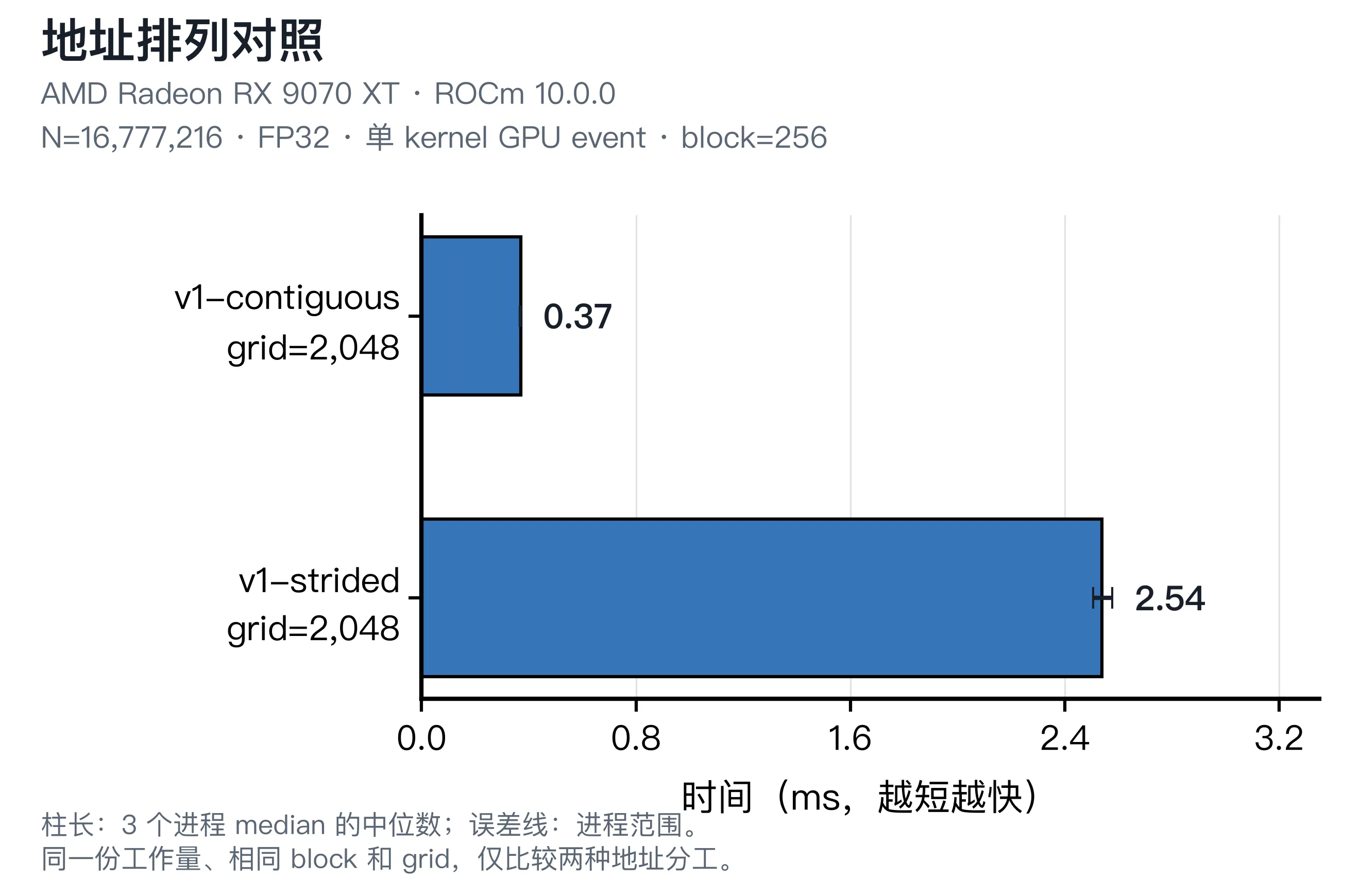
图 8.3 只改变同轮地址排列的 HIP 对照;柱长为三个独立进程 median 的中位数,误差线为进程范围。
连续版为 0.369681 ms,跨步版为 2.538206 ms,后者用时约为前者的 6.87 倍,两者的进程范围明显分离。
受控对照支持“同轮地址排列显著影响当前实现的时间”。它同时改变 A/B 的读取与 C 的写入排列,尚未把时间分摊给读、写或具体缓存行为;图中的地址分组也不是实测内存事务。基线 v0 本来就连续访问,因此这不是把 v0 加速了 6.87 倍。
本轮的决定是保留同轮相邻访问。再采一份仅重复“跨步版更慢”的 trace,不会改变这个决定。若要继续量化物理流量或缓存命中率,需要有效的硬件计数器;本机本次没有取得相应有效数据,边界见 8.5.3。
8.4.3 Grid-Stride:减少 block 数是否有收益
基线启动了 65,536 个 block,每个线程只做一次加法。一个可以验证的想法是:让线程循环处理多个位置,能否用更少的 block 完成同样的工作?
hip-v2 用整个 grid 的线程数作为步长:
cpp
const std::size_t thread =
    static_cast<std::size_t>(blockIdx.x) * blockDim.x + threadIdx.x;
const std::size_t grid_stride =
    static_cast<std::size_t>(gridDim.x) * blockDim.x;

for (std::size_t index = thread; index < size; index += grid_stride) {
    output[index] = input_a[index] + input_b[index];
}
假设整个 grid 有 1,024 个线程,线程 0 处理 0、1024、2048…,线程 1 处理 1、1025、2049…。单个线程跨着读,同一轮的相邻线程仍然连续读,与上一轮的跨步反例不同。
不能只把 v0 与一个缩小了 grid 的 v2 相比,就把差异都归给 block 数。因此分两步观察:先让 v2 同样使用 65,536 个 block,再固定这份循环代码,只把 grid 改为 2,048、256。输入、block size、计时方式保持不变。
本轮重点阅读完整程序中的 vector_add_v2_grid_stride() 与 grid_for()。三次使用同一份循环代码,分别给出明确的 grid 参数。
保持 65,536 个 block。
运行与校验
bash
test -d "${RUN:?请先完成环境与结果目录准备}/build" && \
mkdir -p "$RUN/configs/hip-v2-g65536" && \
test ! -e "$RUN/configs/hip-v2-g65536/benchmark-p1.samples.csv" && \
"$RUN/build/vector_add_hip" \
  --version v2 --block 256 --grid 65536 \
  --size 16777216 --warmup 10 --repeat 50 --seed 20260920 \
  --samples "$RUN/configs/hip-v2-g65536/benchmark-p1.samples.csv" \
  --config-id hip-v2-g65536 --process 1
运行输出:hip-v2-g65536,第 1 个独立进程
text
ENV runtime=hip gpu="AMD Radeon RX 9070 XT" arch=gfx1201 multi_processor_count=32 wave_size=32
RESULT operator=vector-add implementation=hip-v2 runtime=hip shape=16777216 dtype=float32 block=256 grid=65536 warmup=10 repeat=50 seed=20260920 timed=1 correct=OK precheck=OK postcheck=OK min_ms=0.354801 median_ms=0.355121 mean_ms=0.355214 effective_bandwidth_gbs=566.923949 max_abs_error=0
先核对 grid=65536 与 v0 相同。此时检验的是换成循环结构的效果,不能把它和后面的 grid 缩小混为一项改动。本次单进程中位数为 0.355121 ms。
减少到 2,048 个 block。
运行与校验
bash
test -d "${RUN:?请先完成环境与结果目录准备}/build" && \
mkdir -p "$RUN/configs/hip-v2-g2048" && \
test ! -e "$RUN/configs/hip-v2-g2048/benchmark-p1.samples.csv" && \
"$RUN/build/vector_add_hip" \
  --version v2 --block 256 --grid 2048 \
  --size 16777216 --warmup 10 --repeat 50 --seed 20260920 \
  --samples "$RUN/configs/hip-v2-g2048/benchmark-p1.samples.csv" \
  --config-id hip-v2-g2048 --process 1
运行输出:hip-v2-g2048,第 1 个独立进程
text
ENV runtime=hip gpu="AMD Radeon RX 9070 XT" arch=gfx1201 multi_processor_count=32 wave_size=32
RESULT operator=vector-add implementation=hip-v2 runtime=hip shape=16777216 dtype=float32 block=256 grid=2048 warmup=10 repeat=50 seed=20260920 timed=1 correct=OK precheck=OK postcheck=OK min_ms=0.359441 median_ms=0.361721 mean_ms=0.361690 effective_bandwidth_gbs=556.579759 max_abs_error=0
输出中的 grid=2048 表明配置已经生效。平均每线程处理 32 个元素,总加法数量没有减少;本次单进程中位数为 0.361721 ms。
减少到 256 个 block。
运行与校验
bash
test -d "${RUN:?请先完成环境与结果目录准备}/build" && \
mkdir -p "$RUN/configs/hip-v2-g256" && \
test ! -e "$RUN/configs/hip-v2-g256/benchmark-p1.samples.csv" && \
"$RUN/build/vector_add_hip" \
  --version v2 --block 256 --grid 256 \
  --size 16777216 --warmup 10 --repeat 50 --seed 20260920 \
  --samples "$RUN/configs/hip-v2-g256/benchmark-p1.samples.csv" \
  --config-id hip-v2-g256 --process 1
运行输出:hip-v2-g256,第 1 个独立进程
text
ENV runtime=hip gpu="AMD Radeon RX 9070 XT" arch=gfx1201 multi_processor_count=32 wave_size=32
RESULT operator=vector-add implementation=hip-v2 runtime=hip shape=16777216 dtype=float32 block=256 grid=256 warmup=10 repeat=50 seed=20260920 timed=1 correct=OK precheck=OK postcheck=OK min_ms=0.342720 median_ms=0.343640 mean_ms=0.343801 effective_bandwidth_gbs=585.864836 max_abs_error=0
此时平均每线程处理 256 个元素。确认 correct=OK 后,记录本次单进程中位数 0.343640 ms;不要因为这一项较小,就跳过重复测量。
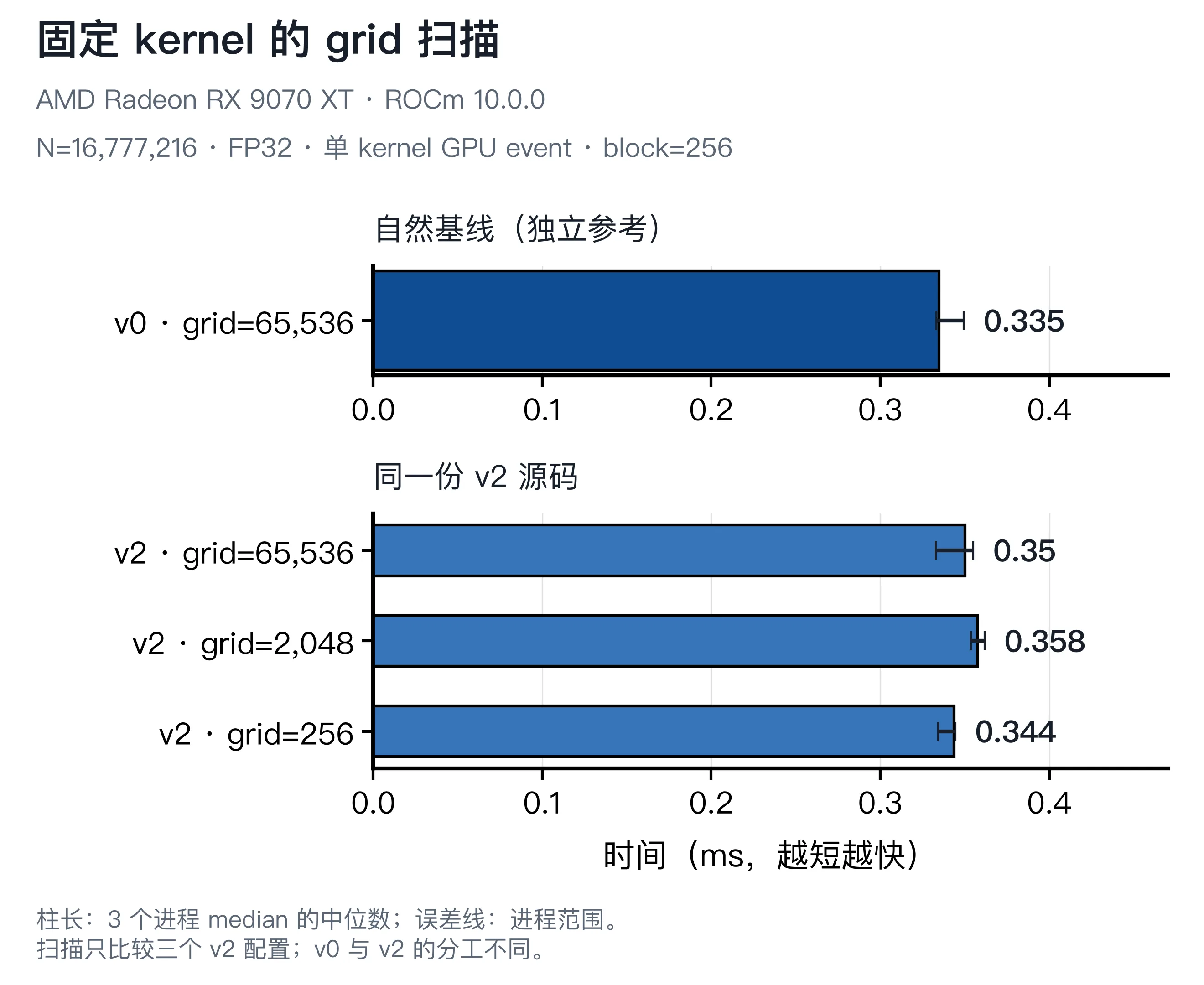
图 8.4 v0 是原始参照;v2 的三个配置使用同一份 kernel。缩小 grid 会同时增加每个线程的工作量,图中实际比较的是这项分工选择。
三个 v2 配置分别为 0.350301、0.357582、0.343640 ms,本轮都没有显示稳定优于 v0 的收益。减少 block 数会同时增加每个线程的循环量;预期中的管理成本下降,未必能抵消其他代价。
本轮保留 v0。这个决定只需要公平测量,不需要给三档 grid 分别再做完整 trace。若后续要判断是否启动了预期数量的 block,可针对那一档检查 Grid / Workgroup;若要解释运行时占用率或等待,还需要对应的有效证据,不能用 block 数替代它们。
8.4.4 float4:一次表达四个元素是否更快
上一轮的 grid=256 中位数高于基线,进程范围仍有重叠。每个线程要循环多次,按四个元素一组读写,能否弥补一部分开销?为了检验这个想法,我们继续固定 grid=256、block=256,比较标量循环 v2 与向量类型 v3;图中同时保留原始 v0。这里没有把 256 当作已经选出的最优 grid。
本例从 hipMalloc 返回的对齐基地址开始;任意 input + 1 偏移不再保证适合强转为 float4*,复用这段代码时要先保证地址对齐。
float4 把四个 FP32 组合成一个 16 Byte 类型。v3 按四元素组读写,并为剩余的 0–3 个元素保留标量路径:
8.4 HIP · float4 向量化四个 FP32 组成 float4,尾部单独处理
左右滑动画布,查看完整过程
先把 A 看成 18 个独立元素N=18 个 FP32,每个占 4 Byte——这是 v0/v1/v2 标量世界的做法。
算法过程示意 · 数字定位到该步完成状态,可拖动进度或播放;动画速度不代表 GPU 耗时。
图 8.5 N=18 的源码分组:前 16 个元素组成四组,最后两个元素单独处理。图中只展开输入 A,B 和 C 使用相同分组。
cpp
const std::size_t vector_count = size / 4;
for (std::size_t vector_index = thread;
     vector_index < vector_count;
     vector_index += grid_stride) {
    const float4 a = input_a4[vector_index];
    const float4 b = input_b4[vector_index];
    output4[vector_index] =
        make_float4(a.x + b.x, a.y + b.y, a.z + b.z, a.w + b.w);
}
for (std::size_t index = vector_count * 4 + thread;
     index < size;
     index += grid_stride) {
    output[index] = input_a[index] + input_b[index];
}
本轮的假设是向量类型可能改变生成的访存指令及循环工作量。源码写出 float4 本身不能证明事务减少;先通过包含尾部的正确性检查,再判断时间:
完整实现仍在HIP 源文件的 vector_add_v3_float4(),运行参数使用 --version v3。
先检查新增的尾部路径:N=2 只走标量尾部,N=6 同时包含一组 float4 和两个尾部元素,N=1026 检查较长向量部分后的两个元素。这里预热为 0、计时重复 1 次,程序仍会先做一次预检;目的是核对答案。
bash
test -d "${RUN:?请先完成环境与结果目录准备}/build" && \
"$RUN/build/vector_add_hip" --version v3 --size 2 --block 256 --warmup 0 --repeat 1 --seed 20260920 --grid 256 && \
"$RUN/build/vector_add_hip" --version v3 --size 6 --block 256 --warmup 0 --repeat 1 --seed 20260920 --grid 256 && \
"$RUN/build/vector_add_hip" --version v3 --size 1026 --block 256 --warmup 0 --repeat 1 --seed 20260920 --grid 256
边界检查原始输出:float4 尾部 @ RX 9070 XT / ROCm 10.0
boundary-float4-n2.log
text
ENV runtime=hip gpu="AMD Radeon RX 9070 XT" arch=gfx1201 multi_processor_count=32 wave_size=32
RESULT operator=vector-add implementation=hip-v3 runtime=hip shape=2 dtype=float32 block=256 grid=1 warmup=0 repeat=1 seed=20260920 timed=1 correct=OK precheck=OK postcheck=OK min_ms=0.011160 median_ms=0.011160 mean_ms=0.011160 effective_bandwidth_gbs=0.002151 max_abs_error=0
boundary-float4-n6.log
text
ENV runtime=hip gpu="AMD Radeon RX 9070 XT" arch=gfx1201 multi_processor_count=32 wave_size=32
RESULT operator=vector-add implementation=hip-v3 runtime=hip shape=6 dtype=float32 block=256 grid=1 warmup=0 repeat=1 seed=20260920 timed=1 correct=OK precheck=OK postcheck=OK min_ms=0.011200 median_ms=0.011200 mean_ms=0.011200 effective_bandwidth_gbs=0.006429 max_abs_error=0
boundary-float4-n1026.log
text
ENV runtime=hip gpu="AMD Radeon RX 9070 XT" arch=gfx1201 multi_processor_count=32 wave_size=32
RESULT operator=vector-add implementation=hip-v3 runtime=hip shape=1026 dtype=float32 block=256 grid=1 warmup=0 repeat=1 seed=20260920 timed=1 correct=OK precheck=OK postcheck=OK min_ms=0.011400 median_ms=0.011400 mean_ms=0.011400 effective_bandwidth_gbs=1.080000 max_abs_error=0
三项记录均为 precheck=OK postcheck=OK correct=OK,max_abs_error=0。小输入下程序会收缩 grid,三份输出的实际 grid=1,不是请求上限 256。日志中的单次 event 数值不作性能比较;边界通过后,再回到相同主输入与实际 grid=256 的对照。
运行与校验
bash
test -d "${RUN:?请先完成环境与结果目录准备}/build" && \
mkdir -p "$RUN/configs/hip-v3-g256" && \
test ! -e "$RUN/configs/hip-v3-g256/benchmark-p1.samples.csv" && \
"$RUN/build/vector_add_hip" \
  --version v3 --block 256 --grid 256 \
  --size 16777216 --warmup 10 --repeat 50 --seed 20260920 \
  --samples "$RUN/configs/hip-v3-g256/benchmark-p1.samples.csv" \
  --config-id hip-v3-g256 --process 1
运行输出:hip-v3-g256,第 1 个独立进程
text
ENV runtime=hip gpu="AMD Radeon RX 9070 XT" arch=gfx1201 multi_processor_count=32 wave_size=32
RESULT operator=vector-add implementation=hip-v3 runtime=hip shape=16777216 dtype=float32 block=256 grid=256 warmup=10 repeat=50 seed=20260920 timed=1 correct=OK precheck=OK postcheck=OK min_ms=0.340083 median_ms=0.342002 mean_ms=0.342412 effective_bandwidth_gbs=588.670796 max_abs_error=0
先核对 grid=256、block=256 与标量 v2 一致,前后检查通过;本次单进程中位数为 0.342002 ms。四元素分组同时改变循环工作量、地址表达和编译选择,不能仅凭源码中的类型推断访存事务减少。
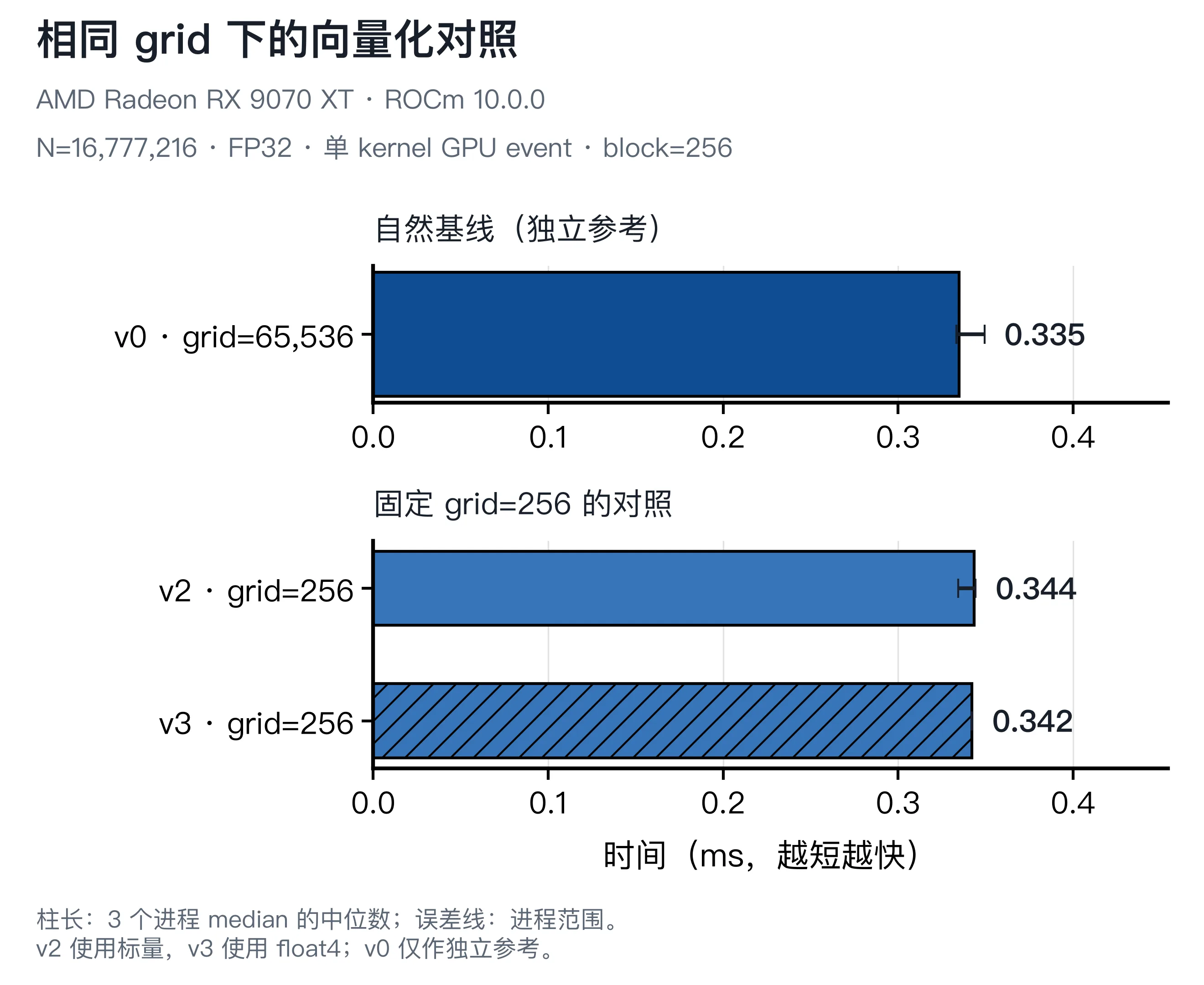
图 8.6 固定 grid=256、block=256,比较 v2 与 v3。相同执行配置使这轮改动更容易解释。
标量 v2 为 0.343640 ms,四元素分组 v3 为 0.342121 ms。两者的三进程范围重叠,与 v0 也有重叠,尚无稳定收益足以替换简单基线。
因此本轮停止这项改动,保留 v0。只有还要回答“编译器是否生成了预期的宽指令”时,才继续看编译结果;即使发现指令变宽,也不能据此宣布速度会提高。8.5.3 的 ATT 选读只演示 v0 的源码与指令对应,不作为这里 v3 的解释证据。
8.4.5 HIP 路线的实验决策
这条路线保留了三种可复用的方法:用相同工作量隔离地址排列,用同一循环 kernel 扫描 grid,用相同 grid/block 对照元素分组。每个对照都回答一个问题;没有稳定提速也能帮助决定停止哪项尝试。
当前主输入选择 v0。换成别的实际长度或布局时,应从基线重新比较,不能把某个 grid 或向量类型当成通用答案。
8.5 按问题选择性能分析
打开 profiler 之前,先写一句它要回答的问题,再决定读什么字段。若报告无法改变下一步的选择,就不必为了流程完整而采集。
8.5.1 从问题到字段
| 当前问题 | 优先证据 | 本章的使用位置 |
|---|---|---|
| 修改后是否正确,是否值得替换基线? | 正确性检查与独立进程 benchmark | 每轮必做;不需要 profiler 才能作取舍 |
| 运行的是预期 kernel 和启动规模吗? | kernel 名称、Grid / Workgroup、目标调用次数 | HIP 基线 trace |
| kernel 在设备上何时开始、何时结束? | 起止时间戳与 CPU/GPU 时间线 | 基线示范;后续有提交节奏疑问时再看 |
| tile 改变后资源分配有变化吗? | 代表配置的 Workgroup、VGPR、LDS、Scratch | Triton256 与2048配对分析 |
| 物理流量或缓存命中率是否变化? | 经过有效性核验的相应硬件计数器 | 本机本次没有取得足够证据,不能用逻辑字节替代 |
| 源码对应哪些指令,局部 wave 在哪里等待? | 编译结果或局部指令跟踪 | 进阶诊断;不能直接分摊整个 kernel 的时间 |
本章的 inspect_trace.py 先匹配一个确定的 kernel 名称,按起点排序,再去掉预检与预热。它会检查记录数量、必需列和各次启动字段是否一致;不满足预期时直接报错。命令中的 grid 仍要与结果人工对照。
完整分析脚本:code/part2-kernels/chapter8/inspect_trace.py
python
"""Read one rocprofv3 kernel-trace window using only Python's standard library."""
from __future__ import annotations

import argparse
import csv
import json
import math
from pathlib import Path
import re
import statistics


GRID_FIELDS = tuple(f"Grid_Size_{axis}" for axis in "XYZ")
GROUP_FIELDS = tuple(f"Workgroup_Size_{axis}" for axis in "XYZ")
RESOURCE_FIELDS = ("VGPR_Count", "SGPR_Count", "LDS_Block_Size", "Scratch_Size")
INTEGER_FIELDS = ("Start_Timestamp", "End_Timestamp", *GRID_FIELDS,
                  *GROUP_FIELDS, *RESOURCE_FIELDS)
REQUIRED_FIELDS = ("Kernel_Name", *INTEGER_FIELDS)


class TraceError(ValueError):
    """The CSV cannot support the requested comparison."""


def analyze_trace(path: Path, kernel: str, skip: int, take: int) -> dict:
    if not kernel.strip():
        raise TraceError("--kernel must be a non-empty name substring")
    if skip < 0 or take <= 0:
        raise TraceError("--skip must be non-negative and --take must be positive")
    rows = []
    with path.open(encoding="utf-8-sig", newline="") as file:
        reader = csv.DictReader(file, strict=True)
        fields = reader.fieldnames or []
        if len(fields) != len(set(fields)):
            raise TraceError("CSV has duplicate column names")
        missing = sorted(set(REQUIRED_FIELDS) - set(fields))
        if missing:
            raise TraceError("CSV is missing required columns: " + ", ".join(missing))
        for row in reader:
            where = f"CSV line {reader.line_num}"
            if None in row or any(value is None for value in row.values()):
                raise TraceError(f"{where}: row width does not match the header")
            if not row["Kernel_Name"].strip():
                raise TraceError(f"{where}: Kernel_Name is empty")
            for field in INTEGER_FIELDS:
                value = row[field].strip()
                if not re.fullmatch(r"[0-9]+", value):
                    raise TraceError(f"{where}: {field} must be a non-negative integer, got {value!r}")
                row[field] = int(value)
            if row["End_Timestamp"] < row["Start_Timestamp"]:
                raise TraceError(f"{where}: End_Timestamp is earlier than Start_Timestamp")
            for grid_field, group_field in zip(GRID_FIELDS, GROUP_FIELDS):
                grid, group = row[grid_field], row[group_field]
                if grid <= 0 or group <= 0 or grid % group:
                    raise TraceError(f"{where}: {grid_field} must be a positive multiple of {group_field}")
            rows.append(row)

    targets = [row for row in rows if kernel in row["Kernel_Name"]]
    names = sorted({row["Kernel_Name"] for row in targets})
    if len(names) != 1:
        detail = "no kernel names" if not names else ", ".join(repr(name) for name in names)
        raise TraceError(f"--kernel must match exactly one distinct Kernel_Name; matched {detail}")
    expected = skip + take
    if len(targets) != expected:
        raise TraceError(f"expected exactly skip + take = {expected} target rows, found {len(targets)}")
    targets.sort(key=lambda row: row["Start_Timestamp"])
    first = targets[0]
    for row in targets[1:]:
        changed = [field for field in (*GRID_FIELDS, *GROUP_FIELDS, *RESOURCE_FIELDS)
                   if row[field] != first[field]]
        if changed:
            raise TraceError("target rows have different launch/resource fields: " + ", ".join(changed))
    kept = targets[skip:]
    durations = [row["End_Timestamp"] - row["Start_Timestamp"] for row in kept]
    grid = [first[field] for field in GRID_FIELDS]
    group = [first[field] for field in GROUP_FIELDS]
    groups = [g // w for g, w in zip(grid, group)]
    return {
        "csv_rows": len(rows), "kernel_name": names[0], "target_rows": len(targets),
        "skipped_rows": skip, "kept_rows": len(kept),
        "first_kept": {"start_ns": kept[0]["Start_Timestamp"],
                       "end_ns": kept[0]["End_Timestamp"], "duration_ns": durations[0]},
        "kernel_time_us": {"min": min(durations) / 1000,
                           "median": statistics.median(durations) / 1000,
                           "max": max(durations) / 1000},
        "launch": {"grid_work_items_xyz": grid, "workgroup_size_xyz": group,
                   "workgroups_xyz": groups, "workgroups_total": math.prod(groups)},
        "resources": dict(zip(("vgpr_count", "sgpr_count", "lds_bytes", "scratch_bytes"),
                              (first[field] for field in RESOURCE_FIELDS))),
    }


def print_report(report: dict) -> None:
    print("kernel_name=" + json.dumps(report["kernel_name"], ensure_ascii=False))
    print(" ".join(f"{key}={report[key]}" for key in
                   ("csv_rows", "target_rows", "skipped_rows", "kept_rows")))
    print("sort=Start_Timestamp_ascending")
    print(" ".join(f"first_{key}={value}" for key, value in report["first_kept"].items()))
    print(" ".join(f"kernel_{key}_us={value:.6f}" for key, value in report["kernel_time_us"].items()))
    launch = report["launch"]
    print(" ".join(f"{key}=" + "x".join(map(str, launch[key])) for key in
                   ("grid_work_items_xyz", "workgroup_size_xyz", "workgroups_xyz")))
    print(f"workgroups_total={launch['workgroups_total']}")
    print(" ".join(f"{key}={value}" for key, value in report["resources"].items()))


def main(argv: list[str] | None = None) -> int:
    parser = argparse.ArgumentParser(description=__doc__)
    parser.add_argument("path", type=Path, help="rocprofv3 *_kernel_trace.csv")
    parser.add_argument("--kernel", required=True, help="case-sensitive Kernel_Name substring")
    parser.add_argument("--skip", required=True, type=int, help="target rows before the measured window")
    parser.add_argument("--take", required=True, type=int, help="exact number of measured target rows")
    parser.add_argument("--json", action="store_true", help="print the same report as JSON")
    args = parser.parse_args(argv)
    try:
        report = analyze_trace(args.path, args.kernel, args.skip, args.take)
    except (TraceError, OSError, UnicodeError, csv.Error) as error:
        parser.error(str(error))
    if args.json:
        print(json.dumps(report, indent=2, ensure_ascii=False))
    else:
        print_report(report)
    return 0


if __name__ == "__main__":
    raise SystemExit(main())
采集命令用 mkdir ... && rocprofv3 ... && python ... 连接。目录已存在或采集失败时停止后续步骤,避免覆盖旧记录或误读旧报告。采集过程中可能改变队列处理方式,因此其 event 时间始终与 benchmark 分开。
| 文件 | 阅读用途 |
|---|---|
*_kernel_trace.csv | 逐条核对目标名称、时间戳和启动字段 |
*_hip_api_trace.csv | CPU 侧 API 调用,用 Correlation_Id 关联提交与设备执行 |
*_kernel_stats.csv | 整次进程汇总,含预检与预热,不作正式成绩 |
*_results.pftrace | 查看 CPU/GPU 时间线与调用关系 |
工具的 Opened result file 记录位于 stderr,行首带 E;这些行报告文件生成。是否成功还要看退出状态、文件内容与目标记录,不能只看日志前缀。时间戳单位为 ns,分析脚本为 μs,benchmark 为 ms:1 ms = 1,000 μs = 1,000,000 ns。
8.5.2 时间线与工具适用范围
先让工具回答一个具体问题:要知道哪次 kernel 慢,读时间线;要核对执行了多少工作,尝试有效的硬件计数器;要观察局部 wave 的指令轨迹,再进入 ATT。工具越底层,需要核对的采集条件也越多。
本章环境中的 rocprofv3 来自 ROCprofiler-SDK 1.3.5,工具自报 ROCm 10.0.0。ROCm 发行版、SDK 工具和 HIP 组件各有自己的版本号,不能要求它们都显示 10.0。
bash
rocprofv3 --version查看本机 rocprofv3 版本输出
ROCm wheel 环境中的工具
text
             version: 1.3.5
        git_revision: 6b0e43f341195e203754e08f850e437ff2fc09f9
        library_arch: x86_64-unknown-linux-gnu
         system_name: Linux
    system_processor: x86_64
      system_version: 6.12.73-95.123.amzn2023.x86_64
         compiler_id: Clang
    compiler_version: 23.0.0
        rocm_version: 10.0.0
输出中的 version 与 rocm_version 对应工具版本和 ROCm 版本;system_version 是工具构建信息,实验机系统以本章的环境记录为准。
| 工具或功能 | 在本章 RX 9070 XT 上的情况 | 适合回答的问题 |
|---|---|---|
rocprofv3 kernel / HIP trace | 本章 11 个配置均已采集 CSV 与 Perfetto 时间线 | CPU 提交了什么,GPU 何时执行,实际启动规模是多少 |
rocprofv3 硬件计数器(PMC) | wave 数取得可核对结果;本次缓存与流量指标返回零,不能用来解释访存效率 | 指定 dispatch 的某类事件发生了多少次;先核对指标与采集是否有效 |
rocprofv3 --att 指令跟踪 | 已取得单次 baseline dispatch 的原始跟踪与解码产物 | 选定硬件位置上的 wave 执行了哪些指令;适合继续定位局部等待 |
| ROCprofiler Systems | 官方 ROCm 10.0 矩阵列出 Radeon 支持;本章未实测此工具 | 更大的应用中,CPU 调用栈、线程活动与 GPU 工作怎样关联 |
| ROCprofiler Compute(原 Omniperf) | 当前官方兼容表未列 RX 9070 XT | 在其支持设备上使用硬件指标面板;本章不提供该工具的实操命令 |
| Radeon GPU Profiler(RGP) | 官方 Linux Ubuntu 24.04 条目为 Vulkan only,不能直接套到这里的 HIP 程序 | 需要同时符合 GPU、API 与操作系统要求,不能只看显卡型号 |
支持范围分别见 SDK tracing 文档、ROCm 10.0 兼容矩阵、Compute 支持表和 RGP Requirements。下面只展开本机已经验证过的路径。
先看时间线。 在 Perfetto 中选择 Open trace file,打开本次配置目录内的 *_results.pftrace。先找到 CPU 的 HIP API 轨道与 GPU kernel 轨道,再搜索目标函数名:CPU 的 launch 调用结束,不代表 GPU kernel 已经完成。展开进程轨道,搜索 vector_add_v0,可以依次定位 16 次目标调用;第一条是预检。点选 GPU 区间,在 Details 中看 Duration,在 Preceding Flows 中找到对应的 hipLaunchKernel;比较时仍应使用 8.4 中经过筛选的多次执行,而非随手选中一条。
同一个 profile 同时导出了 API trace 和 kernel trace,可以借助 Correlation_Id 对应一次提交与设备执行。时间线适合找执行先后和空隙,不能仅凭某段空白就断言 CPU 算力不足;同步、依赖和提交节奏都需要结合程序检查。当前命令没有开启 memory-copy trace,因此不把缺少拷贝轨道解释为没有发生数据复制。
本次 Perfetto 导入出现了一项 track_descriptor_conflicting_reservation 提示,目标 kernel 的 16 条记录仍可检索,数量与 CSV 一致。因此时间线用于观察调用关系,本章的筛选统计继续以原始 CSV 为准;不把查看器的导入提示当作 kernel 性能问题。
8.5.3 进阶诊断:计数器与指令跟踪
前面的配置选择不依赖下面两项诊断。只有遇到对应问题时才展开;不能因为工具更底层,就默认它更适合回答当前问题。
计数器能否作为解释依据? 当前 wave 计数能与启动规模核对,但缓存与流量计数返回零,不足以解释地址对照的时间差。这里的第一步是确认测到的量有意义。
选读:核对 wave 计数,以及缓存与流量指标的有效性
计数器记录某类硬件事件的次数。先选择一个能用程序规模核对的量,比一开始就读几十个百分比更容易。本例选择 SQ_WAVES_sum,核对 baseline 启动的 wave 数。
下面使用 HIP v0 做独立工具核验。若前面只走了 Triton 路线,也先执行这里的编译命令;它生成的仍是 8.4.1 的完整程序。然后查询指标组合,采集 v0 预检和预热之后的 10 次执行:
bash
test -d "${RUN:?请先完成环境与结果目录准备}/build" && \
if [[ ! -x "$RUN/build/vector_add_hip" ]]; then
  hipcc --offload-arch=gfx1201 -O3 -std=c++17 \
    chapter8/vector_add_hip.hip -o "$RUN/build/vector_add_hip"
fi && \
rocprofv3-avail -d 0 pmc-check SQ_WAVES_sum GRBM_GUI_ACTIVE && \
mkdir "$RUN/pmc-waves" && \
rocprofv3 --pmc SQ_WAVES_sum GRBM_GUI_ACTIVE \
  --kernel-include-regex vector_add_v0 --kernel-iteration-range 7-16 \
  --output-format csv --output-directory "$RUN/pmc-waves" \
  --output-file baseline -- \
  "$RUN/build/vector_add_hip" --version v0 --size 16777216 --block 256 \
  --warmup 5 --repeat 10 --seed 20260920
-d 0 选择当前查询到的设备;pmc-check 检查这组指标能否一起采集,最终还要看实际记录。--kernel-iteration-range 7-16 在这里筛选 计数器采集的目标调用;它不会替 8.4 的 kernel trace 删除预检与预热,所以 trace 仍然需要自己的筛选步骤。
查看计数器组合检查、运行输出与完整原始 CSV
组合检查
text
Following input counters can be collected together on GPU:0 SQ_WAVES_sum GRBM_GUI_ACTIVE采集进程的输出(不用于 benchmark)
text
ENV runtime=hip gpu="AMD Radeon RX 9070 XT" arch=gfx1201 multi_processor_count=32 wave_size=32
RESULT operator=vector-add implementation=hip-v0 runtime=hip shape=16777216 dtype=float32 block=256 grid=65536 warmup=5 repeat=10 seed=20260920 timed=1 correct=OK precheck=OK postcheck=OK min_ms=0.368002 median_ms=0.368702 mean_ms=1.549060 effective_bandwidth_gbs=546.041483 max_abs_error=0
Profiler 文件生成记录
text
W0920 08:28:05.453606 1407749 simple_timer.cpp:55] [rocprofv3] tool initialization ::     0.198063 sec
W0920 08:28:05.454094 1407749 simple_timer.cpp:55] [rocprofv3] 'chapter8/results/walkthrough-20260920/build/vector_add_hip --version v0 --size 16777216 --block 256 --warmup 5 --repeat 10 --seed 20260920' ::     0.000000 sec
W0920 08:28:05.459627 1407749 tool.cpp:3348] HSA version 1.21.0 initialized (instance=0)
W0920 08:28:05.553311 1407749 queue_controller.cpp:170] [queue-intercept] device-memory ring-buffer requested but profiling requires system-memory InterceptQueue; falling back to system-memory ring for agent 109707699042784 (priority and CU-mask from the descriptor are not preserved)
W0920 08:28:05.679374 1407749 simple_timer.cpp:55] [rocprofv3] 'chapter8/results/walkthrough-20260920/build/vector_add_hip --version v0 --size 16777216 --block 256 --warmup 5 --repeat 10 --seed 20260920' ::     0.225279 sec
E0920 08:28:05.700510 1407749 output_stream.cpp:110] Opened result file: chapter8/results/walkthrough-20260920/pmc-waves/baseline_counter_collection.csv
E0920 08:28:05.705534 1407749 output_stream.cpp:110] Opened result file: chapter8/results/walkthrough-20260920/pmc-waves/baseline_agent_info.csv
W0920 08:28:05.706677 1407749 simple_timer.cpp:55] [rocprofv3] output generation ::     0.015960 sec
W0920 08:28:05.706711 1407749 simple_timer.cpp:55] [rocprofv3] tool finalization ::     0.015996 sec
baseline_counter_collection.csv
text
"Correlation_Id","Dispatch_Id","Agent_Id","Queue_Id","Process_Id","Thread_Id","Grid_Size","Kernel_Id","Kernel_Name","Workgroup_Size","LDS_Block_Size","Scratch_Size","VGPR_Count","Accum_VGPR_Count","SGPR_Count","Counter_Name","Counter_Value","Start_Timestamp","End_Timestamp"
8,8,"Agent 1",2,1407749,1407749,16777216,23,"(anonymous namespace)::vector_add_v0(float const*, float const*, float*, unsigned long)",256,0,0,8,0,128,"GRBM_GUI_ACTIVE",587211.000000,908801672169834,908801672534236
8,8,"Agent 1",2,1407749,1407749,16777216,23,"(anonymous namespace)::vector_add_v0(float const*, float const*, float*, unsigned long)",256,0,0,8,0,128,"SQ_WAVES_sum",524288.000000,908801672169834,908801672534236
9,9,"Agent 1",2,1407749,1407749,16777216,23,"(anonymous namespace)::vector_add_v0(float const*, float const*, float*, unsigned long)",256,0,0,8,0,128,"GRBM_GUI_ACTIVE",528736.000000,908801684159393,908801684486634
9,9,"Agent 1",2,1407749,1407749,16777216,23,"(anonymous namespace)::vector_add_v0(float const*, float const*, float*, unsigned long)",256,0,0,8,0,128,"SQ_WAVES_sum",524288.000000,908801684159393,908801684486634
10,10,"Agent 1",2,1407749,1407749,16777216,23,"(anonymous namespace)::vector_add_v0(float const*, float const*, float*, unsigned long)",256,0,0,8,0,128,"GRBM_GUI_ACTIVE",527469.000000,908801684534475,908801684861637
10,10,"Agent 1",2,1407749,1407749,16777216,23,"(anonymous namespace)::vector_add_v0(float const*, float const*, float*, unsigned long)",256,0,0,8,0,128,"SQ_WAVES_sum",524288.000000,908801684534475,908801684861637
11,11,"Agent 1",2,1407749,1407749,16777216,23,"(anonymous namespace)::vector_add_v0(float const*, float const*, float*, unsigned long)",256,0,0,8,0,128,"GRBM_GUI_ACTIVE",528474.000000,908801684908317,908801685235639
11,11,"Agent 1",2,1407749,1407749,16777216,23,"(anonymous namespace)::vector_add_v0(float const*, float const*, float*, unsigned long)",256,0,0,8,0,128,"SQ_WAVES_sum",524288.000000,908801684908317,908801685235639
12,12,"Agent 1",2,1407749,1407749,16777216,23,"(anonymous namespace)::vector_add_v0(float const*, float const*, float*, unsigned long)",256,0,0,8,0,128,"GRBM_GUI_ACTIVE",529355.000000,908801685282319,908801685609441
12,12,"Agent 1",2,1407749,1407749,16777216,23,"(anonymous namespace)::vector_add_v0(float const*, float const*, float*, unsigned long)",256,0,0,8,0,128,"SQ_WAVES_sum",524288.000000,908801685282319,908801685609441
13,13,"Agent 1",2,1407749,1407749,16777216,23,"(anonymous namespace)::vector_add_v0(float const*, float const*, float*, unsigned long)",256,0,0,8,0,128,"GRBM_GUI_ACTIVE",529368.000000,908801685655721,908801685982803
13,13,"Agent 1",2,1407749,1407749,16777216,23,"(anonymous namespace)::vector_add_v0(float const*, float const*, float*, unsigned long)",256,0,0,8,0,128,"SQ_WAVES_sum",524288.000000,908801685655721,908801685982803
14,14,"Agent 1",2,1407749,1407749,16777216,23,"(anonymous namespace)::vector_add_v0(float const*, float const*, float*, unsigned long)",256,0,0,8,0,128,"GRBM_GUI_ACTIVE",529518.000000,908801686028883,908801686356125
14,14,"Agent 1",2,1407749,1407749,16777216,23,"(anonymous namespace)::vector_add_v0(float const*, float const*, float*, unsigned long)",256,0,0,8,0,128,"SQ_WAVES_sum",524288.000000,908801686028883,908801686356125
15,15,"Agent 1",2,1407749,1407749,16777216,23,"(anonymous namespace)::vector_add_v0(float const*, float const*, float*, unsigned long)",256,0,0,8,0,128,"GRBM_GUI_ACTIVE",528427.000000,908801686402365,908801686729287
15,15,"Agent 1",2,1407749,1407749,16777216,23,"(anonymous namespace)::vector_add_v0(float const*, float const*, float*, unsigned long)",256,0,0,8,0,128,"SQ_WAVES_sum",524288.000000,908801686402365,908801686729287
16,16,"Agent 1",2,1407749,1407749,16777216,23,"(anonymous namespace)::vector_add_v0(float const*, float const*, float*, unsigned long)",256,0,0,8,0,128,"GRBM_GUI_ACTIVE",530411.000000,908801686775168,908801687103049
16,16,"Agent 1",2,1407749,1407749,16777216,23,"(anonymous namespace)::vector_add_v0(float const*, float const*, float*, unsigned long)",256,0,0,8,0,128,"SQ_WAVES_sum",524288.000000,908801686775168,908801687103049
17,17,"Agent 1",2,1407749,1407749,16777216,23,"(anonymous namespace)::vector_add_v0(float const*, float const*, float*, unsigned long)",256,0,0,8,0,128,"GRBM_GUI_ACTIVE",529243.000000,908801687149930,908801687477012
17,17,"Agent 1",2,1407749,1407749,16777216,23,"(anonymous namespace)::vector_add_v0(float const*, float const*, float*, unsigned long)",256,0,0,8,0,128,"SQ_WAVES_sum",524288.000000,908801687149930,908801687477012
读取 baseline_counter_collection.csv 时,先找 Counter_Name=SQ_WAVES_sum。同一个 Dispatch_Id 下有不同计数器的记录,不要把 CSV 行数当作 kernel 次数。本次每个目标 dispatch 的值都是 524,288。本例实际采用 wave32,可以按分工核对:
这说明本次 wave 计数与已知启动规模吻合。它并没有告诉我们显存传输了多少字节,也不表示 wave 数越少就越快。
我们还试了 GL2C_HIT_sum、GL2C_MISS_sum 与 FetchSize,本机当前电源状态下得到的记录均为零,没有取得足以解释缓存命中率或物理流量的有效证据。AMD 的 SDK 限制说明要求 gfx11/gfx12 计数器采集使用稳定 power state;本次保留机器原来的 AUTO 状态。因此本章不据这些零值计算命中率,也不把地址反例的慢直接换算成 DRAM 事务数。
查看本次缓存与流量计数器的尝试:命令及原始零值记录
两组分别采集,程序与参数不变;结果保存在不同目录。
bash
test -d "${RUN:?请先完成环境与结果目录准备}/build" && \
mkdir "$RUN/pmc-l2" && \
rocprofv3 --pmc GL2C_HIT_sum GL2C_MISS_sum \
  --kernel-include-regex vector_add_v0 --kernel-iteration-range 7-16 \
  --output-format csv --output-directory "$RUN/pmc-l2" \
  --output-file baseline -- \
  "$RUN/build/vector_add_hip" --version v0 --size 16777216 --block 256 \
  --warmup 5 --repeat 10 --seed 20260920

test -d "${RUN:?请先完成环境与结果目录准备}/build" && \
mkdir "$RUN/pmc-fetch" && \
rocprofv3 --pmc FetchSize \
  --kernel-include-regex vector_add_v0 --kernel-iteration-range 7-16 \
  --output-format csv --output-directory "$RUN/pmc-fetch" \
  --output-file baseline -- \
  "$RUN/build/vector_add_hip" --version v0 --size 16777216 --block 256 \
  --warmup 5 --repeat 10 --seed 20260920
缓存计数器:采集进程输出
text
ENV runtime=hip gpu="AMD Radeon RX 9070 XT" arch=gfx1201 multi_processor_count=32 wave_size=32
RESULT operator=vector-add implementation=hip-v0 runtime=hip shape=16777216 dtype=float32 block=256 grid=65536 warmup=5 repeat=10 seed=20260920 timed=1 correct=OK precheck=OK postcheck=OK min_ms=0.381122 median_ms=0.381562 mean_ms=0.421637 effective_bandwidth_gbs=527.638639 max_abs_error=0
缓存计数器:原始 CSV
text
"Correlation_Id","Dispatch_Id","Agent_Id","Queue_Id","Process_Id","Thread_Id","Grid_Size","Kernel_Id","Kernel_Name","Workgroup_Size","LDS_Block_Size","Scratch_Size","VGPR_Count","Accum_VGPR_Count","SGPR_Count","Counter_Name","Counter_Value","Start_Timestamp","End_Timestamp"
8,8,"Agent 1",2,1407761,1407761,16777216,23,"(anonymous namespace)::vector_add_v0(float const*, float const*, float*, unsigned long)",256,0,0,8,0,128,"GL2C_HIT_sum",0.00000000e+00,908802309333301,908802309697943
8,8,"Agent 1",2,1407761,1407761,16777216,23,"(anonymous namespace)::vector_add_v0(float const*, float const*, float*, unsigned long)",256,0,0,8,0,128,"GL2C_MISS_sum",0.00000000e+00,908802309333301,908802309697943
9,9,"Agent 1",2,1407761,1407761,16777216,23,"(anonymous namespace)::vector_add_v0(float const*, float const*, float*, unsigned long)",256,0,0,8,0,128,"GL2C_HIT_sum",0.00000000e+00,908802309758303,908802310263826
9,9,"Agent 1",2,1407761,1407761,16777216,23,"(anonymous namespace)::vector_add_v0(float const*, float const*, float*, unsigned long)",256,0,0,8,0,128,"GL2C_MISS_sum",0.00000000e+00,908802309758303,908802310263826
10,10,"Agent 1",2,1407761,1407761,16777216,23,"(anonymous namespace)::vector_add_v0(float const*, float const*, float*, unsigned long)",256,0,0,8,0,128,"GL2C_HIT_sum",0.00000000e+00,908802310323706,908802310650747
10,10,"Agent 1",2,1407761,1407761,16777216,23,"(anonymous namespace)::vector_add_v0(float const*, float const*, float*, unsigned long)",256,0,0,8,0,128,"GL2C_MISS_sum",0.00000000e+00,908802310323706,908802310650747
11,11,"Agent 1",2,1407761,1407761,16777216,23,"(anonymous namespace)::vector_add_v0(float const*, float const*, float*, unsigned long)",256,0,0,8,0,128,"GL2C_HIT_sum",0.00000000e+00,908802310710388,908802311037749
11,11,"Agent 1",2,1407761,1407761,16777216,23,"(anonymous namespace)::vector_add_v0(float const*, float const*, float*, unsigned long)",256,0,0,8,0,128,"GL2C_MISS_sum",0.00000000e+00,908802310710388,908802311037749
12,12,"Agent 1",2,1407761,1407761,16777216,23,"(anonymous namespace)::vector_add_v0(float const*, float const*, float*, unsigned long)",256,0,0,8,0,128,"GL2C_HIT_sum",0.00000000e+00,908802311097390,908802311424631
12,12,"Agent 1",2,1407761,1407761,16777216,23,"(anonymous namespace)::vector_add_v0(float const*, float const*, float*, unsigned long)",256,0,0,8,0,128,"GL2C_MISS_sum",0.00000000e+00,908802311097390,908802311424631
13,13,"Agent 1",2,1407761,1407761,16777216,23,"(anonymous namespace)::vector_add_v0(float const*, float const*, float*, unsigned long)",256,0,0,8,0,128,"GL2C_HIT_sum",0.00000000e+00,908802311484351,908802311811633
13,13,"Agent 1",2,1407761,1407761,16777216,23,"(anonymous namespace)::vector_add_v0(float const*, float const*, float*, unsigned long)",256,0,0,8,0,128,"GL2C_MISS_sum",0.00000000e+00,908802311484351,908802311811633
14,14,"Agent 1",2,1407761,1407761,16777216,23,"(anonymous namespace)::vector_add_v0(float const*, float const*, float*, unsigned long)",256,0,0,8,0,128,"GL2C_HIT_sum",0.00000000e+00,908802311870913,908802312197915
14,14,"Agent 1",2,1407761,1407761,16777216,23,"(anonymous namespace)::vector_add_v0(float const*, float const*, float*, unsigned long)",256,0,0,8,0,128,"GL2C_MISS_sum",0.00000000e+00,908802311870913,908802312197915
15,15,"Agent 1",2,1407761,1407761,16777216,23,"(anonymous namespace)::vector_add_v0(float const*, float const*, float*, unsigned long)",256,0,0,8,0,128,"GL2C_HIT_sum",0.00000000e+00,908802312256915,908802312584156
15,15,"Agent 1",2,1407761,1407761,16777216,23,"(anonymous namespace)::vector_add_v0(float const*, float const*, float*, unsigned long)",256,0,0,8,0,128,"GL2C_MISS_sum",0.00000000e+00,908802312256915,908802312584156
16,16,"Agent 1",2,1407761,1407761,16777216,23,"(anonymous namespace)::vector_add_v0(float const*, float const*, float*, unsigned long)",256,0,0,8,0,128,"GL2C_HIT_sum",0.00000000e+00,908802312643517,908802312970678
16,16,"Agent 1",2,1407761,1407761,16777216,23,"(anonymous namespace)::vector_add_v0(float const*, float const*, float*, unsigned long)",256,0,0,8,0,128,"GL2C_MISS_sum",0.00000000e+00,908802312643517,908802312970678
17,17,"Agent 1",2,1407761,1407761,16777216,23,"(anonymous namespace)::vector_add_v0(float const*, float const*, float*, unsigned long)",256,0,0,8,0,128,"GL2C_HIT_sum",0.00000000e+00,908802313030039,908802313356960
17,17,"Agent 1",2,1407761,1407761,16777216,23,"(anonymous namespace)::vector_add_v0(float const*, float const*, float*, unsigned long)",256,0,0,8,0,128,"GL2C_MISS_sum",0.00000000e+00,908802313030039,908802313356960
FetchSize:采集进程输出
text
ENV runtime=hip gpu="AMD Radeon RX 9070 XT" arch=gfx1201 multi_processor_count=32 wave_size=32
RESULT operator=vector-add implementation=hip-v0 runtime=hip shape=16777216 dtype=float32 block=256 grid=65536 warmup=5 repeat=10 seed=20260920 timed=1 correct=OK precheck=OK postcheck=OK min_ms=0.399335 median_ms=0.400135 mean_ms=1.500717 effective_bandwidth_gbs=503.147292 max_abs_error=0
FetchSize:原始 CSV
text
"Correlation_Id","Dispatch_Id","Agent_Id","Queue_Id","Process_Id","Thread_Id","Grid_Size","Kernel_Id","Kernel_Name","Workgroup_Size","LDS_Block_Size","Scratch_Size","VGPR_Count","Accum_VGPR_Count","SGPR_Count","Counter_Name","Counter_Value","Start_Timestamp","End_Timestamp"
8,8,"Agent 1",2,1407771,1407771,16777216,23,"(anonymous namespace)::vector_add_v0(float const*, float const*, float*, unsigned long)",256,0,0,8,0,128,"FetchSize",0.00000000e+00,908802923101432,908802923429234
9,9,"Agent 1",2,1407771,1407771,16777216,23,"(anonymous namespace)::vector_add_v0(float const*, float const*, float*, unsigned long)",256,0,0,8,0,128,"FetchSize",0.00000000e+00,908802934145686,908802934473258
10,10,"Agent 1",2,1407771,1407771,16777216,23,"(anonymous namespace)::vector_add_v0(float const*, float const*, float*, unsigned long)",256,0,0,8,0,128,"FetchSize",0.00000000e+00,908802934563220,908802934890512
11,11,"Agent 1",2,1407771,1407771,16777216,23,"(anonymous namespace)::vector_add_v0(float const*, float const*, float*, unsigned long)",256,0,0,8,0,128,"FetchSize",0.00000000e+00,908802934968195,908802935295607
12,12,"Agent 1",2,1407771,1407771,16777216,23,"(anonymous namespace)::vector_add_v0(float const*, float const*, float*, unsigned long)",256,0,0,8,0,128,"FetchSize",0.00000000e+00,908802935373409,908802935700741
13,13,"Agent 1",2,1407771,1407771,16777216,23,"(anonymous namespace)::vector_add_v0(float const*, float const*, float*, unsigned long)",256,0,0,8,0,128,"FetchSize",0.00000000e+00,908802935778384,908802936106076
14,14,"Agent 1",2,1407771,1407771,16777216,23,"(anonymous namespace)::vector_add_v0(float const*, float const*, float*, unsigned long)",256,0,0,8,0,128,"FetchSize",0.00000000e+00,908802936183559,908802936510691
15,15,"Agent 1",2,1407771,1407771,16777216,23,"(anonymous namespace)::vector_add_v0(float const*, float const*, float*, unsigned long)",256,0,0,8,0,128,"FetchSize",0.00000000e+00,908802936588494,908802936915826
16,16,"Agent 1",2,1407771,1407771,16777216,23,"(anonymous namespace)::vector_add_v0(float const*, float const*, float*, unsigned long)",256,0,0,8,0,128,"FetchSize",0.00000000e+00,908802936993149,908802937320601
17,17,"Agent 1",2,1407771,1407771,16777216,23,"(anonymous namespace)::vector_add_v0(float const*, float const*, float*, unsigned long)",256,0,0,8,0,128,"FetchSize",0.00000000e+00,908802937397804,908802937725055
这里核对的是目标 dispatch 的 Counter_Value,不是上方采集进程打印的 event 耗时。全零尚不能解释原来的快慢,下一步应先核对采集条件,而不是用这些零值计算命中率或带宽。
一行加法对应哪些指令? 下例跟踪 baseline v0 的一个局部硬件位置,将源码对应到实际加载、等待、计算与写回。它用于理解指令报告,不用来解释 v3 或把局部周期换算成整卡瓶颈。
选读:用 ATT 查看 baseline 的源码与指令对应
若要观察某行源码对应哪些指令,可以用局部 wave 跟踪补充证据。下面只演示 baseline 的源码对应,不归因某个优化版本的时间差。SDK 的 ATT 支持表已列出 gfx1201,模式为 trace-only;本例不使用 Instinct 示例里的 --att-perfcounters。
这是进阶选读,不影响前面完成一轮优化实验。本章提供一个短脚本,仍使用完整的 vector_add_hip.hip:单独编译带行号的诊断程序,选择 v0 的第 7 次调用,即预检与 5 次预热之后的一次调用,再限定一个 shader engine 与 SIMD。
完整采集脚本:code/part2-kernels/chapter8/profile_att.sh
bash
#!/usr/bin/env bash
# Run from code/part2-kernels after source ./activate-rocm.sh.
set -euo pipefail
if [[ $# != 1 || -z "$1" ]]; then
  echo 'Usage: bash chapter8/profile_att.sh NEW_OUTPUT_DIRECTORY' >&2
  exit 2
fi
att_dir=$1
if [[ -e "$att_dir" ]]; then
  echo "Output already exists: $att_dir" >&2
  exit 2
fi
[[ -f chapter8/vector_add_hip.hip ]] || { echo 'Run from code/part2-kernels.' >&2; exit 2; }
mapfile -t sdk_libs < <(python - <<'PY'
from pathlib import Path
import sysconfig
site = Path(sysconfig.get_path('purelib'))
for package in ('_rocm_sdk_devel', '_rocm_sdk_core'):
    print(site / package / 'lib')
PY
)
[[ ${#sdk_libs[@]} == 2 && -d "${sdk_libs[0]}" && -d "${sdk_libs[1]}" ]] || {
  echo 'Activate the ROCm 10.0 environment first.' >&2; exit 2;
}
mkdir -p "$att_dir/build" "$att_dir/trace"
export LD_LIBRARY_PATH="${sdk_libs[0]}:${sdk_libs[1]}${LD_LIBRARY_PATH:+:$LD_LIBRARY_PATH}"
exec 3>"$att_dir/commands.log"
export BASH_XTRACEFD=3
set -x
hipcc --offload-arch=gfx1201 -O3 -std=c++17 -gline-tables-only \
  chapter8/vector_add_hip.hip -o "$att_dir/build/vector_add_hip_debug" \
  >"$att_dir/compile.stdout.log" 2>"$att_dir/compile.stderr.log"
rocprofv3 --att --att-library-path "${sdk_libs[@]}" \
  --att-simd-select 0 --att-shader-engine-mask 0x1 \
  --att-buffer-size 67108864 --kernel-include-regex vector_add_v0 \
  --kernel-iteration-range 7 --output-format csv \
  --output-directory "$att_dir/trace" --output-file baseline -- \
  "$att_dir/build/vector_add_hip_debug" --version v0 --size 16777216 \
  --block 256 --warmup 5 --repeat 1 --seed 20260920 \
  >"$att_dir/profile.stdout.log" 2>"$att_dir/profile.stderr.log"
python chapter8/validate_att.py "$att_dir/trace" \
  >"$att_dir/validation.stdout.log" 2>"$att_dir/validation.stderr.log" || {
    cat "$att_dir/validation.stderr.log" >&2; exit 1;
  }
set +x
cat "$att_dir/validation.stdout.log"
echo "ATT captured and decoded: $att_dir/trace"
echo 'One selected dispatch / shader engine / SIMD; not whole-GPU counters.'
脚本最后会调用随附的 validate_att.py,核对目标 dispatch 的指令统计、kernel 名称和解码 JSON;产物缺失或为空时会报错,不会只凭 profiler 正常退出就宣布解码成功。
完整产物检查脚本:code/part2-kernels/chapter8/validate_att.py
python
"""Validate the single-dispatch ATT output expected by profile_att.sh."""
from __future__ import annotations

import argparse
import csv
import json
from pathlib import Path
import re


def validate_att(directory: Path) -> dict:
    candidates = sorted(directory.glob('stats_*.csv'))
    if len(candidates) != 1:
        raise ValueError('expected exactly one decoded stats CSV')
    stats = candidates[0]
    match = re.fullmatch(r'stats_(ui_output_agent_\d+_dispatch_8)\.csv', stats.name)
    if match is None:
        raise ValueError('expected decoded stats for dispatch 8')
    integer_fields = ('CodeObj', 'Vaddr', 'Hitcount', 'Latency', 'Stall', 'Idle')
    required = {*integer_fields, 'Instruction', 'Source'}
    with stats.open(newline='') as file:
        reader = csv.DictReader(file, strict=True)
        fields = reader.fieldnames or []
        if len(fields) != len(set(fields)) or not required <= set(fields):
            raise ValueError('stats CSV has missing or duplicate required columns')
        rows = list(reader)
    if not rows:
        raise ValueError('stats CSV contains no instruction rows')
    for row in rows:
        if None in row or any(value is None for value in row.values()):
            raise ValueError('stats CSV row width does not match its header')
        if not row['Instruction'].strip():
            raise ValueError('stats CSV contains an empty instruction')
        if any(re.fullmatch(r'[0-9]+', row[field]) is None for field in integer_fields):
            raise ValueError('stats CSV counts and addresses must be non-negative integers')
    if not any(re.search(r'\bvector_add_v0\(', row['Source']) for row in rows):
        raise ValueError('stats CSV does not identify vector_add_v0')
    if not any(int(row['Hitcount']) > 0 for row in rows):
        raise ValueError('stats CSV contains no positive instruction Hitcount')
    ui = directory / match[1]
    json_files = sorted(ui.glob('*.json'))
    if not json_files or not (ui / 'code.json').is_file():
        raise ValueError('corresponding UI directory or code.json is missing')
    for path in json_files:
        document = json.loads(path.read_text())
        if not document:
            raise ValueError(f'empty decoded JSON: {path.name}')
    code = json.loads((ui / 'code.json').read_text())
    if not isinstance(code, dict) or not code.get('code'):
        raise ValueError('code.json contains no decoded instructions')
    if not list(ui.glob('*_wv*.json')):
        raise ValueError('UI directory contains no decoded wave JSON')
    return dict(dispatch=8, kernel='vector_add_v0', instruction_rows=len(rows),
                json_files=len(json_files), stats=stats.name, ui=ui.name)


def main() -> int:
    parser = argparse.ArgumentParser(description=__doc__)
    parser.add_argument('directory', type=Path)
    args = parser.parse_args()
    try:
        result = validate_att(args.directory)
    except (OSError, ValueError, csv.Error) as error:
        parser.exit(1, f'ATT validation failed: {error}\n')
    print('ATT_VALIDATED ' + ' '.join(f'{key}={value}' for key, value in result.items()))
    return 0


if __name__ == '__main__':
    raise SystemExit(main())
bash
test -d "${RUN:?请先完成环境与结果目录准备}/build" && \
bash chapter8/profile_att.sh "$RUN/att"
查看 ATT 运行结果、采集记录与解码后的指令统计
脚本的终端输出
text
ATT_VALIDATED dispatch=8 kernel=vector_add_v0 instruction_rows=29 json_files=4134 stats=stats_ui_output_agent_3208_dispatch_8.csv ui=ui_output_agent_3208_dispatch_8
ATT captured and decoded: chapter8/results/walkthrough-20260920/att-verified/trace
One selected dispatch / shader engine / SIMD; not whole-GPU counters.
采集进程输出(不用于 benchmark)
text
ENV runtime=hip gpu="AMD Radeon RX 9070 XT" arch=gfx1201 multi_processor_count=32 wave_size=32
RESULT operator=vector-add implementation=hip-v0 runtime=hip shape=16777216 dtype=float32 block=256 grid=65536 warmup=5 repeat=1 seed=20260920 timed=1 correct=OK precheck=OK postcheck=OK min_ms=0.389084 median_ms=0.389084 mean_ms=0.389084 effective_bandwidth_gbs=517.437330 max_abs_error=0
Profiler 记录
text
W0920 08:41:31.355825 1414466 simple_timer.cpp:55] [rocprofv3] tool initialization ::     0.065424 sec
W0920 08:41:31.356418 1414466 simple_timer.cpp:55] [rocprofv3] 'chapter8/results/walkthrough-20260920/att-verified/build/vector_add_hip_debug --version v0 --size 16777216 --block 256 --warmup 5 --repeat 1 --seed 20260920' ::     0.000000 sec
W0920 08:41:31.365662 1414466 tool.cpp:3348] HSA version 1.21.0 initialized (instance=0)
W0920 08:41:31.460928 1414466 queue_controller.cpp:170] [queue-intercept] device-memory ring-buffer requested but profiling requires system-memory InterceptQueue; falling back to system-memory ring for agent 107007324322592 (priority and CU-mask from the descriptor are not preserved)
E0920 08:41:31.478486 1414466 output_stream.cpp:110] Opened result file: chapter8/results/walkthrough-20260920/att-verified/trace/baseline_gfx1201_code_object_id_1.out
E0920 08:41:31.491417 1414466 output_stream.cpp:110] Opened result file: chapter8/results/walkthrough-20260920/att-verified/trace/baseline_gfx1201_code_object_id_2.out
E0920 08:41:31.537903 1414468 output_stream.cpp:110] Opened result file: chapter8/results/walkthrough-20260920/att-verified/trace/baseline_3208_shader_engine_0_8.att
W0920 08:41:31.566081 1414466 simple_timer.cpp:55] [rocprofv3] 'chapter8/results/walkthrough-20260920/att-verified/build/vector_add_hip_debug --version v0 --size 16777216 --block 256 --warmup 5 --repeat 1 --seed 20260920' ::     0.209663 sec
E0920 08:41:31.579793 1414466 output_stream.cpp:110] Opened result file: chapter8/results/walkthrough-20260920/att-verified/trace/baseline_agent_info.csv
W0920 08:41:32.202873 1414466 simple_timer.cpp:55] [rocprofv3] output generation ::     0.623269 sec
W0920 08:41:32.202914 1414466 simple_timer.cpp:55] [rocprofv3] tool finalization ::     0.623313 sec
stats_ui_output_agent_3208_dispatch_8.csv 的归档副本
text
"CodeObj","Vaddr","Instruction","Hitcount","Latency","Stall","Idle","Source"
2,13568,"; _ZN12_GLOBAL__N_113vector_add_v0EPKfS1_Pfm",0,0,0,0,"(anonymous namespace)::vector_add_v0(float const*, float const*, float*, unsigned long)"
2,13568,"s_clause 0x1",4124,4124,0,131694,"<environment-part-root>/.venv/lib/python3.12/site-packages/_rocm_sdk_devel/include/hip/amd_detail/amd_hip_runtime.h:258 -> <environment-part-root>/.venv/lib/python3.12/site-packages/_rocm_sdk_devel/include/hip/amd_detail/amd_hip_runtime.h:317 -> <walkthrough-root>/code/part2-kernels/chapter8/vector_add_hip.hip:40"
2,13572,"s_load_b32 s8, s[0:1], 0x2c",4124,11020,6896,0,"<environment-part-root>/.venv/lib/python3.12/site-packages/_rocm_sdk_devel/include/hip/amd_detail/amd_hip_runtime.h:258 -> <environment-part-root>/.venv/lib/python3.12/site-packages/_rocm_sdk_devel/include/hip/amd_detail/amd_hip_runtime.h:317 -> <walkthrough-root>/code/part2-kernels/chapter8/vector_add_hip.hip:40"
2,13580,"s_load_b256 s[0:7], s[0:1], 0x0",4124,4143,19,3,"<environment-part-root>/.venv/lib/python3.12/site-packages/_rocm_sdk_devel/include/hip/amd_detail/amd_hip_runtime.h:258 -> <environment-part-root>/.venv/lib/python3.12/site-packages/_rocm_sdk_devel/include/hip/amd_detail/amd_hip_runtime.h:317 -> <walkthrough-root>/code/part2-kernels/chapter8/vector_add_hip.hip:40"
2,13588,"v_mov_b32_e32 v1, 0",4124,4124,0,1806,"<walkthrough-root>/code/part2-kernels/chapter8/vector_add_hip.hip:40"
2,13592,"s_wait_kmcnt 0x0",4124,159748,155624,0,"<environment-part-root>/.venv/lib/python3.12/site-packages/_rocm_sdk_devel/include/hip/amd_detail/amd_hip_runtime.h:258 -> <environment-part-root>/.venv/lib/python3.12/site-packages/_rocm_sdk_devel/include/hip/amd_detail/amd_hip_runtime.h:317 -> <walkthrough-root>/code/part2-kernels/chapter8/vector_add_hip.hip:40"
2,13596,"s_and_b32 s8, s8, 0xffff",4124,4124,0,47,"<environment-part-root>/.venv/lib/python3.12/site-packages/_rocm_sdk_devel/include/hip/amd_detail/amd_hip_runtime.h:258 -> <environment-part-root>/.venv/lib/python3.12/site-packages/_rocm_sdk_devel/include/hip/amd_detail/amd_hip_runtime.h:317 -> <walkthrough-root>/code/part2-kernels/chapter8/vector_add_hip.hip:40"
2,13604,"s_delay_alu instid0(VALU_DEP_1) | instid1(SALU_CYCLE_1)",0,0,0,0,"<environment-part-root>/.venv/lib/python3.12/site-packages/_rocm_sdk_devel/include/hip/amd_detail/amd_hip_runtime.h:258 -> <environment-part-root>/.venv/lib/python3.12/site-packages/_rocm_sdk_devel/include/hip/amd_detail/amd_hip_runtime.h:317 -> <walkthrough-root>/code/part2-kernels/chapter8/vector_add_hip.hip:40"
2,13608,"v_mad_co_u64_u32 v[0:1], null, s8, ttmp9, v[0:1]",4124,16496,0,34124,"<walkthrough-root>/code/part2-kernels/chapter8/vector_add_hip.hip:40"
2,13616,"s_delay_alu instid0(VALU_DEP_1)",0,0,0,0,"<walkthrough-root>/code/part2-kernels/chapter8/vector_add_hip.hip:40"
2,13620,"v_cmp_gt_u64_e32 vcc_lo, s[6:7], v[0:1]",4124,8248,0,17131,"<walkthrough-root>/code/part2-kernels/chapter8/vector_add_hip.hip:41"
2,13624,"s_and_saveexec_b32 s6, vcc_lo",4124,4124,0,62166,"<walkthrough-root>/code/part2-kernels/chapter8/vector_add_hip.hip:41"
2,13628,"s_cbranch_execz 27",4124,4124,0,32920,"<walkthrough-root>/code/part2-kernels/chapter8/vector_add_hip.hip:41"
2,13632,"v_lshlrev_b64_e32 v[0:1], 2, v[0:1]",4124,8248,0,9557,"<walkthrough-root>/code/part2-kernels/chapter8/vector_add_hip.hip:?"
2,13636,"s_delay_alu instid0(VALU_DEP_1) | instskip(NEXT) | instid1(VALU_DEP_1)",0,0,0,0,"<walkthrough-root>/code/part2-kernels/chapter8/vector_add_hip.hip:?"
2,13640,"v_add_co_u32 v2, vcc_lo, s0, v0",4124,4124,0,16613,"<walkthrough-root>/code/part2-kernels/chapter8/vector_add_hip.hip:?"
2,13648,"v_add_co_ci_u32_e64 v3, null, s1, v1, vcc_lo",4124,5267,1143,16446,"<walkthrough-root>/code/part2-kernels/chapter8/vector_add_hip.hip:?"
2,13656,"v_add_co_u32 v4, vcc_lo, s2, v0",4124,4124,0,71,"<walkthrough-root>/code/part2-kernels/chapter8/vector_add_hip.hip:?"
2,13664,"s_wait_alu depctr_va_vcc(0)",0,0,0,0,"<walkthrough-root>/code/part2-kernels/chapter8/vector_add_hip.hip:?"
2,13668,"v_add_co_ci_u32_e64 v5, null, s3, v1, vcc_lo",4124,4124,0,66921,"<walkthrough-root>/code/part2-kernels/chapter8/vector_add_hip.hip:?"
2,13676,"global_load_b32 v2, v[2:3], off",4124,8255,7,61975,"<walkthrough-root>/code/part2-kernels/chapter8/vector_add_hip.hip:42"
2,13688,"global_load_b32 v3, v[4:5], off",4124,8248,0,0,"<walkthrough-root>/code/part2-kernels/chapter8/vector_add_hip.hip:42"
2,13700,"v_add_co_u32 v0, vcc_lo, s4, v0",4124,4124,0,34588,"<walkthrough-root>/code/part2-kernels/chapter8/vector_add_hip.hip:42"
2,13708,"s_wait_alu depctr_va_vcc(0)",0,0,0,0,"<walkthrough-root>/code/part2-kernels/chapter8/vector_add_hip.hip:42"
2,13712,"v_add_co_ci_u32_e64 v1, null, s5, v1, vcc_lo",4124,4124,0,62432,"<walkthrough-root>/code/part2-kernels/chapter8/vector_add_hip.hip:42"
2,13720,"s_wait_loadcnt 0x0",4124,11111887,11107763,0,"<walkthrough-root>/code/part2-kernels/chapter8/vector_add_hip.hip:42"
2,13724,"v_add_f32_e32 v2, v2, v3",4124,4124,0,124,"<walkthrough-root>/code/part2-kernels/chapter8/vector_add_hip.hip:42"
2,13728,"global_store_b32 v[0:1], v2, off",4124,12372,0,65950,"<walkthrough-root>/code/part2-kernels/chapter8/vector_add_hip.hip:42"
2,13740,"s_endpgm",4124,1481481,0,0,"<walkthrough-root>/code/part2-kernels/chapter8/vector_add_hip.hip:44"
本次生成原始 .att、对应 code object,以及解码后的 stats_ui_output_agent_3208_dispatch_8.csv 与 ui_output_agent_3208_dispatch_8/;文件名中的 agent 编号可能随运行变化。终端中的 ATT_VALIDATED 确认目标为 dispatch 8、kernel 为 vector_add_v0,并检查了 29 行指令统计和 4,134 个非空的有效 JSON 文件。输出记录中只有选定的一次 dispatch。脚本显式指定当前 ROCm wheel 的解码库目录,是因为本次直接采用默认搜索路径时出现了 Error loading decoder: 37;指定路径后采集与解码均成功。脚本会保留实际命令、编译日志、采集日志与产物检查结果。
先读 Instruction 与 Source 两列。本次 vector_add_hip.hip:42 的一行加法,映射出两条 global_load_b32,随后是 s_wait_loadcnt、v_add_f32_e32 与 global_store_b32。它把源码中的“读两个数、等待数据、相加、写回”对应到了真实指令。
再看 Hitcount:上述指令在本次局部跟踪中各记录了 4,124 次。它是对已追踪 wave 累加的该指令执行次数;本例每个被跟踪的 wave 执行这些指令各一次。它和上一节全 dispatch 的 524,288 个 wave 不是同一范围。Latency、Stall 与 Idle 是周期统计,不是 ms;即使等待指令对应较大数值,也需要结合跟踪范围、依赖和受控对照分析,不能直接宣布它贡献了整个 kernel 的多少百分比。字段定义见 ATT Stats CSV。
这些轨迹只代表选定硬件位置与这一次调用。局部 wave 的指令时间不能直接加成整个 GPU 的 kernel 时间,也不能拿启用 ATT 后的 event 耗时替换 benchmark。解码目录可交给 ROCprof Compute Viewer继续查看;本章验证到采集与解码,尚未验证该查看器在本机上的图形展示。
8.6 HIP 与 Triton 对照
8.6.1 两条路线调整的对象
| 问题 | HIP 直接表达 | Triton 直接表达 |
|---|---|---|
| 一份工作负责哪些数据 | 线程下标、循环步长、向量分组 | program 的 offsets 与逻辑 tile |
| 尾部怎样保护 | 标量 if 与标量尾部循环 | load/store 各自的 mask |
| 本章改变的执行粒度 | 固定 kernel 后调整 grid | 固定 num_warps 后调整 BLOCK_SIZE |
| 谁完成底层映射 | 源码指定线程到地址的关系,编译器生成指令 | 编译器将 tile 分配给 lane、寄存器与执行组 |
HIP 的 thread 与 Triton 的 program 不是一一对应关系。比较两种实现时,先核对负责哪些输出、读哪些输入、怎样处理边界,再核对时间与资源,而不是把两种语言的参数名称直接互换。
8.6.2 将每轮结果放回原始基线
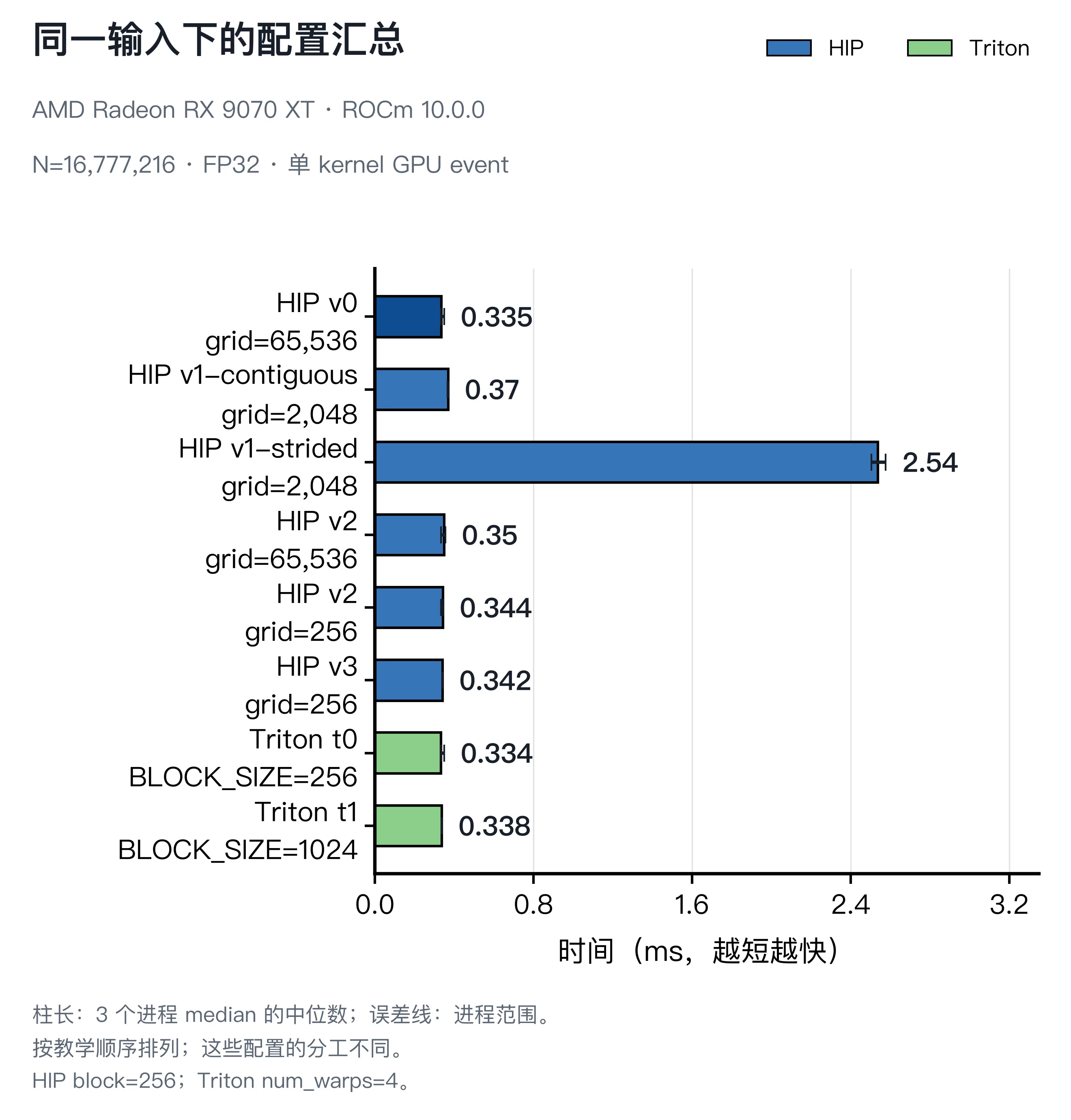
图 8.9 相同主输入下的代表配置总览;下表列出全部 11 个配置。地址对照是独立诊断,不是从 v0 开始的线性升级链;这张图用于回看各轮选择,不替代前面的受控比较。
| 配置 | Median(ms) | 三进程范围(ms) |
|---|---|---|
hip-v0 | 0.334861 | 0.333301–0.349441 |
hip-v1-contiguous | 0.369681 | 0.366240–0.370081 |
hip-v1-strided | 2.538206 | 2.505867–2.576887 |
hip-v2-g65536 | 0.350301 | 0.332861–0.355121 |
hip-v2-g2048 | 0.357582 | 0.353582–0.361721 |
hip-v2-g256 | 0.343640 | 0.334301–0.344421 |
hip-v3-g256 | 0.342121 | 0.342002–0.342500 |
triton-t0-b256 | 0.334061 | 0.333781–0.349521 |
triton-t1-b512 | 0.335441 | 0.335401–0.340481 |
triton-t1-b1024 | 0.337701 | 0.336301–0.338220 |
triton-t1-b2048 | 0.341241 | 0.340961–0.343221 |
hip-v0 与 triton-t0-b256 的三进程测量范围高度重叠,基于当前严谨的统计数据,我们不能得出“某种语言在性能上压倒另一种”的轻率结论。更为客观的认识是:在当前的大规模输入下,两条路线最自然的基线实现均已展现出极高的访存效率;后续试图通过更复杂的技巧进行重构时,唯有拿出同口径下更显著的提速证据,才值得替换掉简洁明了的基线。
正文引用的单进程输出、三进程统计与五张对比图表,均完整归档于配套代码库的 evidence/walkthrough/ 目录中,确保所有实验数据源头均可独立追溯与复核。
8.7 负结果、适用边界与下一步
一次改动没有提速,也能帮助我们判断在当前条件下是否值得保留。记录观察结果时,要同时说明它还不能解释什么:
| 观察到的实测现象 | 据此可以作出的工程决定 | 依然不能直接推论的假设 |
|---|---|---|
| 受控地址排列对比出现 6.87 倍断崖落差 | 坚决保留同轮连续访存模式,在后续所有算子中持续审视访问连续性 | 不能脱离硬件计数器直接将理论分桶等同于真实 DRAM 事务数 |
| Grid 或 Tile 缩放未见稳定收益 | 保留最初简洁的配置,不盲目为了减少线程/Program 而加重单任务负担 | 不能推广认为“更少的 Block/Program 在所有场景下都普遍低效” |
引入 float4 向量化后无稳定提速 | 保留原生标量加法写法,避免徒增代码复杂度 | 不能断言“向量类型在硬件层面上绝对没有生成更宽的访存指令” |
本章得出的最佳配置结论严格受限于当前的大规模输入。当计算场景切换到小尺寸张量或非连续内存布局时,应当重新运行基线并评估候选版本,切忌将大数组下的经验生搬硬套。
如果未来我们需要实现 ReLU、GELU 或 Scale & Bias,由于输出元素依然保持严格独立,本章建立的网格划分与边界保护策略均可直接迁移复用。如果考虑将 Add 与后续的激活算子进行算子融合,则必须严格测量“两次独立算子调用”与“单次融合内核调用”的完整端到端路径,相关的融合收益与代价我们将在第 12 章深入探讨。
8.8 复跑与练习
8.8.1 复现逐轮实验
在仓库根目录进入本篇环境:
bash
cd code/part2-kernels &&
uv sync --locked &&
source ./activate-rocm.sh
单项命令帮助你理解一个改动。要比较运行波动,用批量入口自动运行 11 个配置,每个配置启动 3 个独立进程,并轮换运行顺序。这里显式选择 main:做小边界检查与 benchmark,不采集 profiler。输出目录必须尚不存在:
bash
python chapter8/run_rounds.py --output chapter8/results/my-run --phase main程序默认同样为 main。它在测量前检查 1、31、32、33、255、256、257、1027 等小长度;主输入每个进程仍执行前后检查。profile 与 validation 是额外阶段,不是每次实验必做的下一步;profile 会采集全部配置,当前章节通常只需 8.4 中针对问题的单项命令。已有主实验目录不会被覆盖。
若需要在独立进程中再次确认选定配置,并检查各 tile 的专属边界,可以执行下面的补充验收。这是单独的验收步骤,不包含在上面的默认运行中:
bash
python chapter8/verify_rounds.py \
  --frozen-run chapter8/results/my-run \
  --output chapter8/results/my-confirmation
确认步骤复用 my-run 中保存的 kernel,结果写进新目录;不覆盖原扫描。8.4 的单项命令用于看清每一步,这里的运行器用于自动保存完整的多进程矩阵。
从自己的汇总重画本章五类比较图:
bash
python chapter8/plot_rounds.py \
  --summary chapter8/results/my-run/summary/summary.csv \
  --manifest chapter8/results/my-run/summary/manifest.json \
--out-dir chapter8/results/my-run/figures运行目录中,samples/ 保存每次 event 时间,commands.jsonl 保存实际命令,logs/ 保存环境、程序输出和检查结果,profiles/ 保存原始 trace,source/ 保存该次源码,summary/ 保存汇总与环境清单。仅执行 main 时,profiles/ 为空是正常现象。上面的绘图命令显式读取你自己的汇总;不要省略数据参数,否则脚本的默认值会读取另一组归档。正文五张图对应 evidence/walkthrough/;evidence/rounds/ 是先前完整运行器实验的独立快照,两组不混算成绩。
采集日期、源码身份与详细条件保存在每组实验记录中。新增结果以自己的运行目录保存,原始样本、环境、源码哈希和实际参数一起保留;不同日期、shape 或计时区间的结果不混成一个中位数。
8.8.2 练习与验收
- 选择一个新的非整除长度,先预测最后一个 HIP block 和 Triton program 中哪些位置有效,再检查输出。正确性通过后才计时。
- 固定 v2 的源码与 block size,增加一个 grid 候选。把结果与现有 grid 配置放在同一张图中,说明这次是否值得保留。
- 固定 Triton 的
num_warps=4,改变一个 tile 候选;记录 program 数和实测范围。若差异很小,说明为什么还不能宣布胜者。 - 将算术替换为
output[i] = alpha * input[i] + beta。重新计算逻辑字节与 FLOP,先写出改动假设,再校验和比较;如果需要 profiling,写明它要回答的问题与预期字段。
完成时应能独立回答:我改了哪项分工,为什么值得试,正确性怎样确认,比较图支持什么决定,还有什么原因没有证实。如果决定进一步 profiling,还要说明现有测量缺少什么证据、工具能否取得它,以及不同结果会怎样改变下一步。某个优化一定成功,不是验收条件。
本章小结
- 输出独立,分工可以改变:一个输出只依赖对应输入,可以比较不同的线程分工与数据块大小。低算术强度提示优先检查数据访问,但不能据此断定显存带宽是唯一瓶颈。
- 两条路线各有控制方式:HIP 从线程索引出发,比较地址排列、grid-stride 循环与四元素分组;Triton 从分块张量出发,比较 tile 大小。
- 每轮都检查并复测:先核对结果,再按相同口径测量,与基线及上一轮比较。独立复测与样本范围帮助判断收益是否稳定,没有提速的结果也要保留。
- 有具体问题时再做 profiling:正确性与性能比较可以支持保留或回退的决定;需要进一步解释时,再选择能够提供相关证据的工具。
接下来的第 9 章:Reduction 归约算子研究一个输出依赖多个输入的情况:怎样组织线程协作,并把各组的局部结果合并为最终答案。
延伸阅读
- AMD HIP Performance Guidelines:线程映射、合并访存、对齐与内存吞吐建议。
- Triton 官方编程模型介绍:program 与分块计算的含义。
- Triton 官方 Vector Addition 教程:kernel、主机调用、正确性与 benchmark 的完整起点。
- PyTorch HIP 语义:ROCm 构建为何沿用
torch.cuda接口名。 - 《AMD GPU 编程》第 8.1–8.2 节:从任务分工到 block/grid 实验的思路;书中 MI100 的配置与性能不作为本章 RX 9070 XT 的结论。