
38. Prefill Decode Disaggregation | Prefill / Decode 分离
难度: Medium | 环境: CPU-first | 标签: 推理优化, 推理服务, PD Disaggregation | 目标人群: 推理优化学习者
🚀 云端运行环境
本章节的实战代码可以点击以下链接在免费 GPU 算力平台上直接运行:
(国内推荐:魔搭社区免费实例)

本节导读
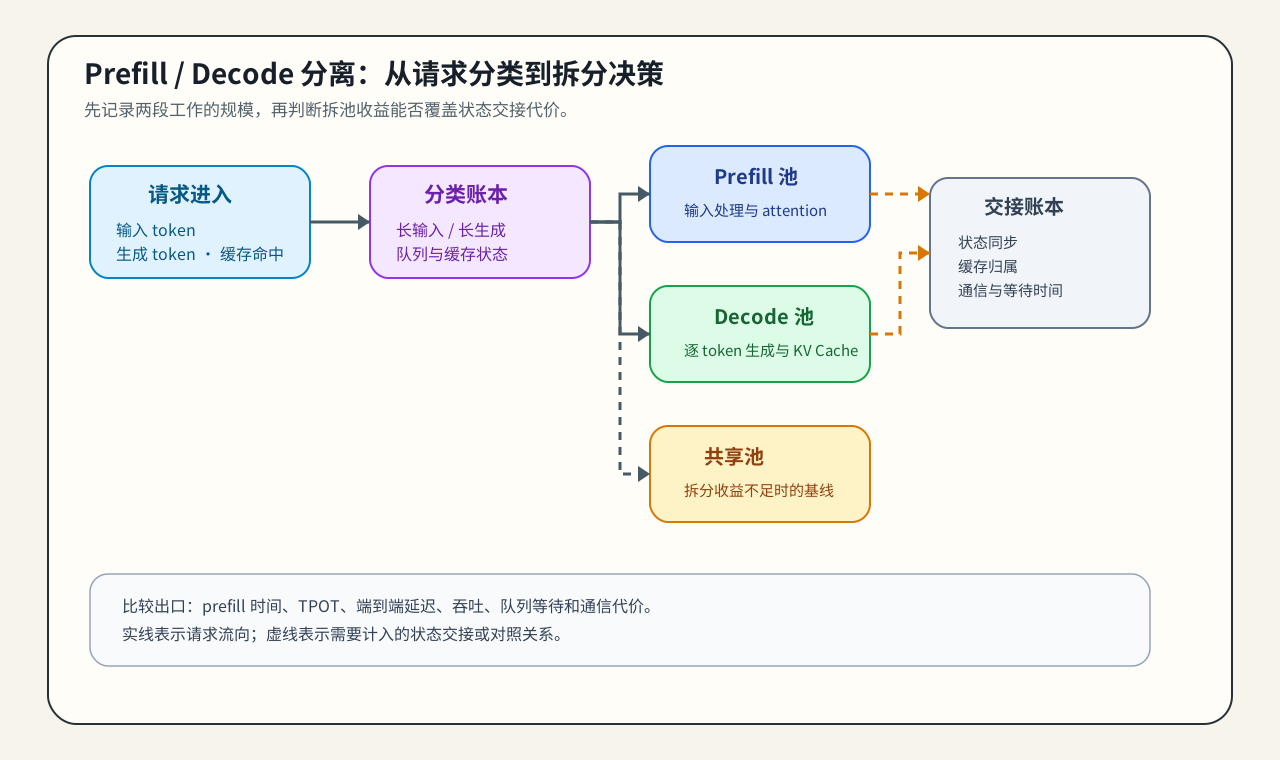
一次请求中的 prefill 更集中地消耗输入处理算力和带宽,decode 则持续占用 KV Cache 并受到排队影响。当一批请求的两类压力明显分化时,可以进一步观察独立资源池是否改善服务表现。
本节用最小教学模拟建立一条判断链:记录请求流量,形成 prefill / decode 分池计划,再比较吞吐、延迟和交接代价。
关键词: prefill, decode, queue, kv residency
前置阅读
导语: 进入本节前,先能比较 prefill 与 decode 的计算、带宽和 KV Cache 压力,再判断它们是否值得使用不同的资源池。
- 34. Prefix Caching and Chunked Prefill | 前缀缓存与分块预填充
- 36. Decode Scheduling | Decode 调度
- 37. KV Cache Scheduling | KV Cache 调度
Step 1: 先分清 Prefill 与 Decode 的压力来源
一次请求先处理输入,再逐 token 生成输出。Prefill 更集中地消耗输入处理算力和带宽,Decode 则持续占用 KV Cache 并受到排队影响。先按请求记录这两段的规模,才能判断拆分是否有依据。
本节的输入是请求的输入长度、生成长度和当前状态,输出是流量分层、资源池分配以及拆分收益与交接代价的比较。
| 请求形态 | 主要压力 | 先观察什么 |
|---|---|---|
| 长输入、短生成 | prefill 的 attention 计算与输入访存 | 输入处理时间、prefill 吞吐、队列长度 |
| 短输入、长生成 | decode 迭代、KV Cache 驻留与排队 | TPOT、KV Cache 占用、decode 队列 |
| 输入和生成都长 | 两段压力叠加 | 端到端延迟、吞吐和两类队列 |
Step 2: 把请求流量写成显式账本
先把每个请求的输入长度、生成长度和当前状态记录下来。这样可以从同一份账本识别流量构成,再比较共享池和拆分方案的资源需求。一条记录可以写成“请求 a:输入 4000 token、生成 64 token、命中前缀、位于 prefill 队列”。
| 字段类别 | 记录内容 | 用途 |
|---|---|---|
| 核心:请求标识 | 请求名称或 ID | 在分类、分池和结果表之间追踪同一个请求 |
| 核心:输入规模 | prompt_tokens | 估计 prefill 工作量和输入处理压力 |
| 核心:生成规模 | decode_tokens | 估计 decode 迭代次数和 KV Cache 驻留时间 |
| 状态:前缀复用 | cache_hit | 说明输入处理是否可能复用已有前缀 |
| 状态:所在队列 | queue | 观察请求当前处于 prefill、decode 或共享队列 |
Step 3: 比较拆分收益与交接代价
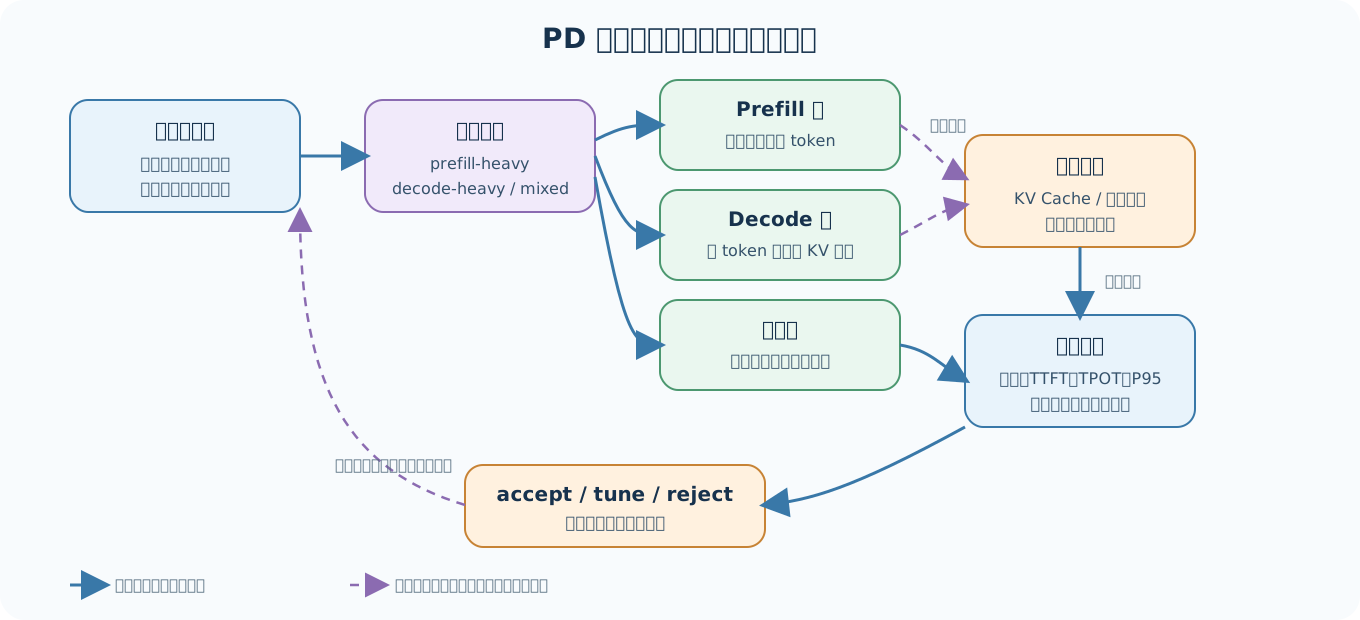
PD 分离需要同时比较收益和代价:独立资源池可能改善某类请求的等待,但也会增加交接、缓存迁移和空闲容量成本。先从吞吐、延迟和资源使用观察收益,再把交接时间纳入判断。CPU 机制实验可以比较方向;真实交接时间、KV Cache 迁移和 worker 空闲容量需要在 backend 中测量。
| 观察对象 | 需要比较的指标 | 读数代表什么 |
|---|---|---|
| 吞吐收益 | throughput_gain | 拆分后单位时间完成的请求或 token 是否增加 |
| 交互延迟 | TTFT、TPOT、P95、latency_delta_ms | 输入等待、生成速度和长尾请求是否改善 |
| 交接成本 | handoff_time、KV Cache 迁移时间、通信量 | 请求从 prefill 池进入 decode 池需要付出的代价 |
| 资源代价 | 两类 worker 的显存、算力和空闲容量 | 分池后是否出现一侧拥塞、另一侧闲置 |
| 最终判断 | accept / tune / reject | 收益是否足以覆盖交接与资源组织成本 |
Step 4: 实现请求分类、分池与拆分决策
题目区把前面的账本和判断框架落成三个函数:先统计请求构成,再生成分池计划,最后根据吞吐、延迟和交接代价输出拆分结论。实现时保持输入字段与上面表格一致,便于把模拟结果替换成真实 backend 的记录。 完成 CPU 测试后,再把同样的请求账本和指标字段带入 Step 5;真实 backend / 多 GPU 证据在 Step 5 中记录。
| 实现位置 | 输入 | 输出 | 测试时观察 |
|---|---|---|---|
summarize_request_mix | 请求的 prompt_tokens、decode_tokens 和分类阈值 | 三类请求数量 | 三类数量之和等于请求总数,边界请求分类稳定 |
plan_pd_split | 请求名称、两类长度阈值 | prefill_pool、decode_pool、shared_pool | 每个请求只进入一个池,分池结果保留输入顺序 |
evaluate_pd_decision | baseline 与 split 的吞吐、P95 | 增益、延迟变化和 keep_split | 吞吐增加且 P95 不恶化时才保留拆分 |
from typing import Dict, Listdef summarize_request_mix(requests: List[Dict[str, int]], long_prompt_threshold: int) -> Dict[str, int]:
"""按输入长度和生成长度统计三类请求。
返回 prefill-heavy、decode-heavy 和 mixed 的请求数量;这里只做流量分类,
不代表真实 backend 已经完成了资源隔离。
你需要返回:
- prefill_heavy: 长 prompt、短 decode 的请求数
- decode_heavy: 短 prompt、长 decode 的请求数
- mixed: 其他请求数
"""
# TODO 1:统计 prefill-heavy、decode-heavy 和 mixed 请求数量。
# 提示:先创建结果字典,再逐个请求判断属于哪一类。
# result = ???
# if ???:
# result['prefill_heavy'] += 1
# elif ???:
# result['decode_heavy'] += 1
# else:
# result['mixed'] += 1
raise NotImplementedError
def plan_pd_split(requests: List[Dict[str, int]], long_prompt_threshold: int, long_decode_threshold: int) -> Dict[str, object]:
"""根据请求规模生成三个逻辑池的分配计划。
返回请求名称列表;它是调度账本,不会启动 worker 或搬运 KV Cache。
"""
# TODO 2:根据请求规模生成三个逻辑池的分配计划。
# 提示:先创建三个列表,再根据 prompt/decode 长度把 request name 放进去。
# prefill_pool = ???
# decode_pool = ???
# shared_pool = ???
raise NotImplementedError
def evaluate_pd_decision(baseline: Dict[str, float], split_run: Dict[str, float]) -> Dict[str, object]:
"""比较共享池与拆分方案的吞吐、P95 延迟,并输出保留建议。
throughput_gain 是绝对差值,latency_delta_ms 是拆分减基线。
"""
# TODO 3:比较共享池和拆分方案,并输出 keep_split。
# 提示:先算 throughput_gain 和 latency_delta_ms,再决定 keep_split。
# throughput_gain = ???
# latency_delta_ms = ???
# keep_split = ???
raise NotImplementedErrordef test_pd_disaggregation_template():
try:
requests = [
{'name': 'a', 'prompt_tokens': 4000, 'decode_tokens': 64},
{'name': 'b', 'prompt_tokens': 256, 'decode_tokens': 512},
{'name': 'c', 'prompt_tokens': 1500, 'decode_tokens': 128},
]
summary = summarize_request_mix(requests, long_prompt_threshold=2048)
assert summary == {'prefill_heavy': 1, 'decode_heavy': 1, 'mixed': 1}
assert sum(summary.values()) == len(requests), '请求分类数量必须守恒!'
boundary = summarize_request_mix(
[{'name': 'boundary', 'prompt_tokens': 2048, 'decode_tokens': 256}],
long_prompt_threshold=2048,
)
assert boundary == {'prefill_heavy': 0, 'decode_heavy': 0, 'mixed': 1}, '阈值边界分类不明确!'
plan = plan_pd_split(requests, long_prompt_threshold=2048, long_decode_threshold=256)
assert plan['prefill_pool'] == ['a']
assert plan['decode_pool'] == ['b']
assert plan['shared_pool'] == ['c']
planned = plan['prefill_pool'] + plan['decode_pool'] + plan['shared_pool']
assert sorted(planned) == sorted(item['name'] for item in requests), '分池结果必须覆盖且只覆盖每个请求一次!'
decision = evaluate_pd_decision(
{'throughput': 100, 'p95_latency_ms': 180},
{'throughput': 126, 'p95_latency_ms': 150},
)
assert decision['throughput_gain'] == 26
assert decision['latency_delta_ms'] == -30
assert decision['keep_split'] is True
reject = evaluate_pd_decision(
{'throughput': 100, 'p95_latency_ms': 180},
{'throughput': 110, 'p95_latency_ms': 210},
)
assert reject['throughput_gain'] == 10
assert reject['latency_delta_ms'] == 30
assert reject['keep_split'] is False, '延迟恶化时不能只看吞吐收益!'
print('测试通过:PD 分离模板可以工作。')
except NotImplementedError:
raise
except (NameError, AttributeError) as e:
raise NotImplementedError('请先完成 TODO 代码或检查字段名!') from e
test_pd_disaggregation_template()🛑 STOP HERE 🛑
请先尝试自己完成代码并跑通测试。
如果你正在 Colab 中运行,并且遇到困难没有思路,可以向下滚动查看参考答案。
参考代码与解析
代码
def summarize_request_mix(requests: List[Dict[str, int]], long_prompt_threshold: int) -> Dict[str, int]:
    """按输入长度和生成长度统计三类请求。

    返回 prefill-heavy、decode-heavy 和 mixed 的请求数量;这里只做流量分类,
    不代表真实 backend 已经完成了资源隔离。

    你需要返回:
    - prefill_heavy: 长 prompt、短 decode 的请求数
    - decode_heavy: 短 prompt、长 decode 的请求数
    - mixed: 其他请求数
    """
    # 提示:先创建结果字典,再逐个请求判断属于哪一类。
    # result = ???
    # if ???:
    #     result['prefill_heavy'] += 1
    # elif ???:
    #     result['decode_heavy'] += 1
    # else:
    #     result['mixed'] += 1
    # TODO 1:统计 prefill-heavy、decode-heavy 和 mixed 请求数量。
    result = {'prefill_heavy': 0, 'decode_heavy': 0, 'mixed': 0}
    for request in requests:
        prompt_tokens = request.get('prompt_tokens', 0)
        decode_tokens = request.get('decode_tokens', 0)
        if prompt_tokens > long_prompt_threshold and decode_tokens <= long_prompt_threshold // 8:
            result['prefill_heavy'] += 1
        elif decode_tokens > long_prompt_threshold // 8 and prompt_tokens <= long_prompt_threshold:
            result['decode_heavy'] += 1
        else:
            result['mixed'] += 1
    return result


def plan_pd_split(requests: List[Dict[str, int]], long_prompt_threshold: int, long_decode_threshold: int) -> Dict[str, object]:
    """根据请求规模生成三个逻辑池的分配计划。

    返回请求名称列表;它是调度账本,不会启动 worker 或搬运 KV Cache。
    """
    # 提示:先创建三个列表,再根据 prompt/decode 长度把 request name 放进去。
    # prefill_pool = ???
    # decode_pool = ???
    # shared_pool = ???
    # TODO 2:根据请求规模生成三个逻辑池的分配计划。
    prefill_pool = []
    decode_pool = []
    shared_pool = []
    for request in requests:
        name = request.get('name', 'request')
        if request.get('prompt_tokens', 0) > long_prompt_threshold and request.get('decode_tokens', 0) <= long_decode_threshold:
            prefill_pool.append(name)
        elif request.get('decode_tokens', 0) > long_decode_threshold and request.get('prompt_tokens', 0) <= long_prompt_threshold:
            decode_pool.append(name)
        else:
            shared_pool.append(name)
    return {'prefill_pool': prefill_pool, 'decode_pool': decode_pool, 'shared_pool': shared_pool}


def evaluate_pd_decision(baseline: Dict[str, float], split_run: Dict[str, float]) -> Dict[str, object]:
    """比较共享池与拆分方案的吞吐、P95 延迟,并输出保留建议。

    throughput_gain 是绝对差值,latency_delta_ms 是拆分减基线。
    """
    # 提示:先算 throughput_gain 和 latency_delta_ms,再决定 keep_split。
    # throughput_gain = ???
    # latency_delta_ms = ???
    # keep_split = ???
    # TODO 3:比较共享池和拆分方案,并输出 keep_split。
    throughput_gain = split_run.get('throughput', 0.0) - baseline.get('throughput', 0.0)
    latency_delta_ms = split_run.get('p95_latency_ms', 0.0) - baseline.get('p95_latency_ms', 0.0)
    return {'throughput_gain': throughput_gain, 'latency_delta_ms': latency_delta_ms, 'keep_split': throughput_gain > 0 and latency_delta_ms <= 0}
解析
题目区和答案区保留同样的 3 个 TODO;答案区只补全实现,不改变函数接口。测试函数分别检查分类守恒、分池覆盖和收益/代价方向。
| TODO | 题目区要完成的机制 | 测试函数中的对应检查 |
|---|---|---|
| 1 | 根据输入长度和生成长度统计请求构成 | 三类数量守恒与阈值边界 |
| 2 | 将请求分配到 prefill、decode 或 shared 池 | 每个请求只进入一个池且顺序可追踪 |
| 3 | 比较共享池和拆分方案的吞吐、P95 与决策 | 收益明确时保留,延迟恶化时拒绝 |
1. TODO 1:统计请求流量构成
- 先读取每个请求的
prompt_tokens和decode_tokens,再把请求分成prefill_heavy / decode_heavy / mixed。 - 这一步的意义不是精确建模,而是先判断流量是不是已经明显异构,是否存在拆池动机。
2. TODO 2:把请求分配到 prefill / decode / shared 三个池
prefill_pool放长 prompt、短 decode 的请求;decode_pool放短 prompt、长 decode 的请求;其余进入shared_pool。- 这里先做最小分配账本,不涉及真实 worker 调度,只固定“谁更适合被单独隔离”。
3. TODO 3:输出 PD 分离决策
- 先计算
throughput_gain和latency_delta_ms,再判断拆分后的收益是否同时覆盖吞吐和延迟两侧。 - 这一步回答的是“拆池值不值得保留”,而不是“系统能不能拆”。
4. 这页的定位
- PD 分离首先回答“流量是否真的异构”,再回答“拆池是否值得”。
- 请求分类、资源分配和收益评估,构成了最小判断链路。
Step 5: 可选 GPU / backend:验证拆分收益与交接代价
CPU 题目区先验证流量分类、分池计划和决策逻辑;真实 PD 分离需要两个可运行的 worker 池、状态交接和匹配 workload。单 GPU 上的合成计算不能代替 prefill / decode worker 之间的真实交接,因此本步默认只做环境预检和实验配置,具备匹配 backend 后再执行真实对照。
| 实验路径 | 使用资产 | 学习者操作 | 可以验证 / 不能直接推出 |
|---|---|---|---|
| CPU 机制验证 | 题目区三个函数和测试单元 | 先完成请求分类、分池计划和 baseline / split 决策 | 可以验证账本与决策逻辑;不能推出真实 worker 性能 |
| 环境预检 | tools/environment_preflight.py、当前 Notebook runtime | 检查 CUDA、GPU、显存、PyTorch 和可选 backend;需要时执行 python tools/environment_preflight.py --gpu --optional-packages vllm sglang | 判断环境是否可执行;不产生 PD 性能结论 |
| 单 GPU backend | vLLM / SGLang 服务与统一请求集 | 可做共享池 baseline 或单 worker smoke test | 可以测请求指标;不能证明跨设备交接成本 |
| 多 GPU / serving backend | 两类 worker、状态交接配置和统一 workload | 对比 shared pool 与 PD split,记录 TTFT、TPOT、吞吐、P95、交接时间和失败状态 | 可以验证当前模型与 workload;不能直接外推到其他 backend |
| 结果登记 | 本节最后的 PD 实验记录表 | 每组新配置新增一行,不覆盖已有结果 | 形成可复核的 PD 对照记录 |
真实 backend 验证优先参考 70 Serving Scheduler Benchmark 和 81 Distributed Inference Project。本节 GPU 结果必须记录 evidence_level,CPU 模拟结果不能写成真实 PD 分离收益。
"""GPU/backend 配置单元:默认只做配置检查,不启动 backend。"""
RUN_PD_GPU_PREFLIGHT = False  # 改为 True 后检查当前 GPU 和可选 backend。
PD_RESULT_PATH = 'benchmarks/results/38_pd_disaggregation.json'  # 相对项目根目录。
PD_BACKEND = 'vllm'  # vllm / sglang / multi_backend;这里只记录计划,不自动启动服务。
PD_MODEL_ID = 'Qwen/Qwen2.5-0.5B-Instruct'
PD_DTYPE = 'float16'
PD_PROMPT_TOKENS = 2048
PD_DECODE_TOKENS = 256
PD_CONCURRENCY = 2
PD_WORKER_COUNT = 2 # 真实 PD 对照至少需要 prefill / decode 两类 worker。"""GPU/backend 执行单元:记录环境和实验计划,不伪造 backend 结果。"""
if RUN_PD_GPU_PREFLIGHT:
import importlib.util
import json
from pathlib import Path
import torch
if not torch.cuda.is_available():
raise RuntimeError('PD 实验预检需要 CUDA;请先切换到 GPU runtime。')
if PD_BACKEND not in {'vllm', 'sglang', 'multi_backend'}:
raise ValueError('PD_BACKEND 必须是 vllm、sglang 或 multi_backend。')
if any(value < 1 for value in (PD_PROMPT_TOKENS, PD_DECODE_TOKENS, PD_CONCURRENCY, PD_WORKER_COUNT)):
raise ValueError('token 数、并发度和 worker 数必须为正数。')
project_root = next((p for p in [Path.cwd(), *Path.cwd().parents] if (p / 'benchmarks').is_dir()), Path.cwd())
report = {
'task': 'pd_disaggregation_preflight',
'evidence_level': 'gpu_environment_preflight_only',
'runtime': {
'device': torch.cuda.get_device_name(0),
'gpu_memory_gb': round(torch.cuda.get_device_properties(0).total_memory / (1024 ** 3), 2),
'torch': torch.__version__,
'torch_cuda': torch.version.cuda,
'backend_installed': importlib.util.find_spec(PD_BACKEND) is not None if PD_BACKEND != 'multi_backend' else False,
},
'config': {'model': PD_MODEL_ID, 'dtype': PD_DTYPE, 'prompt_tokens': PD_PROMPT_TOKENS, 'decode_tokens': PD_DECODE_TOKENS, 'concurrency': PD_CONCURRENCY, 'worker_count': PD_WORKER_COUNT, 'backend': PD_BACKEND},
'decision': {'decision': 'measure', 'reason': '环境预检完成;真实 PD split 仍需两个 worker 池和统一 workload。'},
}
output_path = project_root / PD_RESULT_PATH
output_path.parent.mkdir(parents=True, exist_ok=True)
output_path.write_text(json.dumps(report, ensure_ascii=False, indent=2), encoding='utf-8')
print(json.dumps(report, ensure_ascii=False, indent=2))
else:
print('PD GPU/backend 预检未启动:将 RUN_PD_GPU_PREFLIGHT 改为 True 后运行。')PD 实验记录
完成 CPU 或 GPU/backend 实验后,每组新条件新增一行;没有真实 worker 交接数据时,保留为空,不用 CPU 模拟值代填。
| 配置组 | GPU / backend | 模型与 dtype | worker 配置 | prompt / decode tokens | 并发 | TTFT / TPOT | 吞吐 | P95 | 交接时间 | 峰值显存 | evidence level | decision | 结果文件 |
|---|---|---|---|---|---|---|---|---|---|---|---|---|---|
| 示例:CPU 账本 | CPU / 模拟 | 待填写 | shared / split 计划 | 待填写 | 待填写 | 不适用 | 不适用 | 不适用 | 不适用 | 不适用 | cpu_simulation | 待填写 | 待填写 |
相关阅读
完成 prefill、decode 和资源池拆分的判断后,可以继续阅读推理系统论文与真实服务基准。