
39. Inference Fallback and Tiers | 推理分层与回退策略
难度: Medium | 环境: CPU-first | 标签: 推理优化, 推理服务, 回退策略 | 目标人群: 推理优化学习者
🚀 云端运行环境
本章节的实战代码可以点击以下链接在免费 GPU 算力平台上直接运行:
(国内推荐:魔搭社区免费实例)

本节导读
请求的输入长度、生成长度和当前资源压力不同,适合的 serving 策略也不同。38 讨论资源池如何拆分,本节进一步观察:请求如何分层,资源紧张时先采取什么退化动作,以及这些动作会怎样影响延迟与吞吐。
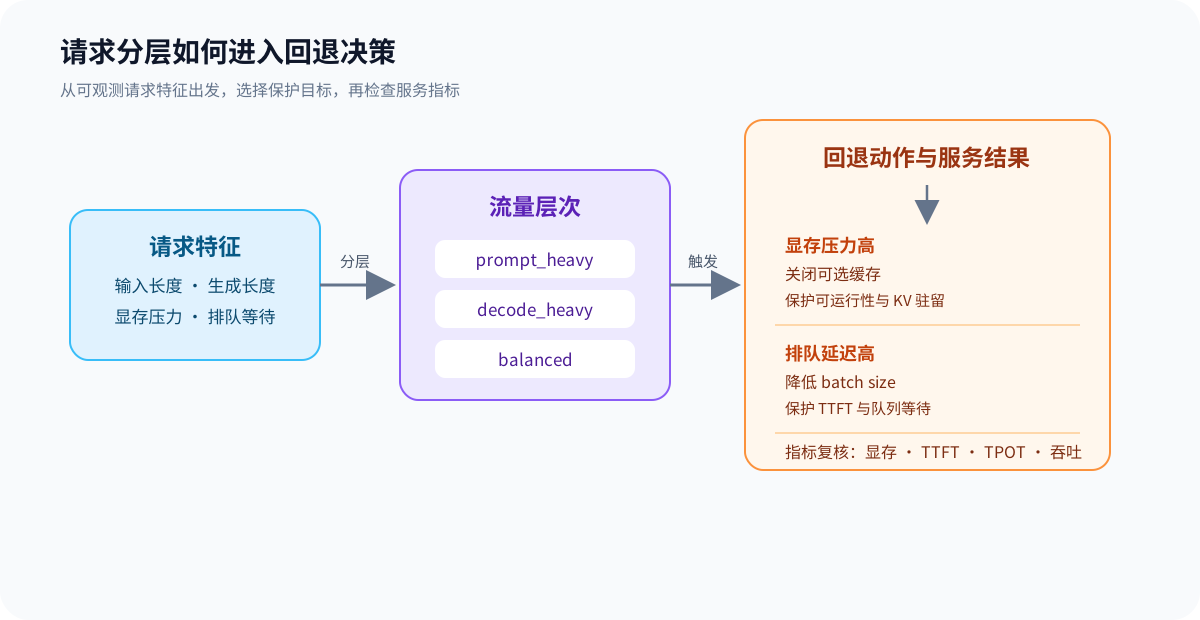
本节先把一个最小决策链跑通:从请求特征得到流量层次,根据显存和排队压力选择退化动作,再用服务指标检查这项动作是否保护了系统目标。学完后,你可以把 fallback 从经验规则写成可检查的输入、动作和结果。
关键词: request mix, latency, throughput, fallback
前置阅读
导语: 进入本节前,先能读出请求的输入规模、生成规模和当前排队状态,再观察这些信息如何进入回退决策。
- 36. Decode Scheduling | Decode 调度
- 37. KV Cache Scheduling | KV Cache 调度
- 38. Prefill-Decode Disaggregation | PD 分离
Step 1: 请求类型如何进入服务分层
请求分层先看两个可直接记录的输入:prompt_tokens 和 decode_tokens。它们分别近似表示输入处理压力与持续生成压力;把请求分成 prompt_heavy、decode_heavy 和 balanced 后,才能为后续回退动作选择观察重点。
| 请求层次 | 判断依据 | 主要风险 | 后续观察 |
|---|---|---|---|
prompt_heavy | 输入长、生成短 | prefill 时间和输入访存 | TTFT、prefill 吞吐 |
decode_heavy | 输入短、生成长 | KV Cache 驻留和排队 | TPOT、队列等待、显存 |
balanced | 两者都未超过阈值 | 两类压力同时存在 | 端到端延迟与吞吐 |
Step 2: 资源压力如何触发回退
资源压力进入决策后,回退动作应有稳定的优先级:先保护无法继续运行的资源约束,再处理排队延迟,压力解除时恢复当前计划。这里的策略是教学化的离散动作,重点是让输入条件、动作和保护目标一一对应。
| 触发信号 | 回退动作 | 优先保护的目标 | 需要记录的结果 |
|---|---|---|---|
memory_pressure > 0.9 | disable_optional_cache | KV Cache 驻留与可运行性 | 显存压力、失败请求数 |
queue_delay_ms > 100 | reduce_batch_size | 等待延迟 | TTFT、队列等待、吞吐 |
| 其他情况 | keep_current_plan | 稳定吞吐 | 当前计划和基线指标 |
Step 3: 回退策略如何影响服务质量
回退不是单纯改变一个开关,而是用可接受的吞吐损失换取显存安全或延迟稳定。需要把请求层次和回退动作放在一起,检查当前动作保护了什么、牺牲了什么,以及是否值得继续保留。本节 CPU 实验只验证分层、策略选择和结果分类;真实延迟、吞吐与显存效果需要在固定 workload 和真实 backend 中复测。
| 观察维度 | 需要比较的结果 | 判断问题 |
|---|---|---|
| 可运行性 | 显存压力、失败请求数、OOM | 回退是否避免资源失控? |
| 延迟 | TTFT、TPOT、queue_delay_ms | 等待和生成速度是否改善? |
| 吞吐 | 请求或 token 吞吐 | 性能损失是否可接受? |
| 工作负载 | 各层请求数量与比例 | 当前策略是否只适合某一类流量? |
Step 4: 实现分层、回退与结果评估
题目区把前面的输入、动作和结果落成三个函数,保持字段名称与 Step 1–3 的表格一致。
| 实现函数 | 输入 | 输出 | 验证重点 |
|---|---|---|---|
summarize_inference_tiers | 请求长度与两个分类阈值 | 三类流量数量 | 数量守恒,阈值边界稳定 |
select_fallback_policy | memory_pressure、queue_delay_ms | 回退动作与保护目标 | 显存压力优先于排队压力 |
evaluate_fallback_outcome | 流量分层与回退动作 | 风险等级、保护动作和适用范围 | 结果能解释当前策略保护了什么 |
提示
TODO 1先把请求按prompt_heavy / decode_heavy / balanced分层,再统计数量。TODO 2只需要根据memory_pressure和queue_delay_ms选择一个最小退化策略。TODO 3先根据 fallback 动作确定保护目标,再结合请求分层标记风险等级和工作负载范围。
from typing import Dict, Listdef summarize_inference_tiers(requests: List[Dict[str, int]], long_prompt_threshold: int, long_decode_threshold: int) -> Dict[str, int]:
"""
TODO 1: 统计请求层次。
"""
# 提示:先创建结果字典,再根据 prompt/decode 长度把请求分到三类里。
# result = ???
# if ???:
# result['prompt_heavy'] += 1
# elif ???:
# result['decode_heavy'] += 1
# else:
# result['balanced'] += 1
raise NotImplementedError
def select_fallback_policy(system_state: Dict[str, float]) -> Dict[str, object]:
"""
TODO 2: 根据资源压力选择退化策略。
"""
# 提示:先判断 memory_pressure,再判断 queue_delay_ms,最后返回默认策略。
# if ???:
# return {'policy': ???, 'priority': ???}
raise NotImplementedError
def evaluate_fallback_outcome(summary: Dict[str, int], fallback: Dict[str, object]) -> Dict[str, object]:
"""
TODO 3: 评估回退动作保护的目标和适用的流量范围。
"""
# 提示:先根据 fallback policy 确定风险和保护目标,再结合 summary 标记流量范围。
# risk_level = ???
# action = ???
raise NotImplementedErrordef test_inference_reserved_template():
try:
requests = [
{'prompt_tokens': 3000, 'decode_tokens': 64},
{'prompt_tokens': 128, 'decode_tokens': 512},
{'prompt_tokens': 800, 'decode_tokens': 128},
]
summary = summarize_inference_tiers(requests, long_prompt_threshold=2048, long_decode_threshold=256)
assert summary == {'prompt_heavy': 1, 'decode_heavy': 1, 'balanced': 1}
fallback = select_fallback_policy({'memory_pressure': 0.92, 'queue_delay_ms': 140})
assert fallback['policy'] == 'disable_optional_cache'
decision = evaluate_fallback_outcome(summary, fallback)
assert decision == {'risk_level': 'memory', 'action': 'protect_residency', 'workload_scope': 'mixed'}
print('测试通过:推理预留页模板可以工作。')
except NotImplementedError:
raise
except (AttributeError, NameError, TypeError, ValueError, AssertionError) as e:
raise NotImplementedError('请先完成 TODO 代码!') from e
test_inference_reserved_template()🛑 STOP HERE 🛑
请先尝试自己完成代码并跑通测试。
如果你正在 Colab 中运行,并且遇到困难没有思路,可以向下滚动查看参考答案。
参考代码与解析
代码
def summarize_inference_tiers(requests: List[Dict[str, int]], long_prompt_threshold: int, long_decode_threshold: int) -> Dict[str, int]:
    """
    TODO 1: 统计请求层次。
    """
    # 提示:先创建结果字典,再根据 prompt/decode 长度把请求分到三类里。
    # result = ???
    # if ???:
    #     result['prompt_heavy'] += 1
    # elif ???:
    #     result['decode_heavy'] += 1
    # else:
    #     result['balanced'] += 1
    result = {'prompt_heavy': 0, 'decode_heavy': 0, 'balanced': 0}
    for request in requests:
        prompt_tokens = request.get('prompt_tokens', 0)
        decode_tokens = request.get('decode_tokens', 0)
        if prompt_tokens > long_prompt_threshold and decode_tokens <= long_decode_threshold:
            result['prompt_heavy'] += 1
        elif decode_tokens > long_decode_threshold and prompt_tokens <= long_prompt_threshold:
            result['decode_heavy'] += 1
        else:
            result['balanced'] += 1
    return result


def select_fallback_policy(system_state: Dict[str, float]) -> Dict[str, object]:
    """
    TODO 2: 根据资源压力选择退化策略。
    """
    # 提示:先判断 memory_pressure,再判断 queue_delay_ms,最后返回默认策略。
    # if ???:
    #     return {'policy': ???, 'priority': ???}
    if system_state.get('memory_pressure', 0.0) > 0.9:
        return {'policy': 'disable_optional_cache', 'priority': 'protect_residency'}
    if system_state.get('queue_delay_ms', 0.0) > 100:
        return {'policy': 'reduce_batch_size', 'priority': 'protect_latency'}
    return {'policy': 'keep_current_plan', 'priority': 'stable'}


def evaluate_fallback_outcome(summary: Dict[str, int], fallback: Dict[str, object]) -> Dict[str, object]:
    """
    TODO 3: 评估回退动作保护的目标和适用的流量范围。
    """
    # 提示:先根据 fallback policy 确定风险和保护目标,再结合 summary 标记流量范围。
    # risk_level = ???
    # action = ???
    policy = fallback.get('policy')
    if policy == 'disable_optional_cache':
        risk_level, action = 'memory', 'protect_residency'
    elif policy == 'reduce_batch_size':
        risk_level, action = 'latency', 'protect_latency'
    else:
        risk_level, action = 'stable', 'keep_current_plan'
    mixed = summary.get('prompt_heavy', 0) > 0 and summary.get('decode_heavy', 0) > 0
    return {'risk_level': risk_level, 'action': action, 'workload_scope': 'mixed' if mixed else 'single'}
解析
1. TODO 1:统计请求层次
- 先根据
prompt_tokens和decode_tokens把请求分成prompt_heavy / decode_heavy / balanced三类。 - 这一步的目标是先看流量有没有明显分层,因为不同层次的请求通常不能共用同一套最优 serving 策略。
2. TODO 2:根据资源压力选择退化策略
- 先看
memory_pressure,再看queue_delay_ms,最后再回到默认策略。 - 这一步回答的是“资源紧张时系统先牺牲什么”,把退化规则从隐含经验变成显式策略。
3. TODO 3:评估回退动作的服务影响
- 根据
fallback['policy']标记当前主要风险和保护目标,再结合请求层次判断策略适用范围。 - 这一步不宣称真实性能提升;它为后续固定 workload 的 TTFT、TPOT、吞吐和显存复测生成清晰的记录入口。
4. 这页的定位
- 本节用最小输入、动作和结果说明 serving 回退如何保护可运行性与服务质量。
- 如果后续需要比较真实 backend 或复杂 workload,再把本节字段带入 benchmark。
相关阅读
完成请求分层、回退动作和结果评估后,可以继续阅读推理服务调度、资源隔离与真实 benchmark。